
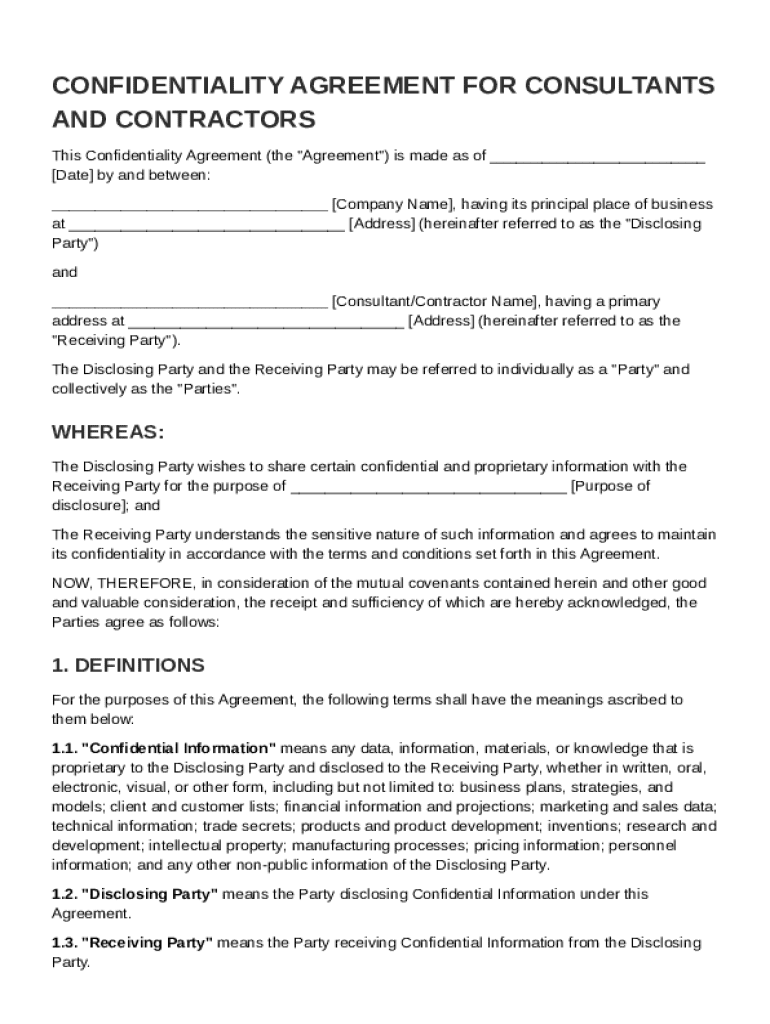







Definition and Meaning
The "Confidentiality for Consultants Contractors Agreement Template" is a legal document that establishes conditions under which confidential information is shared between a disclosing party and a receiving party, typically within the context of consulting or contracting services. The template defines the nature of confidential information, how it should be handled, and restrictions on its use and dissemination. It serves to protect proprietary and sensitive business information from being misused or disclosed to unauthorized parties, thereby safeguarding the interests of the disclosing party.
How to Use the Template
Using the Confidentiality for Consultants Contractors Agreement Template involves several key steps to customize it for specific business needs. First, parties should identify the confidential information that needs protection and detail it within the document. The template allows for sections where the purpose of the disclosure can be specified, ensuring that both parties understand the scope of confidentiality. Users should fill in names and details of both the disclosing and receiving parties, specify the duration of the agreement, and clearly define any exceptions or conditions under which the confidentiality may not apply. This tailored approach ensures that the document addresses the unique requirements of each consulting or contractor relationship.
Steps to Complete the Template
- Identify Parties Involved: Clearly state the names and addresses of the disclosing and receiving parties.
- Detail Confidential Information: Enumerate the types of information considered confidential, such as trade secrets, client lists, or financial data.
- Specify Purpose of Disclosure: Indicate the business purpose for which the confidential information is shared.
- Define Responsibilities: Outline the duties and obligations of the receiving party concerning information protection.
- Include Exceptions: Specify circumstances where confidentiality obligations may not apply.
- Set Duration: Establish the period for which the confidentiality terms will be in effect.
- Sign and Date: Ensure both parties review the agreement, make necessary revisions, and sign and date the final document.
Key Elements of the Template
The Confidentiality Agreement template includes several critical components that form its foundation:
- Confidential Information: Clearly defines what constitutes confidential information within the scope of the agreement.
- Purpose of Disclosure: Describes why the information is being shared and for what specific business purpose.
- Obligations of Receiving Party: Details the responsibilities the receiving party must uphold to maintain confidentiality.
- Exceptions and Limitations: Outlines situations where the obligations do not apply, such as information that becomes public through no fault of the receiving party.
- Duration and Termination: Establishes how long the confidentiality obligations last and conditions under which the agreement may be terminated.
- Return or Disposal of Information: Specifies procedures for returning or destroying confidential information once the contract ends or upon request.
Who Typically Uses the Template
This confidentiality agreement is commonly used by businesses and professionals in consulting, contracting, freelancing, and other industries where third-party service providers access sensitive business data. Organizations ranging from startups to large corporations employ this template to protect their proprietary information when outsourcing services or collaborating with external experts. Consultants and contractors themselves may also use it to define terms with their subcontractors, ensuring a secure environment for exchanging confidential business insights.


Legal Use and Implications
Legally, the Confidentiality Agreement sets binding obligations on the receiving party to prevent unauthorized dissemination of sensitive information. It is enforceable in court, providing legal recourse to the disclosing party if the terms are breached. For validity, the agreement must be consensually signed by both parties, with clear articulation of the rights, duties, and consequences of non-compliance. Jurisdictional laws, especially those in the United States, must be considered to ensure that the agreement complies with state-specific regulations regarding contract formation and enforcement.
Examples of Using the Template
A practical example might involve a tech startup hiring a freelance marketing consultant. In their agreement, the startup would define proprietary business strategies and customer lists as confidential. Alternatively, a manufacturing company might use the agreement when sharing new product designs with a contractor tasked with prototype development. In both cases, the template ensures that critical business information remains protected and limits the risk of unauthorized disclosure.
Important Terms Related to the Template
Familiarity with key terms is essential for utilizing the template:
- Disclosing Party: The entity sharing confidential information.
- Receiving Party: The entity receiving and obligated to protect the information.
- Trade Secret: A type of confidential information with economic value derived from not being publicly known.
- Non-Disclosure Agreement (NDA): Another term commonly used for confidentiality agreements, though NDAs can sometimes refer to specific confidentiality scenarios.
State-Specific Rules and Requirements
Confidentiality agreements across the United States can be subject to varying state laws. States such as California have specific provisions limiting non-compete clauses that can affect confidentiality terms tied to them. Users should ensure compliance with state-specific business practices and legal standards, possibly seeking legal counsel to adapt the template to reflect any state-mandated requirements, particularly when it comes to duration and scope of enforceability.
By leveraging this comprehensive understanding of the "Confidentiality for Consultants Contractors Agreement Template," businesses can effectively safeguard their sensitive information while maintaining productive external relationships with confidence and legal assurance.




