






Definition & Meaning
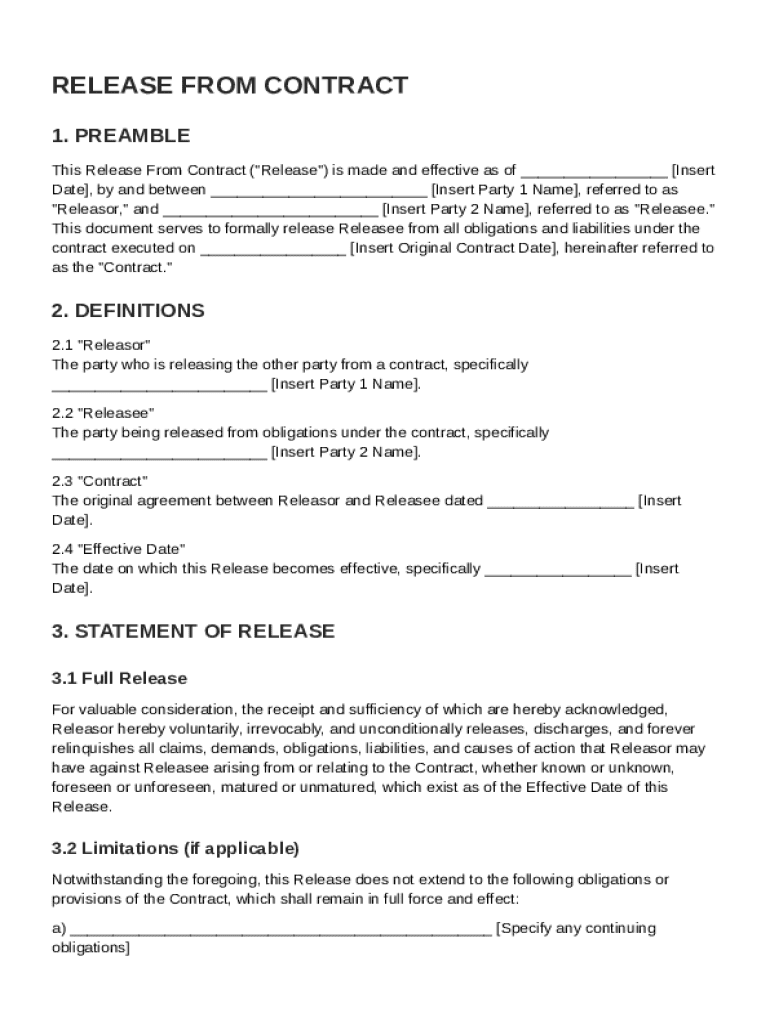
A Release From Contract Template is a legal document designed to formally discharge a party, known as the Releasee, from their obligations specified under an existing contract. This template acts as a mutual agreement between the Releasor, who is freeing the Releasee, and the Releasee themselves, ensuring all previously agreed commitments are terminated, except for any provisions designated to remain in effect. The form essentially clears the Releasee from all future claims related to the original contract, providing both parties with a clear understanding of their post-release obligations, if any.
How to Use the Release From Contract Template
To effectively use a Release From Contract Template, follow these steps:
- Identify the Parties: Clearly state the names and contact information of the Releasor and the Releasee.
- Review Obligations: Understand the obligations from which the Releasee will be released and any continuing responsibilities they may still hold.
- Draft the Agreement: Incorporate elements such as the statement of release, consideration (why the release is being granted), and any relevant warranties or representations of both parties.
- Obtain Consent: Ensure all involved parties agree to the terms outlined.
- Sign and Execute: Complete the document with signatures from both parties, thus legally finalizing the release under the prescribed terms.
Having a comprehensive understanding of the template maximizes its effectiveness, mitigating potential legal misunderstandings.
Key Elements of the Release From Contract Template
A Release From Contract Template incorporates several critical components:
- Definitions: Clarifies terminology used within the document, ensuring both parties share a mutual understanding.
- Statement of Release: Explicitly states the release of obligations, detailing the extent of the release.
- Consideration: Addresses the reasoning or compensation behind the release, which is a necessary element to render the contract valid.
- Representations and Warranties: Outlines promises made by each party, certifying that the release terms are agreed upon in good faith.
- Governing Law: Specifies the legal jurisdiction under which the release will be executed.
- Miscellaneous Provisions: Includes any additional clauses such as confidentiality or indemnification, pertinent to the specifics of the contract.
These elements must be thoughtfully addressed to ensure the release is lawful and comprehensive.
Legal Use of the Release From Contract Template
The Release From Contract Template is primarily used to absolve the Releasee of existing contractual duties in a legal and binding manner. It is crucial for all parties to:
- Ensure Legal Compliance: The template should comply with relevant state and federal laws to avoid future disputes.
- Consult Legal Experts: Legal advice may be beneficial to handle complex scenarios, ensuring that all potential liabilities are effectively addressed.
- Document Everything: Adequate documentation throughout the process is vital for validating the release in legal environments.
This step provides a safety net, ensuring that the release upholds legal standards and is enforceable.
State-Specific Rules for the Release From Contract Template
Since contracts are subject to state-specific laws, it’s essential to address these considerations:
- State Laws: Recognize that some states have unique requirements for contract releases, such as notary acknowledgment or specific language that must be included.
- Legal Variances: Certain states might impose additional stipulations related to the consideration necessary for a valid release.
- Cross-State Agreements: When parties reside in different states, select an acceptable governing law for all involved.
Understanding these nuances is essential for ensuring that the release is legally valid in the applicable state.
Important Terms Related to Release From Contract Template
Key terms associated with a Release From Contract Template include:
- Releasor and Releasee: Parties involved in the termination of obligations.
- Consideration: Compensation or rationale for the release.
- Indemnification: Protection against claims or damages post-release.
- Confidentiality: Agreement to protect sensitive information.
Grasping these terms guarantees the template is correctly executed and the rights and responsibilities of each party are clear.
Who Typically Uses the Release From Contract Template
Various entities and individuals employ the Release From Contract Template, such as:
- Businesses: Often used in partnership dissolutions or vendor agreements.
- Employers/Employees: Utilized during employment separation to terminate non-compete clauses or other contractual agreements.
- Contractors: Engaged to close out project-based agreements upon fulfillment of the contract's terms.
Each user aims to ensure a smooth transition and termination of responsibilities, minimizing the risk of future disputes.


Steps to Complete the Release From Contract Template
To accurately complete the template:
- Gather Necessary Information: Collect all pertinent details about the contract, parties involved, and their obligations.
- Fill Out the Template: Insert the necessary information, ensuring all required sections are complete.
- Review by All Parties: Both parties should examine the filled form for errors or concerns.
- Seek Legal Verification: Consider a final legal review to ensure all clauses meet necessary legal standards.
- Signatures: Obtain all required signatures to execute the document legally.
Following these steps ensures comprehensive completion and reduces the potential for misunderstanding or future disputes.