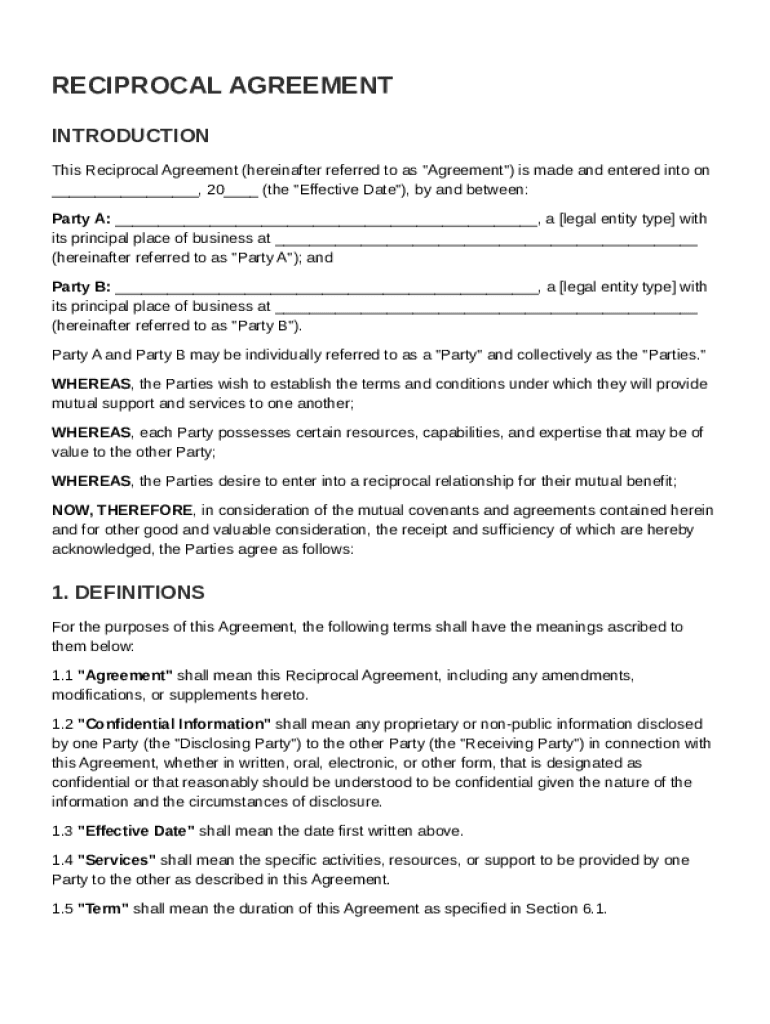







Definition and Meaning
A Reciprocal Agreement Template serves as a structured framework for formulating mutual agreements between two parties. It delineates the terms and conditions under which both entities will engage in joint activities or support each other. Within this document, essential clauses cover various elements, such as scope of services, individual responsibilities, and compensatory arrangements. Crucially, it serves as a legal instrument to foster collaborative relationships, ensuring that all parties have a clear understanding of their roles and obligations.
Detailed Components
- Scope of Services: Outlines specifics about what each party is expected to deliver.
- Responsibilities: Defines the duties and tasks to be undertaken by each entity.
- Compensation Arrangements: Details any financial obligations and remuneration methods.
- Confidentiality Obligations: Specifies measures to protect sensitive information.
This template ensures a foundational understanding that aids in preventing future disputes by clearly articulating the terms of collaboration.
How to Use the Reciprocal Agreement Template
Using a Reciprocal Agreement Template efficiently requires a step-by-step approach to ensure all parties understand and agree to the terms:
- Initial Review: Each entity should meticulously go through the template to understand the standard clauses.
- Customization: Tailor sections like responsibilities and compensation to suit the specific needs of the agreement.
- Consultation with Stakeholders: Involves discussions with relevant parties to incorporate their insights.
- Legal Review: Engage a legal professional to review the document and ensure compliance with all legal requirements.
- Finalization: Agree on the final terms, and ensure both parties sign the document.
This sequential process aids in generating a clear and enforceable agreement tailored to the involved parties' requirements.
Key Elements of the Reciprocal Agreement Template
The Reciprocal Agreement Template includes several critical elements instrumental for a comprehensive agreement:
- Definitions: Clarifies terms that are crucial for mutual understanding across the agreement.
- Dispute Resolution Procedures: Outlines the process to manage conflicts and disagreements efficiently.
- Termination Clauses: Specifies conditions under which the agreement can be dissolved.
- Miscellaneous Provisions: Covers additional terms and conditions, including governing law and amendment procedures.
These elements create a robust framework that supports a balanced and equitable agreement between parties.
Steps to Complete the Reciprocal Agreement Template
Completing the Reciprocal Agreement Template involves precise steps designed to finalize the document:
- Data Entry: Input all relevant information, ensuring accuracy in details such as names and roles.
- Detail Clauses: Fill in specific sections, such as the scope of services, responsibilities, and financial terms.
- Review and Edit: Make necessary changes or edits based on stakeholder feedback and legal advice.
- Sign-Off: Ensure all parties understand and agree with the terms before signing.
Successfully executing these steps assures that the completed agreement aligns with the specific needs and expectations of the parties involved.
Legal Use of the Reciprocal Agreement Template
The legal use of the Reciprocal Agreement Template involves ensuring that it meets all relevant legal requirements. This includes:
- Compliance with State Laws: Ensuring that the agreement abides by the state-specific statutory requirements.
- Validity of Signatures: Verifying that all parties' signatures are legally binding.
- Adherence to Confidentiality Laws: Protects sensitive information as per existing laws like GDPR.
By adhering to these legal parameters, the agreement maintains its enforceability and legitimacy in a legal setting.
Who Typically Uses the Reciprocal Agreement Template
Typically, various business entities and professionals use the Reciprocal Agreement Template:
- Business Partnerships: Companies engaging in joint ventures.
- Freelancers and Contractors: Individuals needing clear terms for collaborative projects.
- Non-profit Organizations: Groups seeking alliances for mutual benefit.
These diverse users ensure that the template is versatile enough to cater to a wide array of partnership scenarios.


Important Terms Related to the Reciprocal Agreement Template
Understanding key terms within a Reciprocal Agreement Template is vital:
- Mutual Support: Commitment by both parties to assist each other as defined.
- Governing Law: Specifies which jurisdiction’s laws will apply in the event of a dispute.
- Indemnification: A clause where one party agrees to compensate the other for any incurred losses.
These terms are essential in facilitating a mutual understanding and preventing potential misunderstandings.
Examples of Using the Reciprocal Agreement Template
The Reciprocal Agreement Template has been used in various contexts:
- Collaboration Between Tech Startups: For the combined development of a software product.
- Academic Partnerships: Schools working together to share resources and expertise.
- Community Initiatives: Non-profits collaborating on a common project to maximize social impact.
These examples illustrate the template's flexibility, offering solutions across a wide range of industries and scenarios.