
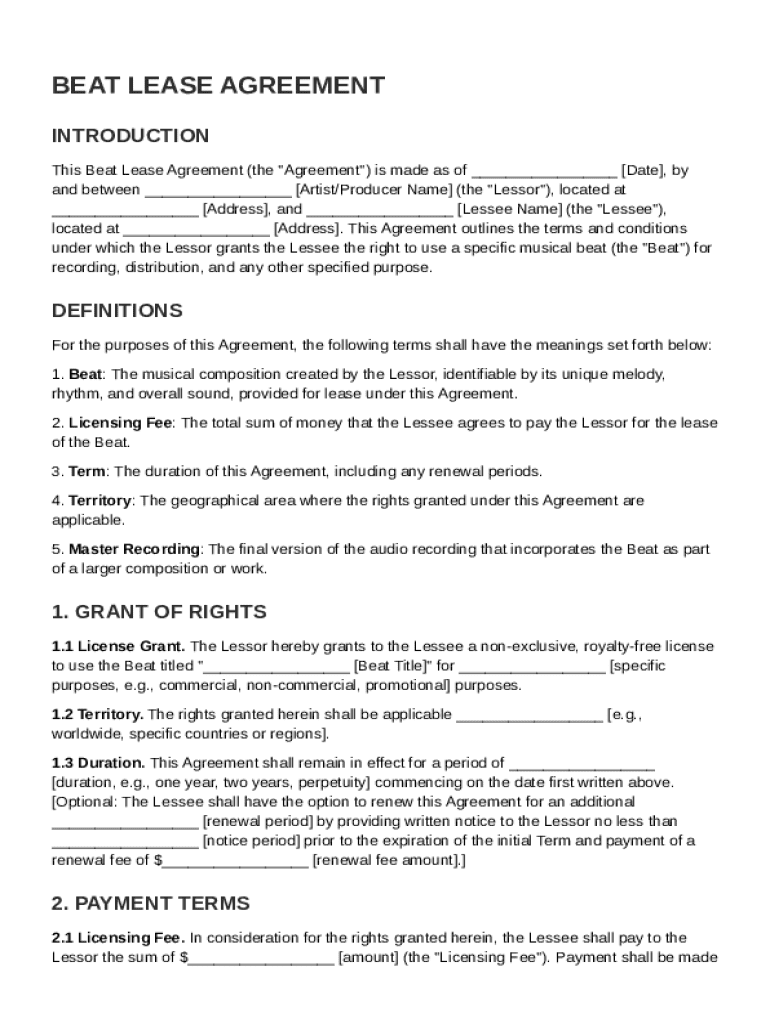







Definition and Meaning of a Beat Lease Contract Template
A Beat Lease Contract Template serves as a standardized document that outlines the conditions under which a musical beat is leased by a lessor, typically an artist or producer, to a lessee. This document functions as a legal agreement that delineates the specific rights and responsibilities of both parties involved. The template includes key terms such as payment conditions, copyright details, and usage rights. It also provides clarity on the lessee's entitlement to use the beat in various projects while ensuring that the lessor retains overall ownership and control. This legal framework facilitates the distribution, creation, and monetization of musical compositions, allowing artists to focus on their creative work while minimizing legal risks.
Key Elements of the Beat Lease Contract Template
The Beat Lease Contract Template comprises several critical components designed to protect the interests of both the lessor and the lessee. These elements include:
- Definitions and Interpretations: Establishes the specific meaning of terms used in the agreement, ensuring clarity and uniform understanding.
- Rights and Obligations: Specifies the duties and permissions conferred to the lessee, such as reproduction rights and public performance allowances.
- Payment Terms: Details the financial arrangements, including leasing fees, royalties, and payment scheduling.
- Ownership and Copyright: Confirms that the original beat remains the intellectual property of the lessor while granting usage rights to the lessee.
- Termination Conditions: Identifies situations that may lead to the termination of the contract, including breach of terms or non-payment.
- Miscellaneous Provisions: Covers additional legal clauses, such as indemnity, dispute resolution, and amendments to the agreement.
Steps to Complete the Beat Lease Contract Template
When completing a Beat Lease Contract Template, follow these structured steps to ensure accuracy and legal compliance:
- Fill Out Parties' Details: Provide comprehensive contact information for both the lessor and lessee, including names, addresses, and official identification numbers if required.
- Specify the Beat Details: Include information about the specific beat being leased, such as its title or any unique identifiers.
- Outline the Usage Rights: Clearly define the scope of the lessee's usage rights, including geographical limits, media usage, and any exclusivity arrangements.
- Agree on Payment Terms: State the agreed leasing fee, payment methods, due dates, and any applicable royalties.
- Detail Ownership Rights: Reaffirm the lessor's retention of ownership rights and explain any rights the lessee may have for modifications or derivative works.
- Set Termination and Alteration Conditions: Establish what constitutes a breach of contract and outline procedures for amendments or early termination.
- Sign and Date: Both parties must sign and date the document to confirm their agreement to the terms and conditions, making it legally binding.
Important Terms Related to the Beat Lease Contract Template
Understanding the terminologies within the Beat Lease Contract Template is essential for clarity and adherence to legal standards:
- Exclusive vs. Non-Exclusive Lease: Exclusive leases provide the lessee with sole rights to use the beat, whereas non-exclusive leases allow multiple lessees to use the same beat.
- Mechanical Rights: Permissions to reproduce and distribute the beat in physical or digital formats.
- Performance Rights: The lessee's right to publicly perform or broadcast the beat.
- Derivative Works: Rights concerning modifications or new compositions created using the original beat.
- Advance Payment: An upfront fee paid by the lessee before using the beat.
- Recoupable Costs: Expenses that the lessee may need to repay to the lessor from subsequent earnings.
Legal Use of the Beat Lease Contract Template
Utilizing a Beat Lease Contract Template lawfully requires adherence to several legal stipulations to ensure enforceability and protection:
- Contractual Capacity: Both parties must have the legal authority and capacity to enter into the contract, meaning they are of legal age and sound mind.
- Governing Law: The contract must specify the jurisdiction under which it falls, often influenced by state or federal laws.
- Compliance with ESIGN Act: For digital signatures, the contract must conform to the Electronic Signatures in Global and National Commerce Act, ensuring that electronic agreements maintain the same legal standing as paper ones.
- Adhering to Copyright Law: The agreement must respect existing copyright regulations, ensuring that the lessor holds legitimate rights to lease the beat.
Who Typically Uses the Beat Lease Contract Template
The Beat Lease Contract Template is primarily used by individuals and entities involved in the music industry, including:
- Independent Artists: Musicians who seek pre-existing beats for their recordings.
- Producers: Individuals or companies offering beats to artists on a leasing basis.
- Record Labels: Entities managing and distributing music who require legal documentation for beat usage.
- Music Supervisors: Professionals overseeing music for film, television, or advertising who need legal access to beats.
- DJs and Live Performers: Artists using beats in live performances or mixed sets.


Who Issues the Beat Lease Contract Template
No single governing entity presides over the issuance of Beat Lease Contract Templates. Instead, they are typically generated by:
- Music Licensing Agencies: Organizations specializing in music rights management and licensing.
- Entertainment Lawyers: Attorneys or legal firms providing custom contractual templates to clients.
- Music Publishing Companies: Companies that manage song copyrights and often include beat leasing as part of their services.
- Digital Platforms and Software: Websites or applications offering template generators tailored to music industry needs.
State-Specific Rules for the Beat Lease Contract Template
While the Beat Lease Contract Template generally follows a standardized format, state-specific rules might influence its application:
- Variations in Contract Law: Some states have unique requirements for contract formation and enforcement, affecting terms like dispute resolution.
- Jurisdictional Differences in Copyright Law: While federal laws predominantly govern copyright, certain state regulations can influence enforcement, especially regarding performance rights.
- Sales Tax Regulations: Leasing agreements may be subject to sales taxes, with varying rates and applicability depending on the state.
- Employment and Labor Laws: These laws can affect contractual terms if the agreement impacts employment status or compensation indirectly.


