






Definition & Meaning
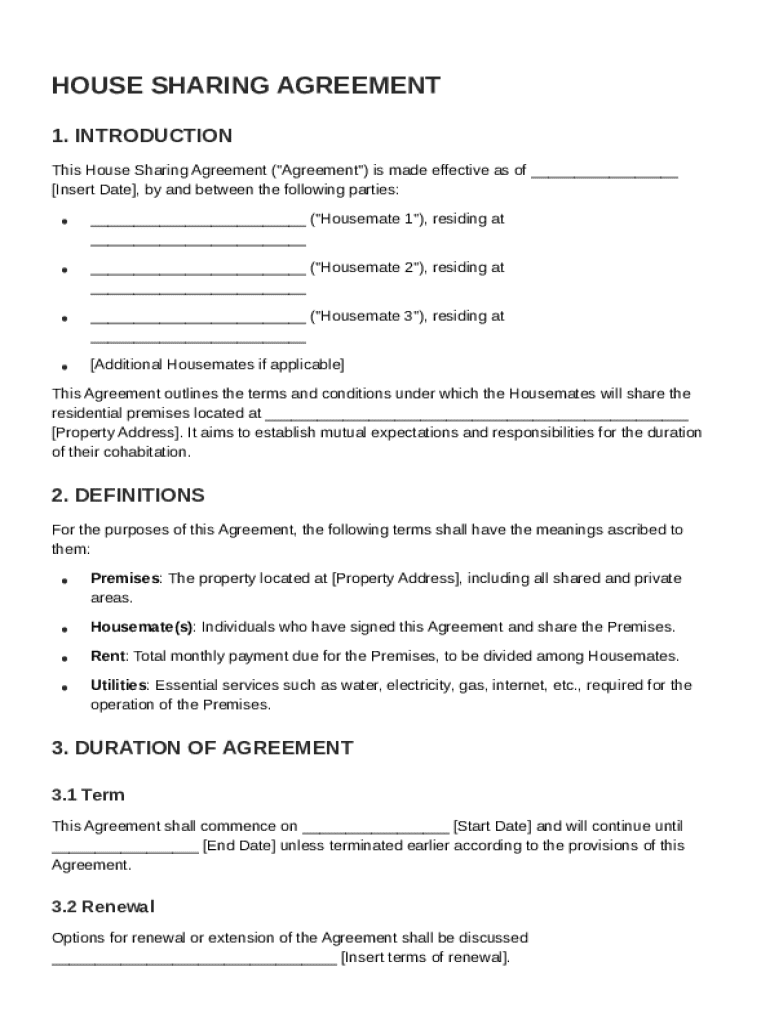
A House Sharing Agreement is a formal document that outlines the terms and conditions for individuals living together in a shared residential space. This agreement serves to clarify key aspects of cohabitation, ensuring that all housemates have a mutual understanding of their roles and responsibilities. It typically includes elements such as rent allocation, utility payments, house rules, and privacy considerations, which are crucial for maintaining a harmonious living environment.
Essential Components of the Agreement
- Rent and Utilities: Specifies how rent is shared among housemates and details the responsibilities regarding utility bills.
- Responsibilities: Outlines day-to-day obligations such as cleaning schedules, trash disposal, and maintenance duties.
- Privacy and Security: Ensures each housemate's privacy is respected and establishes guidelines for using shared spaces.
How to Use the House Sharing Agreement Template
To effectively use a House Sharing Agreement Template, it's important to collaboratively fill out the document with input from all housemates. This ensures that everyone agrees with the terms and any potential disputes can be minimized through mutual understanding.
Step-by-Step Instructions
- Gather Input: Convene all housemates and discuss key areas such as rent division, chore allocation, and rules for guests.
- Complete the Template: Use the template to document your agreed-upon terms clearly and accurately.
- Review Together: Examine the filled-out agreement with all parties to ensure clarity and consensus.
- Finalize and Sign: Once everyone is satisfied with the terms, each housemate should sign the agreement to signify their commitment.
Key Elements of the House Sharing Agreement Template
Some critical elements should always be included in a House Sharing Agreement to ensure it serves its purpose effectively.
Detailed Inclusions
- Conflict Resolution: Provisions for resolving disputes amicably without escalating matters unnecessarily.
- Termination Clause: Conditions under which the agreement can be terminated by either party, including notice period requirements.
- Guest Policy: Rules regarding how guests are managed, including overnight stays and duration limits.
State-Specific Rules for the House Sharing Agreement Template
State regulations may affect how a House Sharing Agreement is drafted and enforced. While the core components remain the same, specifics can vary based on regional housing laws.
Variations Across States
- Security Deposits: Rules about how security deposits are handled can differ, affecting the agreement's financial components.
- Tenant Rights: State laws might mandate specific rights for renters that must be included in the agreement.
- Eviction Procedures: Legal eviction processes and required notice periods can vary between states.
Legal Use of the House Sharing Agreement Template
Creating a legally binding contract is one of the primary purposes of a House Sharing Agreement Template. However, the enforceability depends on how comprehensively the document is crafted and its alignment with local laws.
Factors Affecting Enforceability
- Clarity and Completeness: All terms should be explicitly stated, leaving no room for ambiguity.
- Legal Compliance: Must align with tenancy laws in the state where the property is located.
- Signatures: Ensure all parties have signed the document for it to hold legal weight.
Examples of Using the House Sharing Agreement Template
Utilizing a House Sharing Agreement can prevent numerous common issues that arise in shared living scenarios.
Practical Scenarios
- Dispute Prevention: Clearly defined chore schedules minimize conflicts over shared responsibilities.
- Financial Clarity: Documented rent and utility obligations prevent disagreements over payments.
- Defined Boundaries: House rules, such as quiet hours, establish expected behavior indoors, reducing misunderstandings.
Who Typically Uses the House Sharing Agreement Template
The House Sharing Agreement is commonly used by individuals who opt for shared rental arrangements, including students, young professionals, and those in urban areas with higher living costs.


Typical Users
- College Students: Often share apartments to reduce expenses while attending academic institutions.
- Young Professionals: Use agreements to clarify living terms in city apartments with colleagues or friends.
- Co-living Spaces: Participants in co-living arrangements, organized through specific housing services, also rely on such agreements.
Digital vs. Paper Version of the House Sharing Agreement Template
Both digital and paper versions of the House Sharing Agreement Template have their own benefits and limitations.
Comparison of Formats
- Digital Version: Offers ease of editing, distribution, and storage. Integration with platforms like DocHub allows for easy updates and electronic signing.
- Paper Version: While being tangible, it lacks flexibility in making changes or distributing multiple copies without manual duplication.
The choice between digital and paper depends on the preference for either convenience and technological access or traditional document handling.