






Definition & Meaning
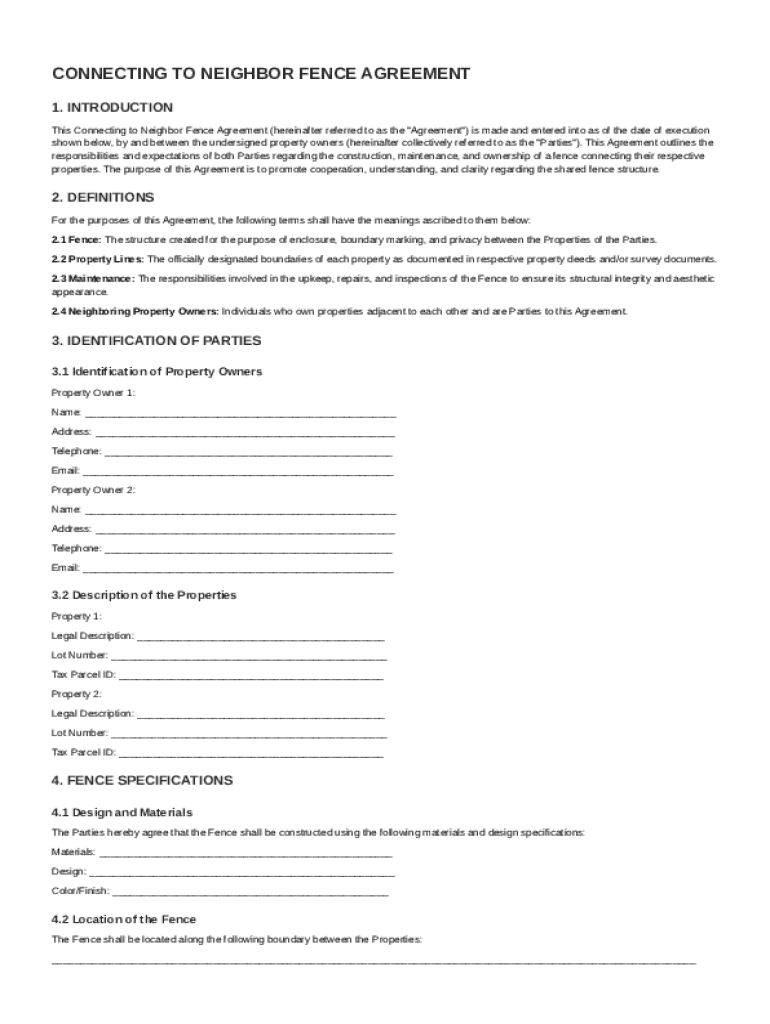
The Connecting to Neighbor Fence Agreement Template is a formal document designed to establish clear expectations between neighboring property owners regarding the construction and maintenance of a shared fence. This agreement typically includes specific responsibilities such as the allocation of financial contributions, ongoing maintenance duties, and ownership rights. By outlining these aspects, the template serves to prevent future disputes by providing an agreed set of rules and expectations.
Purpose and Scope
The main purpose of this template is to create a legally binding framework that promotes harmony and clarity between neighbors. The scope usually covers all aspects of the fence's lifecycle, from planning and installation to long-term upkeep. It specifies what each party is responsible for and can include provisions for addressing modifications or potential termination of the agreement.
Common Use Cases
It is often used in residential neighborhoods where properties share boundaries. The agreement helps manage shared responsibilities and is particularly beneficial in situations where financial contributions and division of labor need to be explicitly defined.
Key Elements of the Connecting to Neighbor Fence Agreement Template
The template incorporates several critical elements to ensure a thorough and effective agreement. These components typically include:
- Definitions: Clear definitions for terms used throughout the document.
- Specifications: Detailed descriptions of the fence materials, dimensions, and design.
- Financial Contributions: Provisions for how costs will be divided between the parties.
- Installation Responsibilities: An outline of who will handle the installation or the coordination of the construction process.
- Maintenance Obligations: Clear instructions for ongoing maintenance, including what happens in the event of damage.
- Dispute Resolution: Procedures for resolving disagreements that may arise regarding the fence.
- Modification and Termination: Conditions under which the agreement can be altered or terminated.
Signature Requirements
The agreement typically concludes with a section for signatures from both parties, along with any necessary witnesses, to affirm the agreement's legality.
Steps to Complete the Connecting to Neighbor Fence Agreement Template
Completing this template involves several structured steps:
- Review Definitions: Ensure all terms are clearly understood by both parties.
- Negotiate Terms: Discuss and agree upon key elements, such as financial contributions and maintenance roles.
- Draft the Agreement: Fill out the template with specific details agreed upon during negotiations.
- Review and Revise: Both parties should review the draft to ensure accuracy and fairness.
- Sign the Agreement: Once reviewed, both parties and any witnesses should sign to validate the document.
Practical Tips
- Engage in open discussion to resolve any uncertainties before signing.
- Consult a legal professional if there are concerns about the wording or implications.
Who Typically Uses the Connecting to Neighbor Fence Agreement Template
The primary users of this agreement template are residential property owners who share boundary lines with their neighbors. This includes:
- Homeowners: Seeking to establish clarity and shared responsibilities with adjoining property owners.
- Landlords: Utilizing the agreement to detail responsibilities with neighboring landlords or tenants.
- Homeowner Associations (HOAs): Sometimes they use such agreements to manage community fencing projects.


Extended Users
Occasionally, real estate agents or legal advisors might also utilize this form to assist clients in setting up clear guidelines for shared property features.
Why You Should Use the Connecting to Neighbor Fence Agreement Template
Utilizing this template provides several advantages:
- Clarity and Prevention of Disputes: Establishing clear guidelines helps prevent misunderstandings and potential conflicts.
- Legal Protection: A properly drafted agreement can serve as evidence in disputes, providing legal leverage if required.
- Community Support: By participating in a mutual agreement, both parties demonstrate a willingness to cooperate, fostering good neighbor relations.
Legal Use of the Connecting to Neighbor Fence Agreement Template
This template is structured to be legally sound, but its effectiveness depends on the adherence to specific legal standards:
Compliance Requirements
- Ensure the agreement complies with local zoning laws and property regulations.
- Verify that the installation specifications meet any municipal codes.
Legal Counsel
Consulting with a legal professional can ensure that the agreement is robust and legally enforceable, especially when complex disputes are anticipated.
State-Specific Rules for the Connecting to Neighbor Fence Agreement Template
While the template provides a general framework, specific rules and regulations vary by state:
- Local Regulations: Each state may have unique laws regarding fence height, materials, and boundary line stipulations.
- Zoning Laws: Certain areas may impose restrictions on fence construction impacting the agreement's terms.
- Permit Requirements: Check if permits are required for installation to avoid compliance issues.
Examples of State Requirements
In states like California, there are specific codes regarding boundary fences, such as the Good Neighbor Fence Act, which might require additional provisions in the template.
Examples of Using the Connecting to Neighbor Fence Agreement Template
Real-world scenarios can illustrate how this template serves property owners:
- Case Study 1: A suburban neighborhood uses the template to agree on a uniform fence design that adds value and aesthetic appeal to all adjoining properties.
- Case Study 2: Rural property owners draft an agreement to split costs fairly, ensuring both parties share equally in the benefits and responsibilities of the shared boundary fence.
Potential Challenges
- If one party is uncooperative, consultation or mediation might be necessary to arrive at a mutually beneficial agreement.
Important Terms Related to Connecting to Neighbor Fence Agreement Template
Understanding key terms is essential for effectively using the agreement template:
- Boundary Line: The precise line where the fence will be constructed.
- Easement: A legal right to use another's property for a specific purpose, which might affect fence placement.
- Encroachment: Unauthorized intrusion of the fence onto neighboring property, which must be avoided.
Definitions in Detail
- Shared Maintenance: Defined as joint responsibility for fence upkeep, ensuring both parties contribute to repairs and maintenance equally.
By harnessing the structure and comprehensive nature of the Connecting to Neighbor Fence Agreement Template, neighbors can efficiently manage shared responsibilities, reducing the potential for disputes and fostering a cooperative living environment.