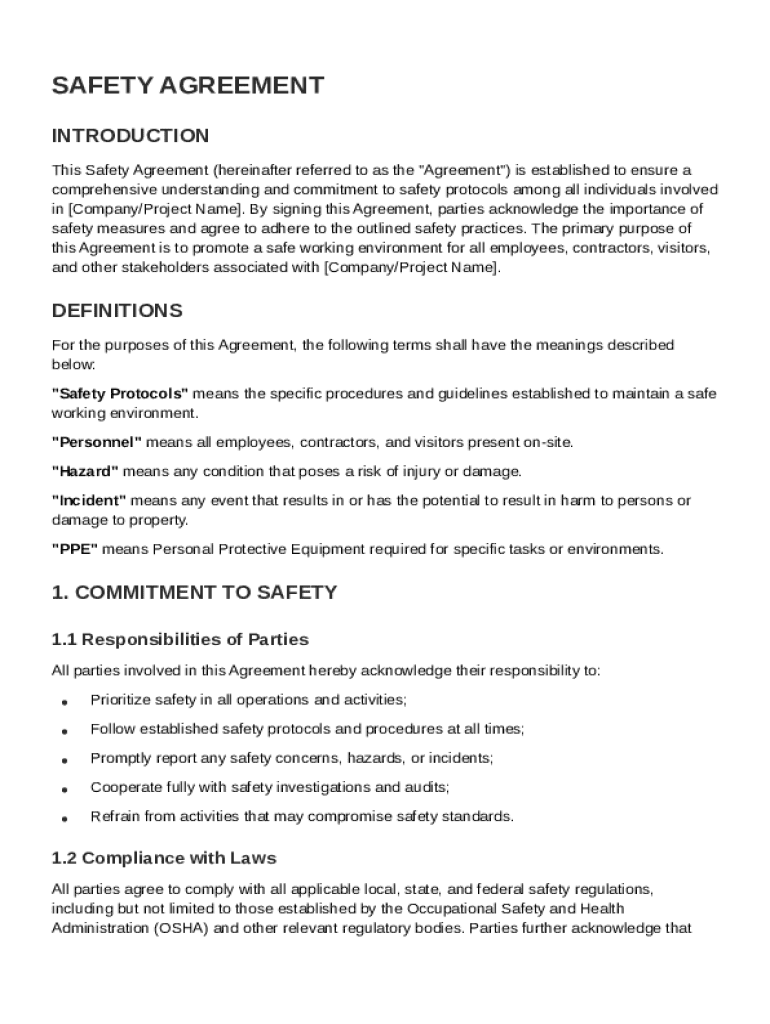







Definition and Purpose of the Safety Agreement Template
The Safety Agreement Template is an essential document designed to outline commitments and responsibilities related to maintaining safety within a workplace or project environment. The primary goal of this agreement is to ensure that all participants, whether individuals or organizations, adhere to established safety protocols. The template provides a comprehensive framework to define key safety terms, delineate responsibilities, and establish procedures that must be followed to maintain a secure environment.
The agreement encompasses a range of elements, such as compliance with relevant safety laws, mandatory training for personnel, and systematic procedures for incident reporting and safety equipment maintenance. By setting clear expectations and defining roles, the Safety Agreement Template promotes a culture of safety and accountability among all involved parties.
How to Use the Safety Agreement Template
Employing the Safety Agreement Template effectively requires understanding its structure and filling it out accurately. Begin by reviewing the entire template to grasp the breadth of obligations it encompasses. The document typically includes sections for defining key roles, responsibilities, and procedures that need to be tailored to fit the specific context of your company or project.
These steps will guide you through using the template:
- Customize Company Details: Start by inputting your organization's name, address, and the specific project or department the agreement pertains to.
- Define Roles and Responsibilities: Clearly state the responsibilities of each party involved, including management, employees, and any third-party contractors.
- Establish Safety Procedures: Detail specific safety procedures, including how incidents should be reported and what steps will be taken following any safety breach.
- Communicate the Agreement: Distribute the completed document to all stakeholders and ensure that it is understood and acknowledged.
Key Elements of the Safety Agreement Template
A well-crafted Safety Agreement Template includes several critical components, each serving a distinct purpose:
- Introduction: A brief overview of the agreement's objectives and scope.
- Definitions: An explanation of key terms and jargon used in the agreement to ensure all parties have a common understanding.
- Safety Protocol Compliance: A commitment to adhere to applicable safety laws and regulations.
- Roles and Responsibilities: Clear delineation of who is responsible for what aspect of safety.
- Training Requirements: Details on necessary safety training and education for personnel.
- Incident Reporting: Procedures for reporting and addressing safety incidents.
- Equipment Maintenance: Guidelines for the maintenance and inspection of safety equipment.
- Audit and Evaluation: Methods for conducting safety audits and evaluating compliance.
Steps to Complete the Safety Agreement Template
Completing the Safety Agreement Template involves several straightforward steps to ensure comprehensive protection and compliance:
- Review Existing Safety Laws: Before filling out the template, familiarize yourself with relevant safety laws and industry standards to ensure alignment.
- Gather Input from Stakeholders: Engage with individuals responsible for safety measures to incorporate their insights and recommendations into the agreement.
- Complete Each Section: Follow the prompts within the template, ensuring each section is customized to reflect the specific context of your organization or project.
- Consult Legal Counsel: Consider consulting with legal advisors to review the document for compliance and completeness.
- Share and Sign Off: Distribute the completed agreement to all affected parties for review and signature.
Legal Considerations in the Safety Agreement Template
The Safety Agreement Template plays a pivotal role in legal compliance and protection. It serves as a formal, legally binding document that can be referenced in case of disputes or incidents related to safety. Ensuring the agreement is comprehensive and meets all applicable local and federal safety regulations is crucial.
Key legal aspects to consider:
- Compliance with Safety Laws: Ensure the agreement reflects all current laws and industry standards.
- Amendment Provisions: Include a section on how the agreement can be amended or updated to reflect changing laws or procedures.
- Binding Nature: The document should clearly state its binding nature and the consequences of non-compliance.
- Dispute Resolution: Outline methods for resolving any disputes arising from the agreement's implementation.
Examples of Using the Safety Agreement Template
Utilizing this template can vary depending on the industry and specific company needs:
- Construction: Provides a structure for documenting safety protocols in construction sites, focusing on heavy machinery and personal protective equipment.
- Manufacturing: Addresses regulations regarding the handling of hazardous materials and machinery operation.
- Healthcare: Enforces standards for managing biological hazards and ensuring staff are trained in emergency procedures.
- Office Environment: Includes guidelines for fire safety drills and ergonomic workstation assessments.
State-Specific Rules for Safety Agreement Templates
While a Safety Agreement Template provides a baseline, it's important to customize it based on state-specific regulations. Variations may exist in safety protocols that organizations must adhere to, depending on local legislation.
- California: Requires stricter regulations regarding chemical exposure and mandatory reporting of injuries.
- New York: Emphasizes rigorous training programs, especially in industries deemed high-risk.
- Texas: Offers specific guidelines for oil and gas industries reflecting local environmental conditions.
- Illinois: Mandates comprehensive workplace violence prevention procedures in certain sectors, like healthcare.
Important Terms Related to the Safety Agreement Template
Understanding the terminology within the Safety Agreement Template ensures clarity and consistency:
- "OSHA Compliance": Refers to adherence to standards set by the Occupational Safety and Health Administration.
- "PPE": Personal Protective Equipment required for certain work environments.
- "MSDS": Material Safety Data Sheets, essential for businesses dealing with chemicals.
- "Risk Assessment": The process of identifying and evaluating potential hazards.
These terms help establish a mutual understanding of safety requirements across all stakeholders involved with the agreement.