






Definition and Meaning of a Commitment Agreement Template
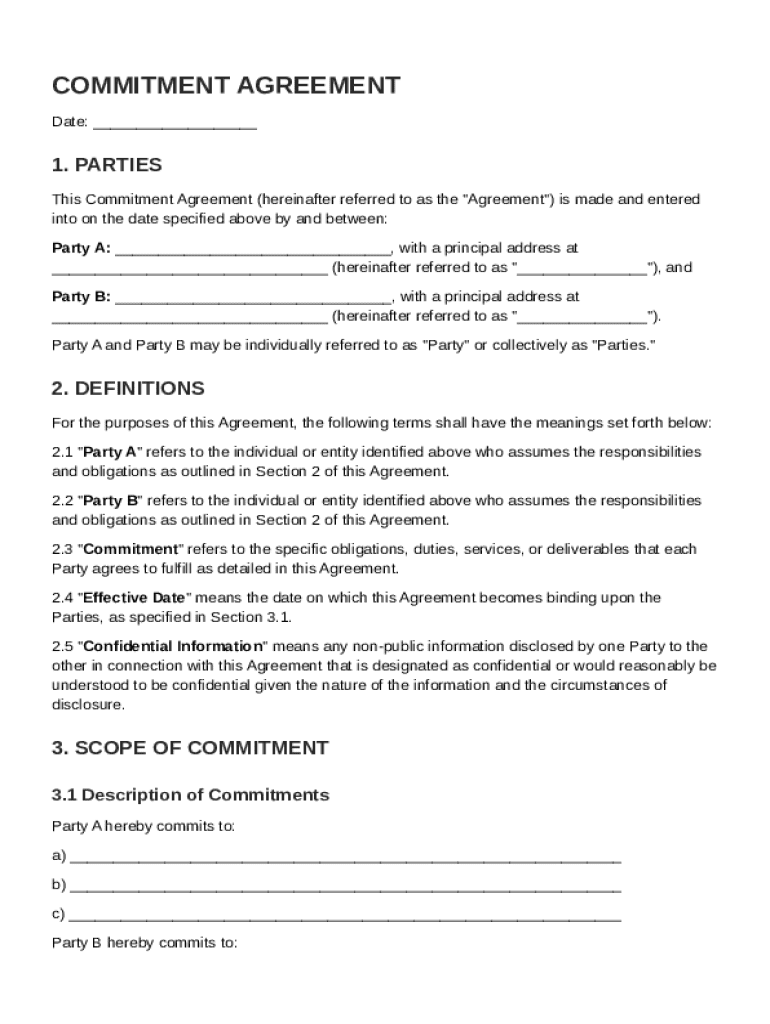
A Commitment Agreement Template is a structured document designed to outline the responsibilities, obligations, and expectations of the involved parties, often referred to as Party A and Party B. This agreement serves as a formal contract that details the scope of commitments each party agrees to undertake. The document typically includes sections defining key terms, performance standards, compensation arrangements, confidentiality clauses, and termination conditions. These components collectively establish a clear framework for cooperation and help mitigate misunderstandings, making them especially valuable in business transactions and collaborative projects.
Key Components of the Agreement
- Scope of Commitments: Clearly defines what each party is responsible for delivering.
- Performance Standards: Establishes the quality and metrics by which performance will be measured.
- Compensation Terms: Details the financial arrangements, including payment schedules and penalties for non-compliance.
- Confidentiality Obligations: Outlines how proprietary information will be protected and limits on disclosure.
- Termination Conditions: Specifies the conditions under which the agreement can be terminated, ensuring both parties are aware of their rights and obligations should they wish to end the contract.
How to Use the Commitment Agreement Template
The template is designed to streamline the creation of binding agreements by providing a ready-to-use format that parties can customize to fit their specific needs. Users should begin by thoroughly reading through the template to understand its structure. Next, each section should be tailored to reflect the unique terms and conditions relevant to the agreement at hand. It's crucial to ensure that all parties have a clear understanding of each section before proceeding to signatures.
Steps for Customization
- Identify Parties: Clear identification of Party A and Party B, including full legal names and contact information.
- Define Terms: Replace placeholders with specific terms and conditions pertinent to the agreement.
- Review Legal Clauses: Ensure all legal aspects comply with jurisdictional requirements by consulting legal professionals if necessary.
- Finalize and Sign: Once all details are finalized, obtain signatures from all parties to enforce the contract legally.
Key Elements of the Commitment Agreement Template
Several core elements are crucial for creating an effective Commitment Agreement. These elements serve as the backbone of the document, ensuring clarity and enforceability.
Detailed Elements
- Definitions Section: Provides clear explanations of key terms and concepts used throughout the agreement.
- Performance Metrics: Includes criteria for evaluating the delivery and quality of the commitments outlined.
- Timelines: Specifies deadlines and schedules for each commitment to avoid disputes related to delays or scheduling conflicts.
- Modification Procedure: Describes the process for amending the agreement, ensuring that all parties consent to any changes.
Important Terms Related to the Commitment Agreement Template
Understanding certain legal and business terms is critical when working with a Commitment Agreement Template. These terms often appear throughout the document and define critical components of the contractual relationship.
Commonly Used Terms
- Obligor: A party who is legally bound to fulfill certain obligations under the agreement.
- Mutual Indemnity: This clause protects each party from financial loss due to the other party's negligence or breach of contract.
- Force Majeure: Outlines circumstances beyond control such as natural disasters or political unrest that can excuse performance delays.
- Arbitration: Refers to a method of resolving disputes outside of court, which is often stipulated in the agreement as the preferred resolution process.
Steps to Complete the Commitment Agreement Template
Completing a Commitment Agreement Template is a systematic process that involves careful attention to detail. This ensures each section properly reflects the intentions of the parties involved.
Detailed Completion Process
- Gather Information: Collect all necessary information, including contact details and specific commitments.
- Fill Template: Carefully input all gathered data into the template, ensuring accuracy.
- Consultation: If uncertain about any section, consult with legal professionals for advice and clarity.
- Review: Conduct a thorough review of the completed template to identify and correct any errors or inconsistencies.
- Execution: All parties should sign the document in the presence of a witness or notary, if required, to formalize the agreement.
Legal Use of the Commitment Agreement Template
Compliance with relevant legal standards is essential when using a Commitment Agreement Template. These agreements must adhere to applicable laws to ensure they are enforceable in a court of law.
Legal Considerations
- Jurisdiction: Clearly state which legal jurisdiction governs the agreement to avoid jurisdictional disputes.
- Compliance: Verify that the agreement complies with state and federal laws, especially regarding consumer protection and fair practices.
- Legally Binding Signatures: Ensure that all signatures are obtained lawfully, adhering to any state-specific signing requirements.
- Document Retention: Keep copies of the signed agreement in both physical and digital formats for record-keeping and future reference.
Who Typically Uses the Commitment Agreement Template
A wide range of individuals and organizations utilize Commitment Agreement Templates to formalize projects and collaborations. These agreements are suited for both business entities and personal commitments where mutual obligations are essential.


Typical Users
- Small and Medium Enterprises (SMEs): Use templates to formalize partnerships and supplier agreements.
- Freelancers and Consultants: Often use these agreements to clarify project terms and expectations with clients.
- Nonprofits: Utilize agreements to define partnerships with donors or partner organizations.
- Individuals: May use templates for personal arrangements, such as joint ventures or shared investments.
Common Scenarios
- Supplier Contracts: Ensures clarity on delivery expectations, pricing, and quality standards.
- Partnership Agreements: Establishes roles, responsibilities, and profit-sharing among business partners.
- Project Collaborations: Defines contributions and responsibilities for each team member in joint ventures.