
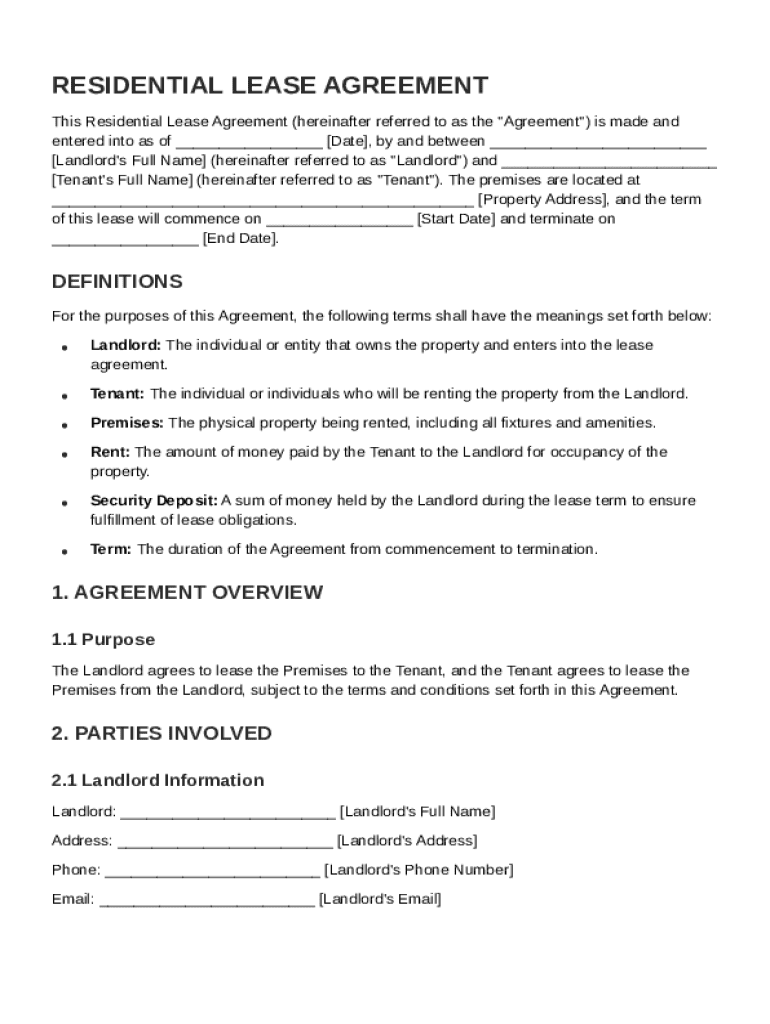







Definition and Purpose of Residential Agreement Template
A Residential Agreement Template serves as a standardized framework used to define the terms and conditions of a lease between a landlord and a tenant. This document lays out the rights and obligations of both parties and ensures mutual understanding. It includes the identification of the property, details of the lease term, rental payment terms, security deposit conditions, maintenance expectations, and much more. This template helps streamline the leasing process by providing a structured format that simplifies complex legal language into comprehensible terms.
How to Use the Residential Agreement Template
When using a Residential Agreement Template, it is crucial to tailor it to the specific circumstances of the lease. This involves personalizing basic information such as the names of the landlord and tenant, the property address, and the agreed-upon rent. Users should review each section carefully to ensure it accurately reflects the conditions they wish to enforce. Additionally, both parties should seek to understand the obligations outlined before signing.
- Adapt the template: Customize key details to reflect individual agreements.
- Review terms: Ensure all conditions, such as maintenance responsibilities and payment methods, are clearly defined.
- Confirm understanding: Both parties should agree on and understand every clause.
Key Elements of the Residential Agreement Template
The effectiveness of a Residential Agreement lies in its comprehensive nature. Key elements that should be present include:
- Parties Involved: Identifies the landlord and tenant, establishing the legal entities entering the agreement.
- Property Description: Details the address and specifics of the rental unit.
- Lease Term: Specifies the duration of the tenancy, including start and end dates.
- Payment Terms: Outlines the monthly rent amount, due date, and acceptable payment methods.
- Security Deposit: Details regarding the amount required, its use, and conditions for its return.
- Maintenance Obligations: Clarification of responsibilities regarding property upkeep and repair.
- Termination Conditions: Circumstances under which the lease may be terminated prematurely.
Legal Use of the Residential Agreement Template
In the United States, Residential Agreements must comply with state and federal laws, ensuring all clauses are enforceable. It is crucial for the agreement to abide by the Fair Housing Act, which prohibits discrimination based on race, color, national origin, religion, sex, familial status, or disability. Legal enforceability requires that the agreement avoids infringing any state-specific landlord-tenant laws, which can vary significantly.
- Ensure compliance: Check alignment with state tenancy laws and federal regulations.
- Avoid discriminatory practices: Adhere to Fair Housing Act prohibitions.
Steps to Complete the Residential Agreement Template
Completing a Residential Agreement Template requires careful attention to detail. Here are the steps involved:
- Download the Template: Obtain the form from a trusted source such as DocHub.
- Input Details: Fill in the landlord's and tenant's names and contact information.
- Describe Property: Accurately document the rental property's address and features.
- Define Lease Terms: Insert the lease start and end date clearly.
- Specify Rent: Include the rent amount and payment details.
- Set Security Deposit: State the deposit amount and return conditions.
- Clarify Responsibilities: Specify maintenance duties and other tenant obligations.
- Finalize and Sign: Both parties should review, agree on all terms, and sign the document.
Important Terms Related to Residential Agreement Template
Understanding key legal terms associated with a Residential Agreement Template is essential for both landlords and tenants. Examples include:
- Lease: A contractual agreement where the landlord permits the tenant to use the property for a specific period.
- Rent: The payment made by the tenant to the landlord for using the property.
- Security Deposit: A sum paid by the tenant as security for performing obligations under the lease.
- Default: Failure by either party to fulfill the contractual terms.
- Eviction: The legal process by which a landlord removes a tenant from the property for breaching the agreement.
State-Specific Rules for the Residential Agreement Template
The Residential Agreement Template should consider state-specific laws affecting lease agreements. While the general structure of a lease is consistent nationwide, variations exist:
- Security Deposit Laws: States differ in their maximum allowable security deposit amounts and return timelines.
- Lease Terminations: Notice periods required for terminating a lease vary by state.
- Rent Control: Certain states have laws limiting the amount rent can increase during a lease.
Examples of Using the Residential Agreement Template
Real-world applications of a Residential Agreement Template include various scenarios:
- New Tenancy: A first-time renter signs a lease, ensuring protection of their rights under the agreement.
- Lease Renewal: An existing tenant and landlord may use the template to adjust terms and extend the lease period.
- Roommates: Multiple tenants sharing a property may create a joint lease agreement outlining shared and individual responsibilities.
By providing detailed, structured, and legally compliant content, the Residential Agreement Template enhances clarity and provides a secure foundation for landlord-tenant relationships.


