






Key Elements of the Carrier Agreement Template
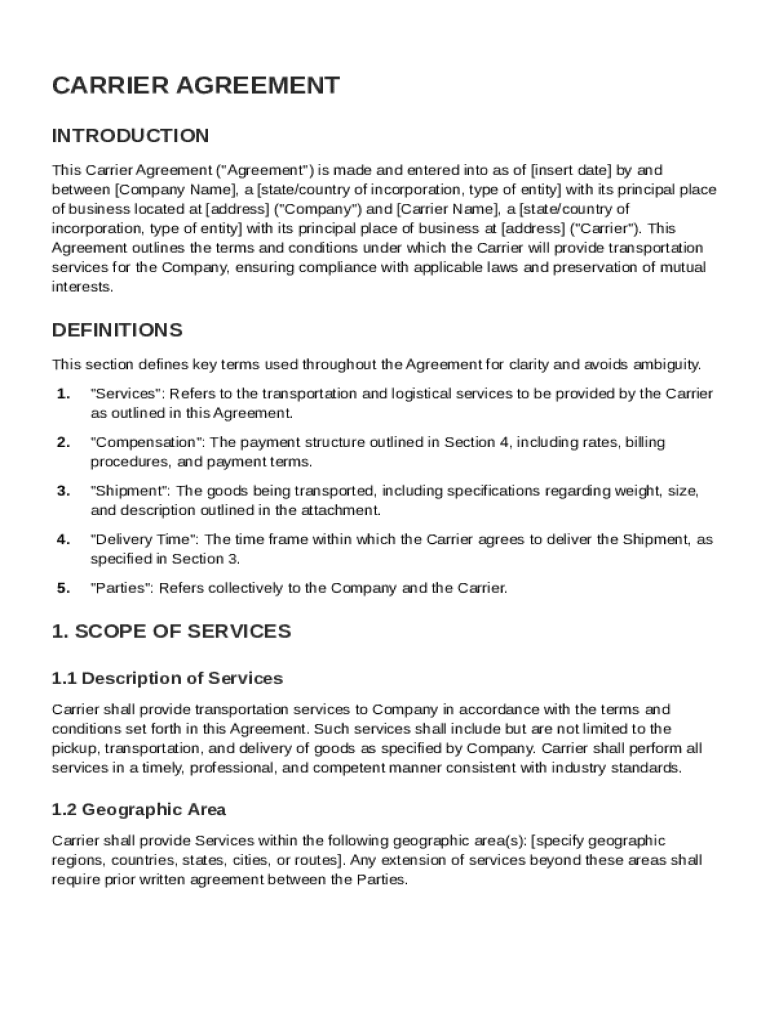
The Carrier Agreement Template is a comprehensive document that outlines the essential aspects of a contractual relationship between a Carrier and a Company. The template includes specific sections that detail the terms and conditions of service provision.
-
Scope of Services: This section clearly defines the transportation services that the Carrier is obligated to provide. It outlines the geographical area of operation, types of goods transported, and any limitations on services.
-
Responsibilities of the Carrier: Describes the duties and obligations of the Carrier, including maintaining vehicles, ensuring timely delivery, and complying with all applicable laws and regulations.
-
Compensation Details: Provides a detailed breakdown of how and when the Carrier will be paid. It might include base rates, fuel surcharges, and payment schedules.
-
Liability and Indemnification: Covers the Carrier’s liability for loss or damage to goods and any indemnity provisions protecting the Company from third-party claims related to the Carrier’s operations.
-
Confidentiality: Ensures that any sensitive information exchanged between the parties remains protected, outlining obligations and penalties for breaches of confidentiality.
-
Dispute Resolution: Describes the methods employed for resolving any disagreements, which could include mediation, arbitration, or litigation.
Legal Use of the Carrier Agreement Template
The Carrier Agreement Template is legally binding and complies with relevant transportation laws within the United States. It ensures that all operations conducted under its terms are lawful and have clear guidelines for compliance.
-
Compliance with Laws: The agreement mandates adherence to federal, state, and local regulations governing transportation safety, labor laws, and environmental standards.
-
Performance Standards: Sets specific standards that the Carrier must meet, which can include delivery timelines, cargo safety requirements, and customer service expectations.
-
Insurance Requirements: Requires the Carrier to maintain insurance coverage as specified within the template, protecting both parties from financial repercussions due to unforeseen incidents.
-
Procedures for Invoicing and Payment: Details precise procedures for the submission of invoices and receipt of payments, ensuring transparency and accountability with financial transactions.
Steps to Complete the Carrier Agreement Template
Filling out the Carrier Agreement Template involves several crucial steps to ensure all details are accurately captured and legally sound.
-
Gather Information: Collect all necessary information, including service details, Carrier qualifications, and financial terms.
-
Insert Key Terms: Enter specific terms into the template, such as scope of services, payment details, and delivery timelines.
-
Review Legal Clauses: Examine clauses on liability, indemnification, and confidentiality to ensure alignment with company policies and legal advice.
-
Define Dispute Resolution Mechanism: Choose and specify the preferred method for resolving disputes, which may include mediation or arbitration.
-
Finalize and Sign: Once all sections are complete and reviewed by legal counsel, finalize the document with signatures from authorized representatives of both parties.
Who Typically Uses the Carrier Agreement Template
A diverse range of businesses and individuals utilize the Carrier Agreement Template.
-
Logistics Companies: To establish contractual terms with independent transport providers.
-
E-commerce Businesses: Ensuring reliable delivery services for goods sold online.
-
Manufacturing Companies: To manage the shipment of raw materials and finished products.
-
Freight Brokers: For arranging transportation services with multiple carriers under unified agreements.


Why You Should Use the Carrier Agreement Template
Utilizing a Carrier Agreement Template offers several significant advantages.
-
Clarifies Expectations: It sets clear expectations for both parties regarding services, timelines, and responsibilities, reducing misunderstandings.
-
Legal Protection: Provides legal coverage for both parties, clarifying liability issues and protecting confidential business information.
-
Efficient Dispute Resolution: The template includes pre-defined dispute resolution mechanisms, thus minimizing potential conflicts.
-
Facilitates Compliance: Ensures all operations are compliant with relevant laws, thus protecting businesses from legal penalties and issues.
Important Terms Related to the Carrier Agreement Template
Understanding key terminology is crucial for interpreting the Carrier Agreement Template effectively.
-
Carrier: Refers to the individual or company providing transportation services for goods.
-
Consignor: The party that gives goods to the carrier for transport.
-
Indemnification: A contractual obligation to compensate for any losses or damages incurred.
-
Bill of Lading: A document issued by a carrier acknowledging the receipt of cargo for shipment.
State-Specific Rules for the Carrier Agreement Template
While the Carrier Agreement Template provides a generalized framework, some states may have specific rules that affect its implementation.
-
Licensing Requirements: Some states may require additional permits or licenses for carriers.
-
Insurance Regulations: State-specific insurance requirements may dictate different coverage levels.
-
Special Transit Laws: Certain states might impose specific restrictions or conditions on goods in transit, affecting how agreements are structured and executed.
Understanding these state-specific considerations is essential for tailoring agreements to comply fully with local regulations.
Digital vs. Paper Version
Deciding between a digital or paper version of the Carrier Agreement Template depends on efficiency and preferences.
-
Digital Advantages: Easier to edit, share, and store securely online. Real-time collaboration features allow multiple users to make changes simultaneously.
-
Paper Benefits: Useful for situations where digital access is limited or where signatures via ink are required for legal validation.
-
Security: Digital versions offer enhanced security features, such as password protection and encryption, reducing risks associated with physical document handling.
Understanding the pros and cons of each version can aid in making an informed decision about which format best suits the operational needs of the business.