






Definition & Meaning
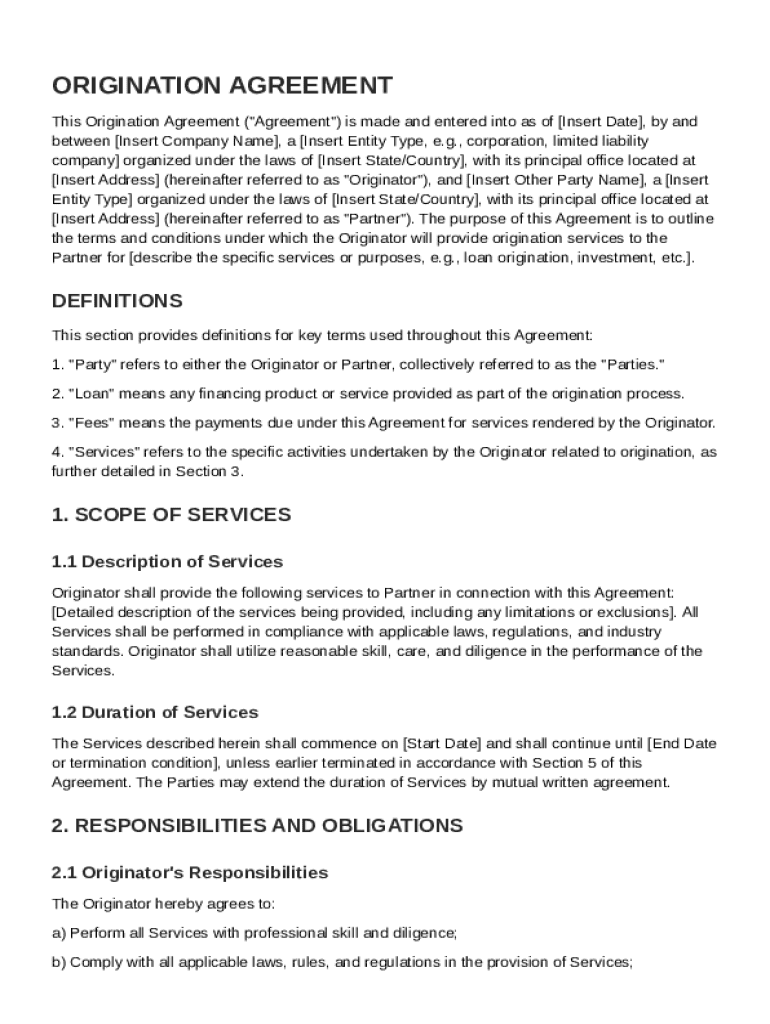
An Origination Agreement Template outlines a formal contract between an Originator and a Partner, specifying the terms and conditions for the provision of origination services. Its primary purpose is to establish a clear framework for collaboration, ensuring all parties understand their roles, responsibilities, and compensation guidelines. This template typically includes details about scope of services, confidentiality terms, compensation structures, termination clauses, and methods for dispute resolution. Its legal foundation is designed to ensure compliance with applicable laws while protecting confidential information.
Key Elements of the Origination Agreement Template
A well-structured Origination Agreement Template encompasses several essential elements, each serving a specific purpose:
- Definitions: Clarifying important terms used within the agreement to prevent misunderstandings.
- Scope of Services: Detailing the specific services that will be performed by the Originator.
- Responsibilities: Enumerating each party’s duties, ensuring that both parties understand their obligations.
- Compensation: Outlining how and when payments will be made, including any milestones or performance-based criteria.
- Confidentiality: Establishing the parameters for protecting sensitive information exchanged between parties.
- Termination Clauses: Providing the circumstances under which the agreement can be terminated and the procedures for doing so.
- Indemnification and Liability Limitations: Defining the extent of each party's liability and indemnification responsibilities, minimizing potential legal disputes.
Steps to Complete the Origination Agreement Template
Completing an Origination Agreement Template involves several methodical steps, ensuring all critical aspects are addressed effectively.
- Identify Parties: Clearly list the names and contact details of all parties involved.
- Define Terms: Include clear definitions as per the standard format to avoid ambiguity.
- Outline Scope of Services: Provide a comprehensive description of the services and processes involved.
- Set Compensation Standards: Specify the payment terms, including fixed costs, variable commissions, and payment schedules.
- Confidentiality and Security Clauses: Define measures for maintaining confidentiality and safeguarding data.
- Draft Termination Criteria: Establish the conditions under which the agreement can be terminated by either party.
- Review and Finalize: Ensure all sections are accurate and complete before signing, seeking legal advice if required.
How to Use the Origination Agreement Template
Using an Origination Agreement Template simplifies the process of crafting a comprehensive and legally sound contract. The template provides a structured format, ensuring every key component is included. Begin by filling out party details, followed by precise definitions and the scope of work. Each section is designed to be customizable, allowing users to adapt the template to their specific needs while ensuring compliance with legal standards. This makes drafting, negotiating, and finalizing an origination agreement efficient and straightforward.
Important Terms Related to Origination Agreement Template
Understanding specific terminology is crucial when dealing with an Origination Agreement Template:
- Originator: The entity or individual responsible for creating and providing the origination services.
- Partner: The counterparty that collaborates with the Originator to receive services.
- Confidential Information: Data that is deemed proprietary and is protected under confidentiality clauses.
- Governing Law: The legal jurisdiction that applies to the agreement, influencing how disputes are resolved.
- Indemnification: A commitment by one party to cover potential losses or damages incurred by another party.
Legal Use of the Origination Agreement Template
This template serves as a legally binding document once signed by all parties involved. Its legal enforceability depends on its compliance with applicable laws and inclusion of obligatory clauses like confidentiality, indemnification, and termination. Using this template helps ensure that all legal standards are met, protecting each party's interests, and providing clear methods for dispute resolution. For legal accuracy, it may also necessitate review by a legal expert, especially when complex transactions are involved.
Examples of Using the Origination Agreement Template
Real-world scenarios demonstrate the utility of the Origination Agreement Template:
- Financial Services: A bank might use the template when partnering with an independent mortgage broker to define mutual responsibilities and compensation structures.
- Technology Sector: Software companies could adopt this template when collaborating with resellers or distribution partners, clearly outlining service levels and confidentiality standards.
Business Types that Benefit Most from the Origination Agreement Template
Various business models derive significant benefits from adopting an Origination Agreement Template:
- Financial Institutions: Banks and lending entities engaging brokers or independent agents for loan origination.
- Consultancy Firms: Organizations outsourcing origination operations to streamline processes and enhance productivity.
- Real Estate: Companies involved in property sales and leasing that require clarity in roles and fee structures.
State-Specific Rules for the Origination Agreement Template
Depending on the location, there might be certain state-specific regulations that affect the Origination Agreement Template. Different states might have varying requirements concerning confidentiality, dispute resolution, and governing law. Entities operating across multiple states may require modifications to the template to accommodate these regulatory differences, ensuring the agreement remains legally valid in every jurisdiction where it is applied. Consulting with legal professionals familiar with state laws is advisable to ensure comprehensive compliance.