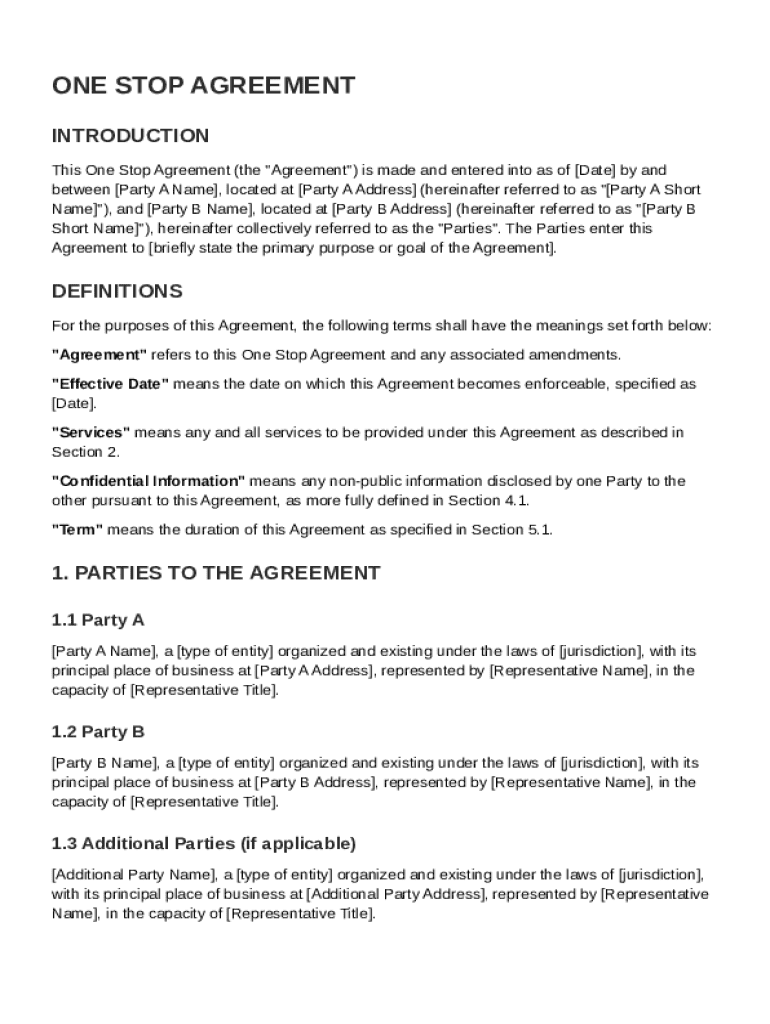







Definition & Meaning
The One Stop Agreement Template is a legally binding contract commonly used between two parties to outline terms and conditions for specific services or transactions. It serves as a comprehensive framework detailing various aspects like scope of work, responsibilities, compensation, confidentiality, and more. By setting clear expectations and requirements, this template ensures both parties are fully aware of their obligations, thereby reducing the potential for disputes.
Key Aspects of the Template
- Scope of Services: Clearly defines what services will be provided by each party.
- Compensation Details: Includes terms of payment, rates, and billing schedules.
- Confidentiality Obligations: Outlines how confidential information should be handled.
- Termination Conditions: Explains how and when the agreement can be terminated.
- Governing Law: Specifies the legal jurisdiction that governs the agreement.
- Dispute Resolution: Details methods for resolving any disagreements that may arise.
How to Use the One Stop Agreement Template
The One Stop Agreement Template is straightforward to use but requires precise filling to ensure its legal efficacy. Understanding how to use it appropriately is vital for successful negotiations and operations.
Step-by-Step Instructions
- Review the Template: Carefully read the entire document to understand its structure and provisions.
- Fill in Required Sections: Accurately input relevant information such as names, dates, and service specifications.
- Customize Provisions: Tailor specific clauses to suit unique requirements of the agreement.
- Review with Legal Counsel: Consult a lawyer to ensure all legal aspects are appropriately addressed.
- Sign and Execute: After thorough review, both parties should sign the document to make it legally binding.
Key Elements of the One Stop Agreement Template
Understanding the key elements within the One Stop Agreement Template is crucial for its proper application and to ensure it covers all necessary legal bases.
Main Components
- Parties Involved: Clearly list all involved parties and their respective roles.
- Definitions: Provide clear definitions for terms and phrases used throughout the agreement.
- Performance Obligations: Detail the specific duties and obligations each party must fulfill.
- Liabilities: Identify the liabilities each party holds if obligations are not met.
Important Terms Related to One Stop Agreement Template
Legal agreements like the One Stop Agreement Template contain various terms that are essential for clarity and enforceability.
Commonly Used Terms
- Indemnification: A provision where one party agrees to compensate the other for any losses or damages.
- Force Majeure: Circumstances beyond the control of the parties that can waive certain obligations temporarily.
- Non-disclosure Clause: A section that restricts the sharing of confidential information with third parties.
Legal Use of the One Stop Agreement Template
To ensure that the document is legally binding and enforceable, users must adhere to legal standards and practices.
Best Practices
- Compliance with State Laws: Ensure the agreement complies with state-specific legal requirements.
- Use Plain Language: Avoid complex legal jargon to maintain clarity.
- Regular Updates: Review and update the agreement regularly to reflect changes in legal standards or business needs.
Examples of Using the One Stop Agreement Template
Applying the One Stop Agreement Template in real-life scenarios can illustrate its flexibility and functionality across different contexts.
Practical Scenarios
- Business Services: Used between a company and contractor to outline project terms.
- Partnerships: Framework for joint ventures defining contributions and profit-sharing.
- Consulting Agreements: Details scope of consulting services and associated fees.
Who Typically Uses the One Stop Agreement Template
A variety of individuals and entities can benefit from using the One Stop Agreement Template due to its versatility and comprehensive coverage.


Common Users
- Small Business Owners: For drafting agreements with vendors and clients.
- Freelancers: To formalize project terms with clients.
- Corporations: As a standardized approach to enter consistent contracts with multiple parties.

State-Specific Rules for the One Stop Agreement Template
Different states may have unique legal requirements that affect the terms or execution of the One Stop Agreement Template.
Considerations by State
- Governing Law Clause: Ensure this clause aligns with local jurisdiction laws.
- State vs. Federal Regulations: Be aware of state-specific legal nuances that may supersede federal guidelines.
- Industry-Specific Regulations: Certain states might impose additional requirements based on industry.
By understanding and applying these comprehensive aspects of the One Stop Agreement Template, users can effectively navigate and utilize this legal form to facilitate their business or personal agreements.