Definition & Meaning
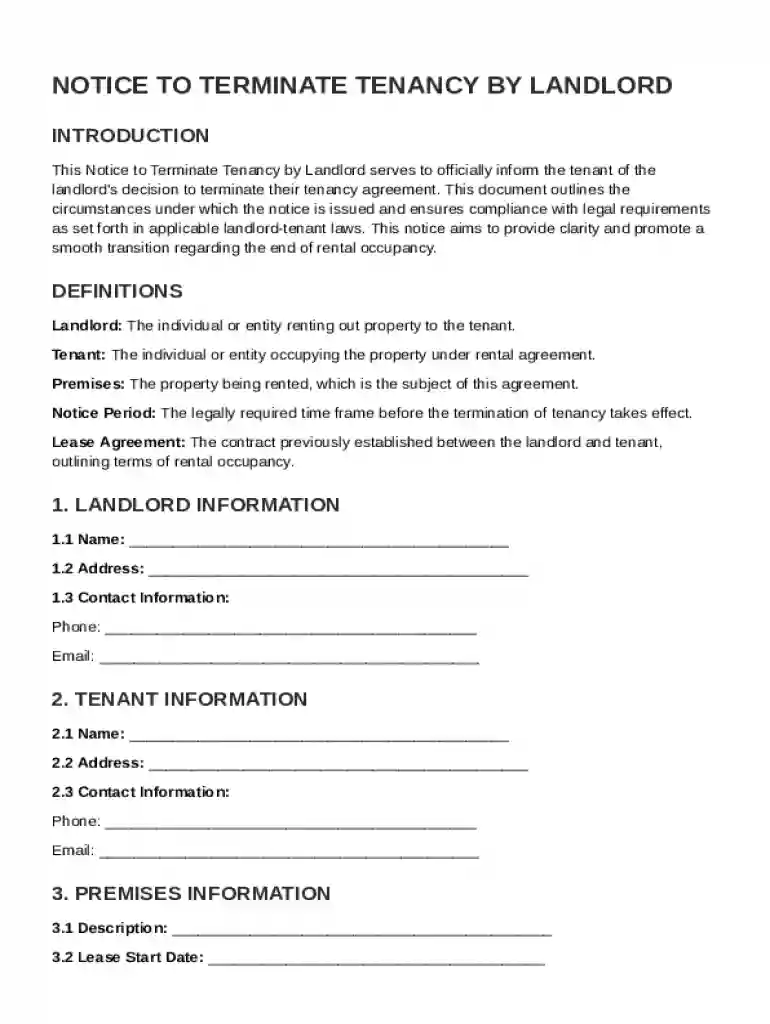
A "Notice to Terminate Tenancy By Landlord Agreement Template" is a formal document used by landlords to officially notify tenants of the decision to end a rental agreement. This template serves as a legal notice that outlines all necessary information such as the identities of both the landlord and the tenant, details of the premises, the reasons for termination, and the specific notice period required. It also guides both parties through the termination process, ensuring that the transition is smooth and compliant with legal standards.
Key Components of the Template
- Landlord and Tenant Information: This section includes the names and addresses of both parties involved in the rental agreement.
- Details of the Premises: Clearly describes the property being rented, including the address and any pertinent details.
- Termination Reason: Provides a valid reason for terminating the tenancy as required by law.
- Notice Period: Specifies the amount of notice that must be given to the tenant, which often varies depending on local laws.
- Move-Out Instructions: Guides the tenant on the steps to take upon leaving the property, such as cleaning and returning keys.
- Legal Compliance: Ensures that the process adheres to applicable laws, protecting both landlord and tenant rights.
How to Use the Notice to Terminate Tenancy By Landlord Agreement Template
Using the "Notice to Terminate Tenancy By Landlord Agreement Template" requires careful attention to detail to ensure legality and clarity.
Steps for Effective Use
- Personalize the Template: Fill in the specific details of your rental arrangement, including tenant and landlord information, the property address, and the termination date.
- State the Reason for Termination: Clearly outline the reason for ending the tenancy, whether it be due to a lease breach or other lawful reason.
- Determine the Notice Period: Research local laws to determine the legally required notice period, and ensure this is reflected in the document.
- Include Move-Out Details: Provide instructions for end-of-tenancy procedures, such as property cleaning and key return protocols.
- Review for Completeness and Compliance: Double-check that all sections are fully completed and that the notice complies with relevant rental laws.
- Deliver the Notice Properly: Decide on the method of delivery (mail, email, in-person) in accordance with any legal requirements for serving such notices.
Practical Examples
Example 1: A landlord needs to terminate a lease due to the tenant's failure to pay rent, and the local law requires a 14-day notice period. The landlord must cite this reason in the template and ensure the delivery at least 14 days before the termination date.
Example 2: If a landlord needs the property back for personal use, they must provide a legitimate reason recognized by law and determine the applicable notice period for such a cause in their jurisdiction.
Steps to Complete the Notice to Terminate Tenancy By Landlord Agreement Template
Completing this legal form involves several precise steps to ensure all mandatory information is properly accounted for.
Detailed Completion Process
- Gather Tenant Information: Collect the tenant's full name, current address, and contact information to include in the notice.
- Fill in Property Details: Include the full address of the rental property, including any unit or apartment number.
- Select Termination Reason: Choose a lawful basis for termination and support it with specific facts or incidents where applicable.
- Calculate Notice Period: Determine the specific timeframe by consulting local rental laws to ensure compliance in notice period requirements.
- Draft Move-Out Instructions: Clearly document any expectations regarding property condition or processes for vacating the premises.
- Review and Finalize the Document: Ensure accuracy in all entered information and that the document satisfies all legal conditions.
- Send the Notice: Follow legal guidelines for how notices must be delivered, whether by certified mail, direct handover, or another approved method.
Common Considerations
- Accuracy: Double-check for any errors in the names or addresses, as mistakes can void the notice.
- Legal Resources: Consult legal resources or professionals if unsure about any aspect of the notice to ensure compliance and prevent disputes.
Key Elements of the Notice to Terminate Tenancy By Landlord Agreement Template
Understanding the key elements of this template ensures the notice serves its intended legal purposes.
Essential Information
- Header Block: Includes the title of the notice and addresses of both parties.
- Date of Notice: The exact date on which the notice is issued to establish timing relative to the lease termination date.
- Termination Date: The specific date when the tenant must vacate the premises.
- Signature: A section for the landlord’s signature to validate the notice.
Important Legal Terms
- Breach of Lease: When a tenant fails to comply with lease terms, allowing for possible termination.
- Rent Control Laws: Specific regulations that may affect termination notices based on local jurisdiction rules.
State-Specific Rules for the Notice to Terminate Tenancy By Landlord Agreement Template
Different states have varying laws regarding lease terminations, and it is critical to understand these when drafting your notice.
Understanding Variability Across States
- California: Requires different notice periods based on the reason for termination with specific protections for tenants in rent-controlled areas.
- New York: May require longer notice periods in certain boroughs or for tenants who have occupied a residence for many years.
- Texas: Typically allows for shorter notice periods but has particular requirements if terminating due to property sale or renovation.
Tools for Compliance
- Legal Consultation: Engage an attorney to ensure adherence to state-specific regulations.
- Document Revisions: Always adjust the template to reflect changes in state rental laws or reforms.
Examples of Using the Notice to Terminate Tenancy By Landlord Agreement Template
This section outlines practical scenarios where this document can be effectively used to facilitate termination.
Typical Scenarios
- Lease Expiry: Notify tenants of the intention not to renew their lease, providing an appropriate notice period.
- Policy Violation: End tenancy due to continuous policy violations such as unauthorized subletting or pet policy breaches.
Real-World Cases
- Case Study: A landlord in Florida terminates the lease of a tenant who continually disregards noise regulations, having served multiple prior violation notices followed by a formal termination notice, ensuring all steps meet legal and procedural standards.
User Profiles
- Private Landlords: Individuals renting out single or multiple properties who need a structured method for ending tenancies legally.
- Property Managers: Professionals managing properties on behalf of owners, relying on standardized notices for procedural consistency.
- Real Estate Attorneys: Legal experts who assist landlords and property managers in ensuring compliance with housing laws.
Utility in Various Contexts
- Multi-Family Housing: Used within larger housing complexes where property managers handle frequent tenant turnover.
- Commercial Properties: Occasionally adapted for use in commercial rental agreements, although typically involving more complex legal terminology.
Legal Use of the Notice to Terminate Tenancy By Landlord Agreement Template
A vital aspect of using this template is ensuring its usage aligns with local and federal laws governing tenancy and eviction.
Legal Standards and Considerations
- Uniformity with Housing Laws: The notice must adhere to both federal and state housing regulations to be enforceable.
- Fair Housing Compliance: Prohibits discrimination in any termination notices based on race, color, national origin, religion, sex, familial status, or disability.
Legal Aid and Resources
- Tenant-Landlord Law Guides: Reference guides offered by state legal resources to assist landlords in understanding their rights and obligations.
- Government Websites: Access to specific state housing department sites that provide guidance and document samples.
State-by-State Differences
Understanding how termination processes differ across states ensures the notice’s legality and effectiveness.
Comparative Analysis
- Varying Notice Requirements: Some states require only 30 days notice for a month-to-month lease, whereas others might extend this period to 60 days under specific conditions.
- Legal Documentation: Documentation requirements, such as proof of delivery and receipt acknowledgment by the tenant, may also fluctuate based on state laws.
Adapting the Template
- Customization: Adjust the template dynamically to reflect differing requirements, including notice periods, acceptable reasons for termination, and the necessity for detailed tenant instructions.
Practical Considerations
- Local Attorney Consultation: Engaging a local attorney can help navigate the nuances specific to each state's regulatory environment for tenancy agreements.