
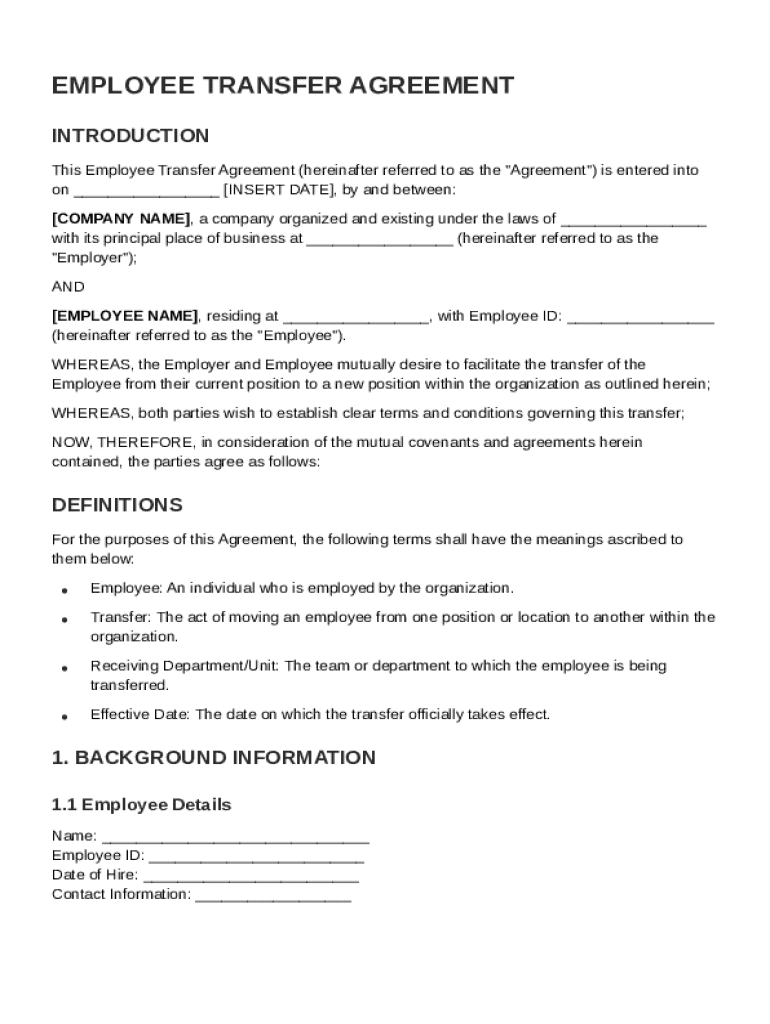







Definition and Meaning
An Employee Transfer Agreement Template is a formal document used by organizations to detail the terms and conditions of transferring an employee from one position or department to another within the same company. The agreement serves both as a guideline and an official record of the transfer, covering various aspects such as the employee’s new role responsibilities, effective dates, remuneration, and additional benefits. This template can be customized to fit the specific requirements of the company while ensuring that both the employer and employee have a clear understanding of the transfer's circumstances and outcomes.
How to Use the Employee Transfer Agreement Template
Utilizing the Employee Transfer Agreement Template involves a systematic approach to ensure all necessary elements are included and accurately reflect the terms of the transfer. Here are steps to follow:
-
Customizing the Template:
- Start with the company’s standard template to maintain consistency with organizational practices.
- Include employee-specific details such as name, current role, and new position title.
-
Filling Key Sections:
- Provide the reason for transfer, detailing organizational needs or employee development goals.
- Indicate effective transfer date and duration if it is temporary.
-
Review and Finalization:
- Engage both parties in reviewing the document for accuracy and completeness.
- Finalize the agreement by getting signatures from the employee, the HR manager, and possibly a departmental head.
This process ensures documentation is thorough and reduces potential misunderstandings.
Key Elements of the Employee Transfer Agreement Template
A comprehensive Employee Transfer Agreement Template includes several critical components:
-
Employee Information:
- Name, employee ID, and current department details must be clear.
-
Transfer Details:
- Specify the new role, responsibilities, and the start date of the transfer.
-
Compensation Adjustments:
- Outline any salary changes or additional benefits, such as relocation allowances.
-
Confidentiality Obligations:
- Reinforce the importance of maintaining confidentiality, especially when changing departments with different access levels to information.
-
Governing Laws:
- Include applicable laws and jurisdiction in case of contractual disputes.
Each element ensures that the interests of both employee and employer are protected and understood.
Steps to Complete the Employee Transfer Agreement Template
Completing the Employee Transfer Agreement Template requires attention to detail to ensure all necessary areas are covered:
-
Gather Necessary Information:
- Prior to filling out the form, gather all relevant personal and employment information about the employee.
-
Fill in Basic Details:
- Enter personal information and current job title.
-
Define Terms and Conditions:
- Clearly describe the new role, effective dates, reasons for the transfer, and any mutual agreements reached during negotiation.
-
Review & Approvals:
- Both HR and the employee should review the document to find discrepancies.
- Acquire signatures to formalize the agreement.
Completing these steps thoroughly ensures that the document is valid and enforceable.
Legal Use of the Employee Transfer Agreement Template
The Employee Transfer Agreement Template is legally binding when properly executed. It ensures that all parties involved understand their rights and obligations in the transfer process. Compliance with state employment laws is crucial to create legally enforceable agreements. Clauses formatted in accordance with the ESIGN Act allow for electronic signatures, adding convenience while ensuring legal validity. Organizations can consult legal counsel to ensure all agreements are compliant with federal and state laws, mitigating risks of future disputes.
State-Specific Rules for the Employee Transfer Agreement Template
Rules regarding employee transfers can vary by state, necessitating adjustments to the agreement template:
-
Legal Requirements:
- Some states may require specific disclosure about job security and at-will employment terms.
-
Notification Periods:
- States like California may have specific rules on how much notice must be given to employees.
Understanding state-specific rules ensures compliance with local laws, enhancing the agreement’s enforceability.
Examples of Using the Employee Transfer Agreement Template
To illustrate practical applications of the Employee Transfer Agreement Template, consider the following scenarios:
-
Internal Restructuring:
- During company-wide restructuring, an employee is moved from marketing to project management to align roles with new company strategies.
-
Career Development:
- As part of a career progression plan, an employee is transferred to another department for skills enhancement or leadership development.
These examples depict how organizations might utilize the template for strategic human resource management.
Important Terms Related to the Employee Transfer Agreement Template
Understanding terms within the Employee Transfer Agreement Template enhances clarity:
- Effective Date: The date from which the new role and responsibilities begin.
- Compensation Adjustments: Changes in salary or benefits due to the new role.
- Confidentiality Obligations: Clauses that outline the confidentiality terms, ensuring sensitive information remains protected.
- Non-Compete Clause: Restrictions on the employee's engagement with competitors post-transfer, if applicable.
Providing precise definitions aids in reducing misunderstandings and disputes related to the agreement.
Versions or Alternatives to the Employee Transfer Agreement Template
Organizations may explore different versions or variations of the Employee Transfer Agreement to meet unique circumstances:
- Short-Term Transfer Agreements: For temporary transfers typically lasting less than six months.
- International Transfer Agreements: Include clauses related to visas, relocation assistance, and cultural training.
Choosing the appropriate version helps align the formal document with the specific needs of the transfer scenario.




