
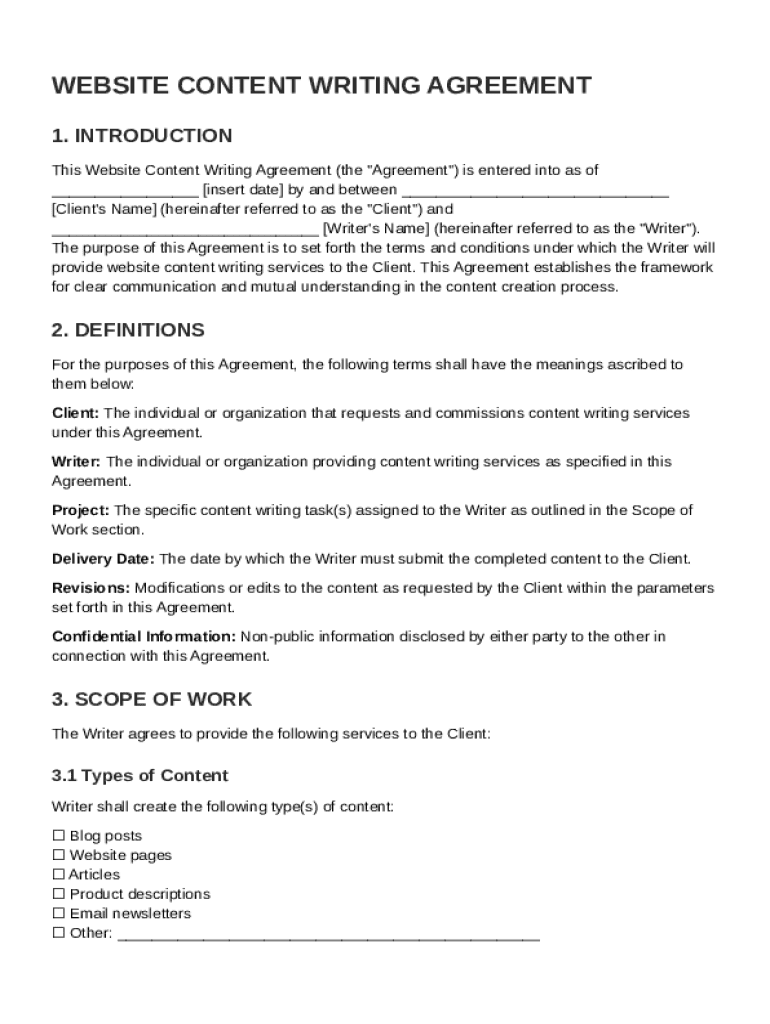







Definition & Meaning
The Website Content Writing Agreement Template is a legal document outlining the relationship between a Client and a Writer for the provision of content writing services. This template ensures both parties have a clear understanding of their responsibilities and expectations. The agreement typically covers essential aspects like the scope of work, compensation, delivery timelines, and content ownership rights. By using this template, both the client and writer can minimize misunderstandings and ensure projects are completed effectively and efficiently. It's an indispensable tool for professionals involved in website content development, providing a standard framework to safeguard business interests and maintain professional relationships.
Key Elements of the Website Content Writing Agreement Template
When drafting or reviewing a Website Content Writing Agreement Template, it's crucial to include specific key elements to ensure comprehensive coverage:
- Scope of Work: Clearly defines the nature, extent, and specifications of the content writing tasks to be performed by the writer.
- Compensation Details: Outlines the payment structure, including rates, payment methods, and any contingencies or bonuses.
- Deadlines and Timelines: Establishes the delivery schedule for drafts and final submissions, ensuring accountability and time management.
- Revision Policies: Specifies the number and nature of revisions allowed, along with any associated costs.
- Ownership and Rights: Discusses who maintains ownership of the content upon completion and the usage rights of both parties.
- Confidentiality Clauses: Ensures the protection of sensitive information shared between the parties during the agreement.
- Termination and Disputes: Details the procedures for ending the contract and resolving disagreements, including mediation and arbitration options.
How to Use the Website Content Writing Agreement Template
This section provides steps to effectively utilize the Website Content Writing Agreement Template:
- Download and Review: Obtain the template from a reliable source, ensuring the document aligns with your project needs.
- Customize the Template: Modify sections to reflect the specific terms agreed upon between the client and the writer.
- Include Specifics: Add detailed descriptions of content requirements, deadlines, and payment terms.
- Consult Legal Counsel: Seek legal advice to ensure the agreement complies with applicable laws and provides adequate protection for all parties involved.
- Finalize and Execute: Once all changes are made, both parties should thoroughly review, sign, and date the agreement to formalize the arrangement.
Legal Use of the Website Content Writing Agreement Template
Using this template legally binds both parties to the terms specified. To ensure the agreement's enforceability:
- Ensure that both parties are of sound mind and legal age to enter into contracts.
- Clearly define all essential terms and conditions within the agreement.
- Maintain compliance with federal and state contract laws, particularly those pertinent to intellectual property and employment.
Who Typically Uses the Website Content Writing Agreement Template
This agreement is beneficial for:
- Freelancers and Contract Writers: Who require a formalized structure for managing client relationships and project expectations.
- Business Owners: Looking to outsource website content creation efficiently and securely.
- Agencies: That engage multiple writers and require a consistent legal framework for contracting.


Examples of Using the Website Content Writing Agreement Template
Several real-world applications demonstrate its utility:
- A digital marketing firm hires freelance writers to produce SEO-optimized blog posts and ensures clear terms regarding ownership and compensation.
- An e-commerce website contracts specialists to write product descriptions and utilizes the template to clarify deadline expectations and revision policies.
- A tech startup employs content creators for its app launch, using the agreement to outline confidentiality clauses vital to protecting intellectual property.
Steps to Complete the Website Content Writing Agreement Template
Filling out the template requires careful attention to detail:
- Enter Party Information: Include the full legal names and contact information for both the client and writer.
- Define the Work: Clearly describe the task, expected outcomes, and any particular standards or styles required.
- Specify Payment Terms: Detail how and when payments will be conducted, as well as any conditions for additional compensation.
- Set Timelines: Establish due dates for each deliverable, including draft submissions and final project completion.
- Outline Revision Allowances: Specify the extent of revisions and feedback cycles permitted without incurring extra costs.
- Clarify Legal Rights: Determine who retains ownership of the content once it is delivered and paid for.
- Finalize Signature Blocks: Allocate space for the signatures of both parties and the date of agreement execution.
Important Terms Related to the Website Content Writing Agreement Template
The document utilizes specific terminology which should be understood by both parties:
- "Client": The individual or entity commissioning the writing services.
- "Writer": The individual or entity responsible for creating the content.
- "Deliverables": Any works produced under the agreement.
- "Intellectual Property": Legal rights concerning creative outputs.
- "Force Majeure": Events beyond control that may affect agreement performance.
These terms ensure clarity and can prevent potential litigation or misunderstandings regarding the contractual obligations. Understanding and agreeing on these fundamental aspects is key to a successful and productive collaboration.




