







Definition & Meaning
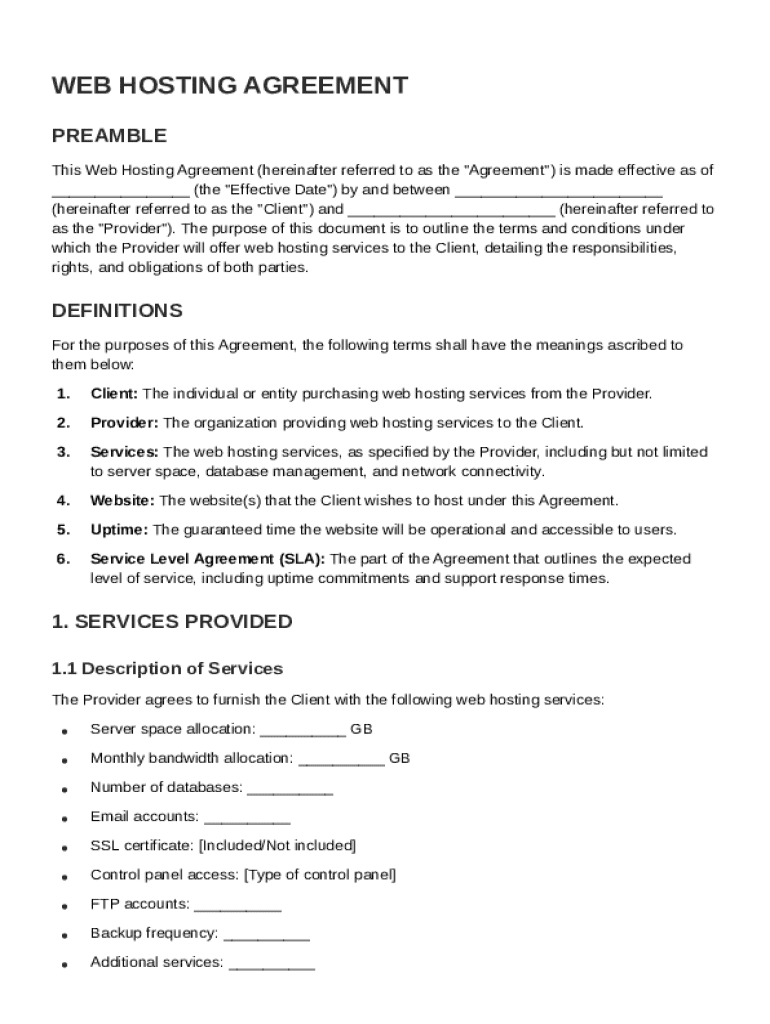
A Web Hosting Agreement Template is a legally binding document that delineates the terms and conditions between a client and a web hosting provider. It outlines the scope of services, payment obligations, service level agreements, data protection measures, and termination clauses, ensuring that both parties understand their roles and responsibilities. This template serves as the foundation for a mutual understanding, minimizing the risk of disputes by setting clear expectations from the onset. Additionally, it includes provisions for liability limitations, governing law, and force majeure events, which encompass extraordinary situations that may affect service delivery.
Key Elements of the Web Hosting Agreement Template
The Web Hosting Agreement Template includes several crucial components essential for protecting both the provider and the client:
- Service Description: Details of the hosting services provided.
- Uptime Guarantee: Specifies the minimum uptime percentage the provider must maintain.
- Data Protection: Measures to secure client data, including encryption and data backup protocols.
- Billing and Payment: The payment structure, including billing cycles, late fees, and currency used.
- Termination Conditions: Circumstances under which either party can terminate the agreement.
- Liability and Indemnifications: Limitations on liability and conditions under which the provider or client must pay for damages.
How to Use the Web Hosting Agreement Template
To effectively utilize the Web Hosting Agreement Template, follow these steps:
- Review the Template: Understand each section and customize it based on specific service offerings.
- Add Specific Details: Include client and provider information, specific service details, and any additional terms.
- Seek Legal Advice: Consult with a legal professional to ensure compliance with applicable laws and regulations.
- Agreement Review: Both parties should review the entire document for accuracy and clarity.
- Execute the Agreement: Have all parties sign the document, making it legally enforceable.
Legal Use of the Web Hosting Agreement Template
The Web Hosting Agreement Template must comply with legal standards to be enforceable:
- Governing Law Clause: Identifies which jurisdiction's laws will govern the contract.
- Compliance: Both parties must adhere to relevant privacy and data protection legislation, such as the GDPR or CCPA.
- Intellectual Property: Clauses addressing ownership and usage rights of digital content or services.
Legal counsel should review the agreement to ensure it satisfies all statutory requirements and effectively protects the interests of both parties involved.
Steps to Complete the Web Hosting Agreement Template
Completing this agreement involves several sequential steps to ensure all necessary information is accurately captured:
- Initiate Document: Begin by entering basic information such as the date, client, and provider details.
- Define Services: Clearly describe the hosting services, including any additional features or options.
- Specify Payment Terms: Include billing cycle, fees, and accepted payment methods.
- Incorporate Security Measures: Outline data protection strategies and policies.
- Final Review: Both parties should carefully review all sections to confirm that their expectations are reflected in the document.
- Signatures: Ensure both parties sign the document to formalize the agreement.
Important Terms Related to Web Hosting Agreement Template
Understanding key terms within the template is vital:
- SLA (Service Level Agreement): Defines expected service performance.
- Bandwidth: The amount of data transferred to and from the website.
- Downtime: A period when the web service is unavailable.
- Scalability: The ability to increase or decrease resources as needed.
Accurate interpretation of these terms is essential for ensuring that both parties have a common understanding of the agreement.
Who Typically Uses the Web Hosting Agreement Template
Various stakeholders use the Web Hosting Agreement Template:
- Web Hosting Companies: To set clear expectations and protect their business interests.
- Startups and Small Businesses: For obtaining hosting services while ensuring their data and operations are secure.
- Legal Professionals: To draft or review agreements to ensure they comply with relevant laws.
These entities benefit from having a structured tool to manage and negotiate web hosting arrangements.


State-specific Rules for the Web Hosting Agreement Template
Legal requirements for hosting agreements may vary by state:
- State Consumer Protection Laws: Must be considered for any clauses related to consumer rights.
- Tax Implications: Some states require inclusion of specific sales or service tax provisions.
- Legal Framework Variations: State-specific rules regarding liability, warranties, and dispute resolution clauses.
Adhering to these rules ensures the agreement is legally valid within the specified jurisdiction.
Software Compatibility and Integration
The Web Hosting Agreement Template can be integrated with software solutions like DocHub for ease of use:
- Editing and Collaboration: Use DocHub to edit the template collaboratively in real-time.
- Compatibility: The template supports multiple file formats, enabling easy export and sharing.
- Signing Options: Use electronic signature features to execute the agreement legally.
Integration with software platforms streamlines document management and ensures efficiency throughout the agreement lifecycle.




