
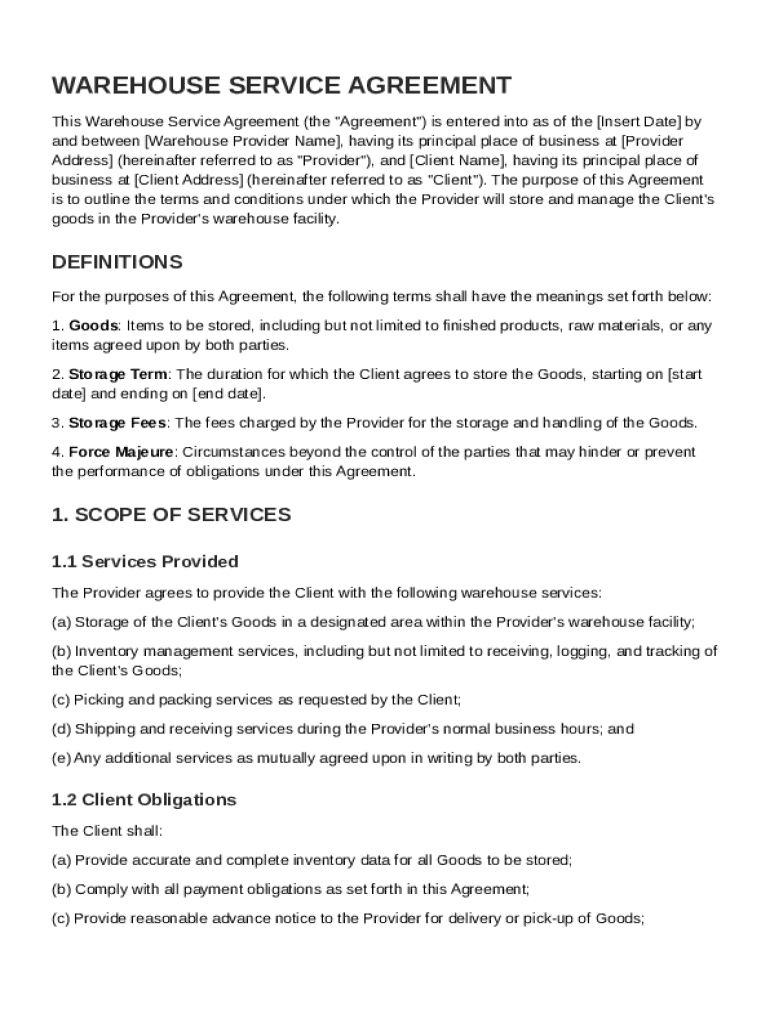







Definition & Meaning
The Warehouse Service Agreement Template is a formal document that sets out the contractual terms between a warehouse provider and a client for the storage and management of goods. It stipulates the roles, responsibilities, and liabilities of both parties to ensure smooth operations and to mitigate risks. By defining clear expectations, it helps protect both the warehouse operator and the client from disputes arising from misunderstandings. The document is crafted to provide comprehensive coverage on aspects such as service scope, fees, security measures, and termination clauses.
Example Scenarios
- Retailers: A large retailer might enter into this agreement for managing overflow inventory during peak seasons.
- Manufacturers: A manufacturer could utilize warehousing services to streamline logistics and ensure timely distribution.
Key Elements of the Warehouse Service Agreement Template
The Warehouse Service Agreement Template is composed of several crucial components that ensure a thorough understanding between the involved parties. These elements help in structuring the agreement effectively.
Core Sections
- Definitions: Clarifies key terms used throughout the agreement, reducing ambiguity.
- Scope of Services: Outlines the specific services that the warehouse provider will offer, such as storage conditions and handling requirements.
- Client Obligations: Details what the client needs to do to facilitate the warehousing services, such as providing accurate inventory lists.
- Fee Structure and Payment Terms: Specifies the payment details, including due dates and penalties for late payment.
Security and Liability
- Liability and Insurance Requirements: Addresses the liabilities of each party and suggests insurance types or amounts required to cover potential losses.
- Access and Security Measures: Defines security protocols to protect stored goods against theft or damage.
Steps to Complete the Warehouse Service Agreement Template
Completing a Warehouse Service Agreement Template requires careful attention to detail to ensure all pertinent information is covered. Below is a structured approach to finalize the document.
Process Overview
- Gather Information: Collect all necessary data regarding the goods to be stored, expected volume, and duration of warehousing needs.
- Draft Agreement: Utilize the template to insert specific details in respective sections. Ensure that client and provider names, addresses, and contact details are correct.
- Review Terms: Both parties should thoroughly review the terms and conditions to ensure mutual understanding and compliance.
- Negotiate Amendments: Discuss any changes required with the counterparty. Amend the document to reflect these negotiations.
- Final Approval: Once both parties agree on the terms, proceed to sign the agreement. Ensure electronic signatures are collected and verified if signing digitally.
Details to Double-Check
- Correct identification of parties involved
- Accurate representation of service scope and costs
- Confirmation of jurisdiction and governing law
Important Terms Related to Warehouse Service Agreement Template
Understanding the legal and logistical terminology used in a Warehouse Service Agreement is essential for effective execution and compliance.
Key Terms
- Indemnification: A contractual obligation of one party to compensate the loss incurred by the other party due to the acts of the indemnitor or any other party.
- Force Majeure: Refers to unforeseeable circumstances that prevent someone from fulfilling a contract, such as natural disasters or political unrest.
- Governing Law: Specifies which jurisdiction’s laws will apply in interpreting the agreement, often crucial in state-specific agreements.
Usage Examples
- Example: "The indemnification clause obligates the client to cover damages if their goods cause harm."
Legal Use of the Warehouse Service Agreement Template
The Warehouse Service Agreement Template must adhere to applicable legal standards to ensure enforceability. Understanding its legal implications helps prevent potential disputes.
Legal Considerations
- Compliance with State Laws: Each state in the U.S. may have specific requirements regarding contract enforceability and compliance with consumer protection laws.
- Legally Binding Signatures: Both parties must sign the document, either physically or electronically, to make it legally binding.
- Modification Clauses: Any amendments should be documented carefully and agreed upon by both parties to retain legal validity.
Practical Tips
- Consult legal professionals to ensure the agreement complies with local laws.
- Use legally recognized electronic signature platforms for digital agreements.
Examples of Using the Warehouse Service Agreement Template
Examples provide context on how different businesses leverage this template to manage their warehousing needs efficiently.
Business Use Cases
- Logistics Firms: May use the template to formalize relationships with third-party storage facilities across multiple states.
- E-commerce Companies: Utilize robust warehousing agreements to manage inventory effectively, ensuring seamless order fulfillment.
Real-World Scenarios
- A multinational company using a warehouse in a hurricane-prone region might include specific clauses addressing disaster recovery and force majeure.
Digital vs. Paper Version
Choosing between a digital or paper version of the Warehouse Service Agreement Template depends on organizational needs and preferences. Each format has its benefits and potential drawbacks.
Digital Version
- Benefits: Easily editable, sharable, and environmentally friendly. Allows for quick updates and electronic signatures.
- Considerations: Requires digital literacy and secure systems to prevent unauthorized access or data loss.
Paper Version
- Benefits: Tangible proof of agreement, possibly easier to review for some parties unfamiliar with digital tools.
- Considerations: Physical storage requires space and can be lost or damaged. Transitioning to digital requires scanning or retyping.
Hybrid Approach
Many organizations opt for a hybrid approach, maintaining digital copies for ease of access while keeping paper copies for archival or legal record purposes.
Who Typically Uses the Warehouse Service Agreement Template
A variety of entities benefit from using the Warehouse Service Agreement Template to optimize their logistic needs and protect their interests.


Key Users
- Small Businesses: Owners looking to scale up operations might need temporary storage solutions during growth phases.
- Wholesalers: Often require large storage spaces and benefit from clearly defined agreements to manage inventory.
Interdepartmental Uses
- Legal Departments: Ensures that all contractual aspects are compliant with current laws.
- Operations Teams: Utilizes the agreement to manage logistics and ensure the supply chain remains uninterrupted.
Tailored Solutions
The flexibility of the template allows customization for specific industries, making it a versatile tool for businesses of all sizes within the warehousing and logistics sector.




