
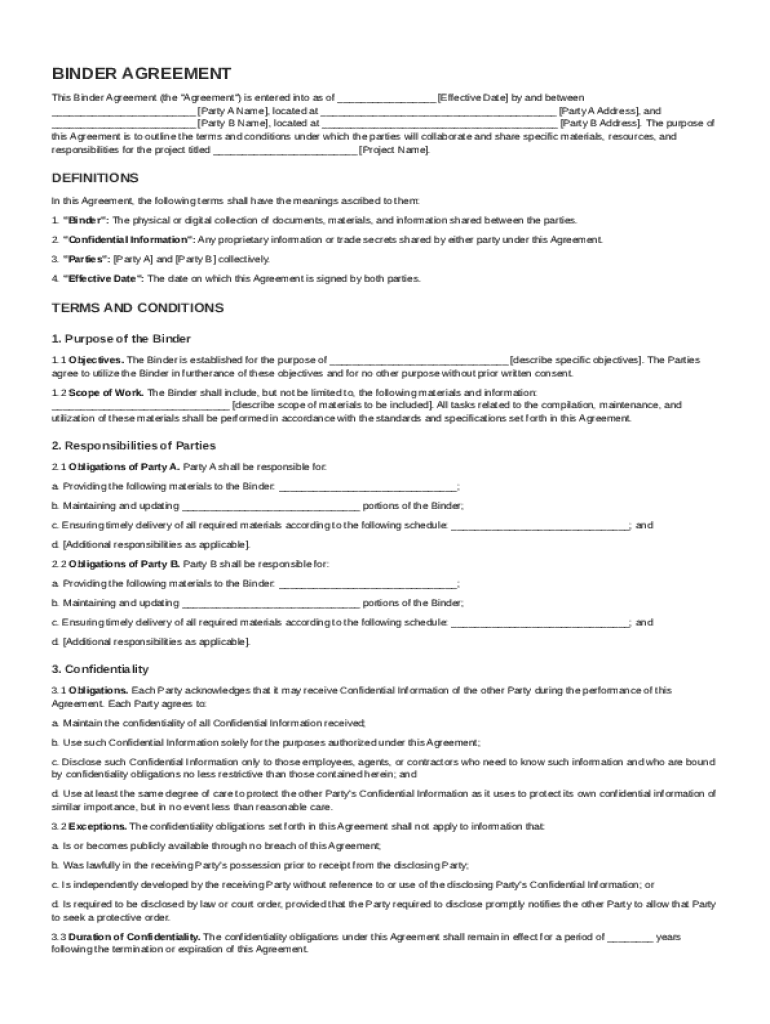







Definition & Meaning
The Binder Agreement Template is a crucial document used to outline the terms and conditions between two parties in a collaborative project. This template serves as a preliminary contract that details key aspects of the partnership, including responsibilities, confidentiality obligations, intellectual property rights, and dispute resolution processes. It helps establish a framework for sharing materials and information while ensuring the protection of confidential data. Typically, this agreement also specifies the duration and termination conditions, providing a clear termination point or conditions under which the agreement can be dissolved. Understanding the intricacies of a Binder Agreement Template is essential for both individuals and businesses engaged in temporary or preliminary collaborations.
Key Elements of the Binder Agreement Template
The Binder Agreement Template comprises several critical elements that structure the relationship between the collaborating parties.
-
Responsibilities: Clearly defines the roles and duties of each party to avoid potential misunderstandings.
-
Confidentiality Clause: Ensures that any shared proprietary or sensitive information is protected from unauthorized disclosure.
-
Intellectual Property Ownership: Specifies the ownership rights of any creations or innovations resulting from the collaboration.
-
Dispute Resolution: Outlines the process for resolving conflicts, which could include mediation, arbitration, or legal action.
-
Duration and Termination: Details the time frame and conditions under which the agreement is active, including any exit strategies or termination clauses.
These elements provide a comprehensive foundation for managing expectations and responsibilities, thereby minimizing potential legal disputes.
How to Use the Binder Agreement Template
Using a Binder Agreement Template effectively requires familiarity with its components and relevance to your specific situation.
-
Review the Template: Begin by examining each section to ensure it aligns with your collaborative goals and legal requirements.
-
Customize the Details: Modify the template to reflect the specific details of your agreement, such as the scope of work, timeline, and party details.
-
Include Additional Clauses: Consider adding any necessary clauses that address specific needs or concerns not covered in the standard template.
-
Legal Review: Consult a legal professional to verify that the agreement complies with applicable laws and effectively protects your interests.
-
Signatures: Ensure that both parties sign the completed document to formalize the agreement and make it legally binding.
Using this structured approach ensures clarity and comprehensiveness while safeguarding all parties involved.
Who Typically Uses the Binder Agreement Template
The Binder Agreement Template is commonly used by a variety of entities across different industries.
-
Businesses: Companies use it to outline terms with clients or partners during initial project phases.
-
Freelancers and Contractors: Independent professionals utilize the template to establish preliminary terms before delving into detailed contracts.
-
Research Institutions: Often used when collaborating with other institutions or private sector partners.
-
Creative Agencies: This template is valuable in the entertainment and design sectors, where preliminary agreements are routine.
These users appreciate the template's comprehensive coverage of necessary legal and operational terms without delving into overly complex contractual obligations too early in a project.


Legal Use of the Binder Agreement Template
When using a Binder Agreement Template, it's imperative to ensure its adherence to relevant legal standards to maintain its enforceability.
-
Compliance with Laws: Must meet specific legal requirements relevant to the jurisdiction of the parties involved.
-
Binding Nature: While often used for preliminary purposes, the terms are legally binding once signed.
-
Modification and Amendments: Provisions for amendments allow parties to modify the agreement as necessary, provided both consent.
Careful legal consideration ensures the agreement serves its intended purpose without exposing the parties to undue legal risks.
Examples of Using the Binder Agreement Template
Understanding practical applications of the Binder Agreement Template can highlight its versatility.
-
Project Collaboration: Two tech companies may enter into a Binder Agreement to co-develop software, defining the project scope and IP rights.
-
Joint Research Projects: Universities might use the template for preliminary agreements in cross-institutional research, detailing each party’s contribution.
-
Short-Term Partnerships: Creative agencies collaborate on design projects with various partners, using the template to establish initial terms and deliverables.
-
Supplier Agreements: Businesses can use the template with temporary vendors to define terms until a long-term contract is negotiated.
These examples illustrate how the template facilitates formal agreements across various industry sectors, guiding collaborations effectively.
Steps to Complete the Binder Agreement Template
Completing a Binder Agreement Template involves a sequenced set of steps to ensure accuracy and completeness.
-
Gather Necessary Information: Compile all pertinent details required for the agreement, including party names and project specifics.
-
Draft the Initial Agreement: Fill out the template, customizing it to reflect the specific terms and requirements of your collaboration.
-
Review and Revise: Thoroughly go over the draft to identify and correct any discrepancies or missing information.
-
Negotiate Terms: Discuss the terms with the other party to address any concerns or adjustments needed.
-
Consult Legal Counsel: Ensure the agreement is reviewed by legal professionals to validate its enforceability.
-
Finalize and Sign: Have both parties sign the agreement to formalize and initiate the terms outlined within.
Following this structured process aids in crafting a thorough and mutually agreeable preliminary contract.
Who Issues the Form
In most cases, the Binder Agreement Template is generated by the initiating party of a collaboration or provided by legal professionals.
-
Initiating Party: Typically prepares the first draft to outline their terms and conditions.
-
Legal Departments: May issue standardized templates for use in various preliminary agreements within a company.
-
Online Legal Services: Offer downloadable templates that can be adapted for specific agreements and purposes.
Understanding who issues the form aids the parties in knowing whom to approach for the initial document and any necessary alterations.




