
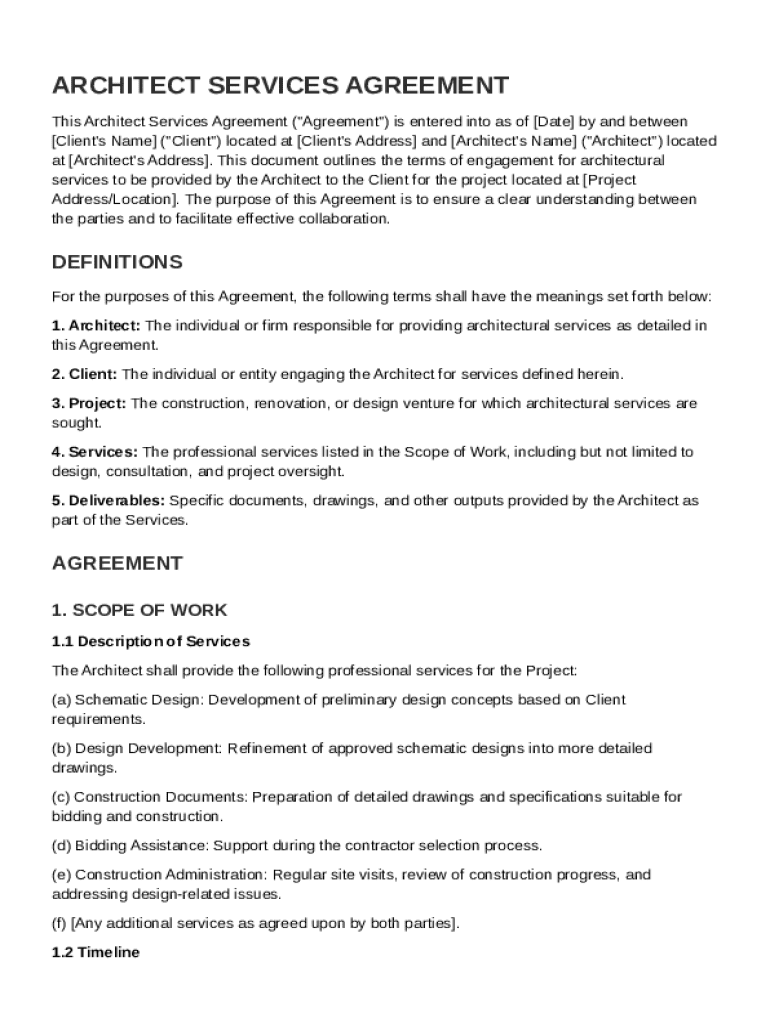







Definition & Meaning
The Architect Services Agreement is a formal contract that outlines the relationship between an architect and their client for a specific project. It details the professional services the architect will render, which may include design, consultation, and project management. This agreement is essential for setting clear expectations, defining roles, and establishing the scope of work. It serves as a legally binding document ensuring both parties are committed to the project's objectives and timelines.
Key Components
- Scope of Work: Defines the extent of services provided by the architect, ensuring clarity about responsibilities and deliverables.
- Compensation Structure: Outlines how the architect will be paid, including fees, reimbursable expenses, and payment schedules.
- Responsibilities: Details the duties and obligations of both the architect and client, promoting mutual understanding and accountability.
- Modifications and Termination: Provides guidelines on how changes to the contract can be handled and the conditions under which either party can terminate the agreement.
How to Use the Architect Agreement Template
The Architect Agreement Template is designed to streamline the creation of a customized contract between architects and their clients. By providing a structured format, it ensures that all necessary components of a legal agreement are addressed.
Step-by-Step Instructions
- Download and Review: Obtain the template from a trusted source and read through the sections to understand what each part entails.
- Customize Details: Modify sections to reflect the specific project, including scope of services, fees, and timelines.
- Include Specific Terms: Add any unique terms or clauses necessary for the particular project or client relationship.
- Legal Review: Before finalizing the document, have a legal professional review it to ensure compliance with local laws and completeness.
Important Terms Related to Architect Agreement Template
Understanding key terms within the Architect Agreement is crucial for both parties involved.
Essential Definitions
- Indemnification: A provision where one party agrees to compensate the other for certain costs and damages.
- Governing Law: Specifies which jurisdiction’s laws will govern the agreement.
- Confidentiality: Ensures that sensitive information shared between parties is protected from unauthorized disclosure.
Practical Scenarios
- Case Example: If an architect uncovers proprietary client information during work, the confidentiality clause ensures this data is not shared externally.
Key Elements of the Architect Agreement Template
The template encompasses essential elements to cover various aspects of professional architectural services.
Core Elements
- Detailed Scope: Clearly defined tasks and deliverables expected from the architect.
- Fee Schedule: Structured payment terms, including milestones and reimbursable expenses.
- Project Timeline: Timelines and deadlines for the delivery of services.
- Termination Clause: Conditions under which the agreement can be legally terminated by either party.
Legal Use of the Architect Agreement Template
The legal framework within the template ensures compliance with relevant laws and protects both parties' interests.
Compliance Requirements
- Adherence to ESIGN Act: Ensures electronic signatures used in the agreement are legally binding.
- Local Law Alignment: The agreement must align with the legal requirements of the jurisdiction it operates within.
Examples
- Project Scenario: An architect signs an agreement with a client in California; the contract must adhere to California state laws, which might differ from laws in New York.
State-Specific Rules for the Architect Agreement Template
Architectural agreements may be subject to state-specific legislation, which can affect various parts of the agreement.
Regional Variations
- California: State regulations may impose additional disclosure requirements related to building codes.
- New York: Specific insurance provisions may be mandated for architectural services.
Impact on Agreements
- Adjustments Required: In regions with stricter regulations, additional clauses or documentation may be necessary to conform to local laws.
Examples of Using the Architect Agreement Template
Practical examples highlight the benefits and applications of the template in real-world scenarios.
Illustrative Cases
- Residential Project: A homeowner and architect use the template to agree on design services for a new house build, clearly outlining each party's responsibilities.
- Commercial Development: A commercial builder and architect utilize the template to delineate the scope for a shopping mall design, ensuring clear terms on compensation and project milestones.
Who Typically Uses the Architect Agreement Template
Identifying the most common users of this template helps in understanding its relevance and application.


Primary Users
- Architects: Professionals offering design and consultation services for various projects.
- Clients: Individuals or companies, such as homeowners or developers, seeking architectural expertise.
Use Cases
- Independent Architects: Use the template to formalize agreements with new clients, ensuring all terms are documented.
- Architectural Firms: Standardize client agreements to maintain consistency across multiple projects.
Software Compatibility and Integration
The Architect Agreement Template can be effectively used across various platforms to enhance productivity and document management.
Compatible Platforms
- Document Editing Software: Supports formats like DOC and PDF for ease of editing and sharing.
- Cloud Storage Integration: Documents can be seamlessly integrated with Google Drive, Dropbox, and OneDrive for efficient collaboration.
Benefits
- Flexibility and Accessibility: Users can work on agreements from different locations using both desktop and mobile devices, ensuring continuity in workflow.




