
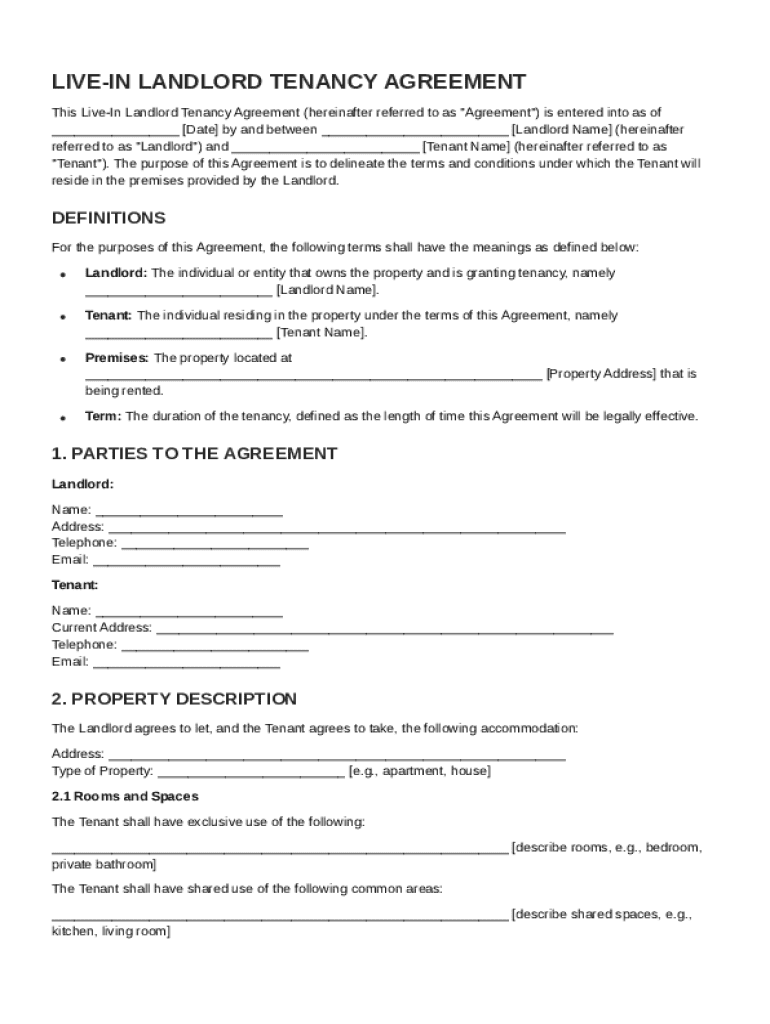







Definition and Meaning
The Tenancy Live-In Landlord Agreement Template is a legal document that establishes the relationship between a landlord and a tenant who resides in the landlord's property. It defines the rights and responsibilities of both parties, ensuring clarity on key aspects such as tenancy duration, rent payments, and property usage. This type of agreement is crucial in scenarios where the property owner shares living space with tenants, providing a structured framework that helps prevent misunderstandings and disputes. It acts as a guiding document that dictates the terms of coexistence in a shared living environment.
How to Use the Tenancy Live-In Landlord Agreement Template
Using the Tenancy Live-In Landlord Agreement Template involves several clear steps to ensure both parties are on the same page. Begin by reviewing the template thoroughly to understand its components and ensure it covers all necessary aspects of the tenancy. The next step is to populate the template with the specific details of the tenancy, including names of the involved parties, property address, and conditions of the tenancy. Once filled out accurately, review the information with the tenant to discuss any clauses that require elaboration or modification. Finally, both parties should sign the document to formalize the agreement, solidifying the legal bond it creates.
Steps to Complete the Tenancy Live-In Landlord Agreement Template
-
Gather Information: Collect all necessary details about the landlord, tenant, and the property.
-
Fill in Parties Involved: Enter the names and contact information of the landlord and tenant.
-
Include Property Details: Note the address and description of the property being rented.
-
Define Terms and Duration: Specify the start and end dates of the tenancy, along with any conditions regarding renewal.
-
Outline Rent Payment Terms: Clearly state the rent amount, due dates, and payment methods.
-
Security Deposit Information: Include the amount and conditions for return of the deposit.
-
Responsibilities and Obligations: Detail duties such as maintenance, utilities payment, and any house rules.
-
Finalize and Sign: Review the completed document with the tenant, make any necessary adjustments, and ensure both parties sign.
Key Elements of the Tenancy Live-In Landlord Agreement Template
-
Identification of Parties: Clearly outlines who the landlord and tenant are, including legal names and contact information.
-
Property Description: Provides specifics about the rental space, including address and any shared facilities.
-
Rent and Payment Details: Establishes the rent amount, due dates, and acceptable payment methods.
-
Duration of Tenancy: Specifies the leasing period along with renewal conditions.
-
Obligations and Responsibilities: Defines what is expected from both the landlord and tenant regarding upkeep and behavior within the property.
-
Termination Conditions: Details the circumstances under which the agreement may be terminated, including notice periods and processes for eviction.
-
Dispute Resolution: Includes protocols for handling disagreements, such as mediation or arbitration.
Legal Use of the Tenancy Live-In Landlord Agreement Template
This template acts as a legally binding document when properly executed, providing enforceable terms that both parties must adhere to. It is designed to conform to state and local rental laws, ensuring compliance across various jurisdictions. Landlords and tenants should verify that the agreement aligns with state-specific requirements, which can vary, particularly in regulations concerning eviction and security deposits. Legal advice may be consulted to ensure the agreement's enforceability and to tailor the document to any unique circumstances present in the arrangement.
Who Typically Uses the Tenancy Live-In Landlord Agreement Template
The Tenancy Live-In Landlord Agreement Template is primarily used by individuals who own property and wish to rent out a part of it while residing on the premises. This includes homeowners looking to rent out spare rooms or a floor to tenants. Additionally, students, young professionals, or anyone looking for affordable living arrangements in a shared environment might engage in such agreements. For landlords, this template helps manage shared tenancy arrangements legally and efficiently, providing standard terms and reducing potential for misunderstandings.


State-Specific Rules for the Tenancy Live-In Landlord Agreement Template
Laws regarding tenancy agreements can differ significantly from one state to another, affecting various components such as rent control, eviction processes, and security deposit stipulations. For example, some states have stringent rules on how much a landlord can charge for a security deposit or how long it must be returned after tenancy ends. Additionally, certain states may have specific regulations on inhabitability standards that need to be met by the landlord. Understanding these differences is crucial for landlords and tenants to ensure full legal compliance and protection under state laws.
Who Issues the Tenancy Live-In Landlord Agreement Template
This type of template is often available from various legal service providers, including online document platforms like DocHub. It is not typically issued by any governmental agency but can be drafted with the help of legal professionals to customize it to specific needs. By using a reputable source, landlords can access templates that are kept up-to-date with current legislation, providing peace of mind that the document is compliant with legal standards.




