
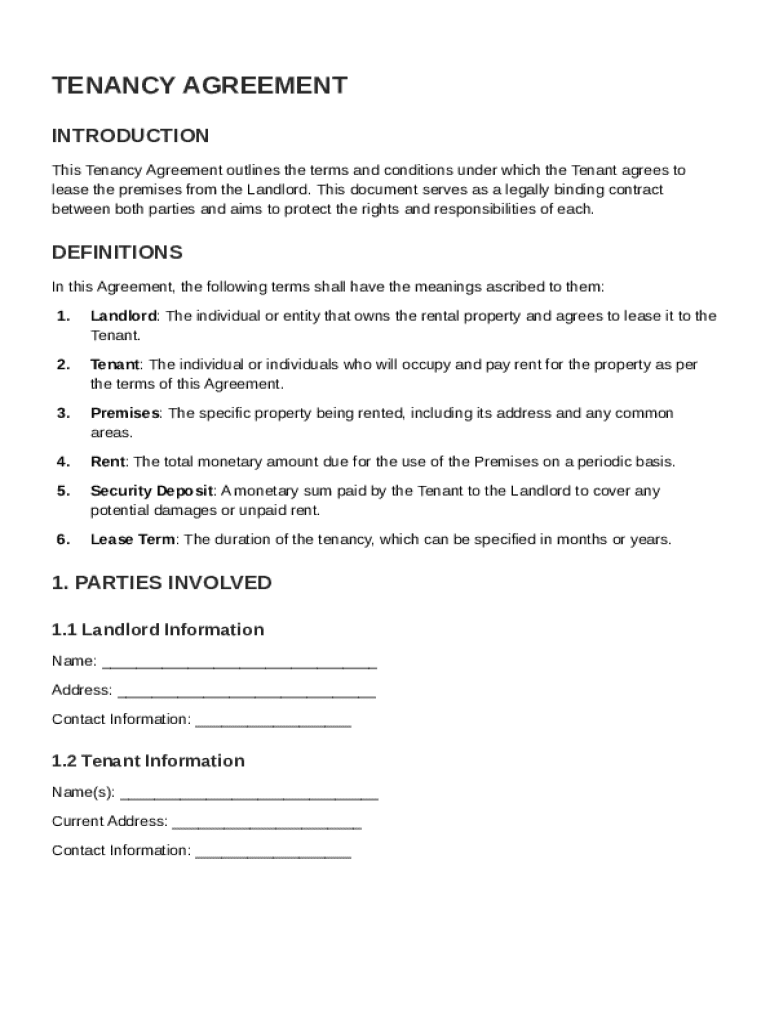







Definition and Meaning of Tenancy Agreement Template
A Tenancy Agreement Template is a standardized form that outlines the terms and conditions under which a landlord and a tenant agree to lease a property. This document acts as a legal contract between the two parties, ensuring clarity and mutual understanding of their obligations and rights. Key components of a tenancy agreement typically include definitions of essential terms, details about parties involved, property description, lease duration, rent payment terms, security deposit conditions, maintenance responsibilities, permitted uses of the premises, termination procedures, and governing laws. The primary aim is to safeguard the interests of both the landlord and the tenant, reducing the potential for disputes and misunderstandings.
Practical Examples of Usage
- Landlords and Tenants: Often used by property owners and tenants to clearly define the start and end dates of a lease, rent amount, and other critical financial aspects.
- Property Managers: Useful for property managers managing multiple rental properties, ensuring consistent lease terms across different tenants.
- Legal Advisors: Beneficial for legal professionals providing consultation services to clients entering into rental agreements to ensure compliance with state laws.
How to Use the Tenancy Agreement Template
Using a Tenancy Agreement Template involves a step-by-step process to customize the document according to specific rental conditions. It starts with selecting a suitable template that complies with state-specific rental laws.
Steps to Utilize the Template
- Select the Right Template: Choose a template that aligns with your state's legal requirements.
- Customize the Agreement: Modify fields such as party names, property details, rental terms, and additional clauses.
- Review Legal Requirements: Ensure all local legal requirements are incorporated.
- Have Both Parties Sign: Both landlord and tenant should review and sign the agreement to make it legally binding.
- Store Securely: Keep a digital and/or physical copy for future reference and legal protection.
Example Scenarios
- Lease Renewals: When renewing a lease, the template allows both parties to update terms easily without starting from scratch.
- New Rentals: Landlords renting out their property for the first time can use templates to ensure they comply with all necessary legal requirements.
Key Elements of the Tenancy Agreement Template
A Tenancy Agreement Template contains several critical components that form the backbone of the rental agreement.
Essential Components
- Parties Involved: Identifies the landlord, tenant, and any other parties associated with the lease.
- Property Description: Provides detailed information about the rental property, including address and type.
- Rent Details: Specifies the rent amount, due dates, late fees, and accepted payment methods.
- Security Deposit Terms: Outlines the amount, use conditions, and refund procedures of the security deposit.
- Maintenance and Repairs: Clarifies responsibilities of both parties regarding property maintenance and repairs.
- Lease Term: Defines the duration of the lease and conditions for renewal or termination.
Additional Provisions
- Pets: Includes rules and potential deposits related to pet allowance.
- Alterations: Stipulates guidelines for property alterations and improvements.
- Early Termination: Conditions under which the agreement can be prematurely terminated.
State-Specific Rules for the Tenancy Agreement Template
Each U.S. state has unique regulations that impact the contents and enforceability of a tenancy agreement.
Examples of State Variations
- Security Deposits: Some states have limits on the amount a landlord can require for a security deposit.
- Notice Periods: Varies by state how far in advance a tenant or landlord must give notice before terminating or altering the agreement.
- Rent Increase Regulations: States may have different rules on how much and how often rent can be increased.
Ensuring Compliance
To ensure full compliance, landlords and tenants should consult state-specific tenancy laws or legal counsel before finalizing an agreement.
Important Terms Related to Tenancy Agreement Template
Understanding the terminology used within a Tenancy Agreement Template is crucial for both landlords and tenants to grasp the legal ramifications fully.
Common Terms
- Lessee and Lessor: Refers to the tenant and the landlord, respectively.
- Premises: The designated rental property being leased.
- Covenant: A formal agreement or promise within the lease.
- Subletting: The action of a tenant renting out the property to a third party.
- Breach: A violation of any terms outlined in the agreement.
Legal Context
These terms are integral to the legal language of the contract and understanding them helps prevent misinterpretation or disputes.
Steps to Complete the Tenancy Agreement Template
Completing a tenancy agreement involves more than just filling out a form. It requires detailed input and careful review.
Process Step-by-Step
- Enter Tenant and Landlord Details: Include full names and contact information.
- Describe the Property: Provide a clear description including address and any special features.
- Define Lease Term: Clearly outline the start and end dates.
- Detail Financial Terms: Specify rent, due dates, late fees, and security deposit.
- Outline Responsibilities: Clearly delineate duties for maintenance, repair, and compliance with property rules.
Verification and Finalization
After filling in all required details, both parties should review and confirm all terms before signing.
Legal Use of the Tenancy Agreement Template
The legal validity of a Tenancy Agreement Template is contingent on its alignment with applicable laws and both parties' consent.
Ensuring Legitimacy
- Mutual Consent: Requires both parties' signatures to be binding.
- State Compliance: Must adhere to local jurisdiction laws on tenancy.
- Written Format: Signing a written agreement is generally more enforceable than verbal agreements.
Implications of Legal Use
Utilizing the template in a manner compliant with state laws provides legal protection to both parties, enabling them to enforce contract terms in legal proceedings.
Examples of Using the Tenancy Agreement Template
Practical uses of a Tenancy Agreement Template demonstrate its versatility in various leasing situations.
Sample Scenarios
- Student Housing: Customized clauses for short-term leases common in student rentals.
- Commercial Leases: Modifications to accommodate specific business requirements or protections.
- Family Housing: Provisions for extended leases often preferred by family-oriented tenants.
Case Studies
Several real-world applications illustrate how well-tailored agreements help resolve landlord-tenant disputes efficiently, highlighting the value of a comprehensive template.
By addressing these integral sections, users can maximize their understanding and application of a Tenancy Agreement Template, ensuring comprehensive and legally sound lease contracts.




