






Definition & Meaning
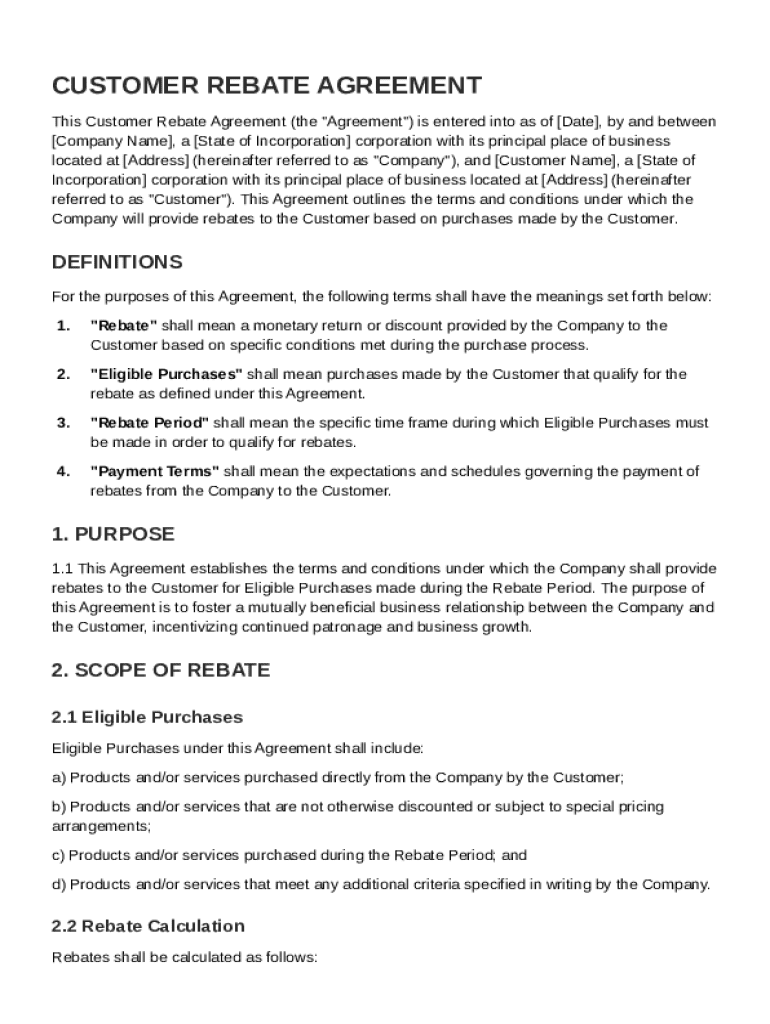
A Customer Rebate Agreement Template serves as a formal document that outlines the specific terms and conditions under which a company offers monetary rebates to its customers. This template helps streamline the creation of agreements by defining terms like "rebate," "eligible purchases," and "payment terms," ensuring both parties understand the rebate structure. The primary goal of such an agreement is to incentivize customer loyalty and enhance business relationships through financial incentives tied to purchase activities over a certain period.
Key Components
- Rebate Definition: Clearly outlines what constitutes a rebate and the criteria for qualification.
- Eligible Purchases: Specifies which purchases qualify for the rebate, ensuring clarity for customers.
- Payment Terms: Details the timing and method of rebate disbursement to manage customer expectations and internal accounting.
Key Elements of the Customer Rebate Agreement Template
Various elements are essential to ensure the effectiveness and legal soundness of the Customer Rebate Agreement Template. These components include the rebate calculation method, adjustment conditions, and confidentiality clauses.
Rebate Calculation Method
- Specified Formula: A clear formula is provided to compute the rebate amount based on eligible purchases.
- Tiered Rebates: Different rebate levels may apply based on purchase volume or other criteria, encouraging higher spending.
Adjustment Conditions
- Volume Thresholds: Conditions under which rebate percentages or amounts may be adjusted.
- Market Changes: Provisions for modifying rebate terms in response to market or cost changes, protecting the business's interests.
Confidentiality & Indemnification
- Confidentiality Clauses: Protect sensitive information shared between the parties.
- Indemnification Provisions: Address liability issues, requiring parties to hold each other harmless from specific claims.
Important Terms Related to Customer Rebate Agreement Template
Understanding the terminology used within the Customer Rebate Agreement Template is crucial for effective execution and compliance.
Common Terms
- Rebate Period: The duration during which purchases are eligible for rebates.
- Governing Law: Specifies the legal jurisdiction managing the agreement, often aligning with the company's primary area of operation.
- Termination Clause: Outlines conditions under which the agreement can be ended by either party.
Steps to Complete the Customer Rebate Agreement Template
Completing the Customer Rebate Agreement Template involves several systematic steps to ensure accuracy and compliance.
- Review the Template: Start by thoroughly reading the entire template to understand all provisions and requirements.
- Enter Specific Details: Input company details, customer information, and specify eligible product or service categories.
- Customize Rebate Conditions: Adjust the rebate terms and conditions to suit specific customer arrangements and business goals.
- Verify Legal Compliance: Ensure that the agreement aligns with relevant laws and regulations to avoid legal repercussions.
- Seek Legal Review: Have the template reviewed by legal counsel to confirm all clauses are enforceable and fair.
Who Typically Uses the Customer Rebate Agreement Template
A wide range of entities might find the Customer Rebate Agreement Template beneficial, including manufacturers, wholesalers, and retailers seeking to enhance customer loyalty through financial incentives.


Typical Users
- Manufacturers: To encourage bulk purchases from distributors.
- Retailers: To promote customer retention and reward frequent buyers.
- Wholesalers: For incentivizing large orders from retail partners.
Legal Use of the Customer Rebate Agreement Template
The legal application of the Customer Rebate Agreement Template requires a sound understanding of applicable laws and regulations to ensure enforceability and protection for both parties involved.
Legal Considerations
- Contract enforceability: Ensure all terms within the agreement are legally binding.
- Compliance with Antitrust Laws: Avoid any clauses that could potentially lead to unfair competition practices.
- Consumer Protection Acts: Confirm that rebates are communicated transparently to prevent misleading representations.
Examples of Using the Customer Rebate Agreement Template
Practical scenarios where a Customer Rebate Agreement Template is effectively utilized demonstrate its utility across different industries.
Real-World Scenarios
- Automobile Industry: Car manufacturers offer rebates on vehicles to promote sales during specific periods.
- Electronics Retailers: Offering rebates on bulk purchases of consumer electronics during sales events.
- FMCG Companies: Rebates on large orders of consumer goods to stimulate inventory turnover.
Business Types That Benefit Most from Customer Rebate Agreement Template
Certain business models gain significant advantages from using Customer Rebate Agreement Templates to incentivize purchases and manage business relationships.
Beneficiary Business Types
- Large Retail Chains: Enhance customer loyalty by offering yearly or seasonal rebate programs.
- Wholesale Distributors: Use rebate terms to manage inventory and forecast demand.
- Subscription Services: Encourage long-term subscription commitments through cashback or rebate incentives.
This comprehensive examination of the Customer Rebate Agreement Template provides essential insights into its application, legal considerations, and strategic uses across different business landscapes.