




01. Edit your form online
Type text, add images, blackout confidential details, add comments, highlights and more.

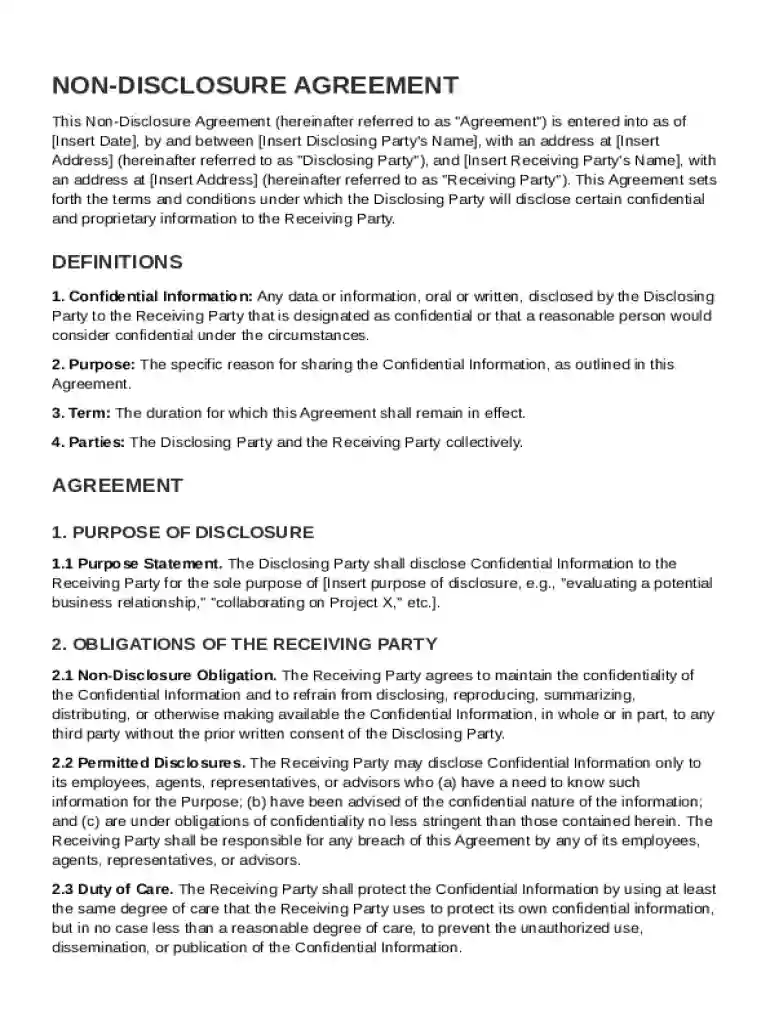
Type text, add images, blackout confidential details, add comments, highlights and more.

Draw your signature, type it, upload its image, or use your mobile device as a signature pad.

Send it via email, link, or fax. You can also download it, export it or print it out.
A "Generic Non-Disclosure Agreement Template" (NDA) is a legally binding document designed to protect confidential information shared between two or more parties. Typically, it involves a Disclosing Party that reveals confidential details and a Receiving Party that agrees to keep this information private. The core function of an NDA is to ensure that sensitive information such as trade secrets, proprietary knowledge, and personal data is not disclosed to third parties or the public without consent. This type of agreement is pivotal in safeguarding intellectual property and maintaining competitive advantages in various business dealings.
Confidential Information: This section identifies the types of information considered confidential, which may include business plans, customer details, financial data, and intellectual property.
Purpose of Disclosure: Clearly outlines the reason for the sharing of confidential information, ensuring both parties understand the context of the exchange.
Obligations of the Receiving Party: Specifies how the Receiving Party should protect the information, including security measures and restrictions on sharing it with others.
Exclusions from Confidentiality: Details situations where the disclosed information will not be considered confidential, such as information that becomes public knowledge through no fault of the Receiving Party.
Duration: States the timeframe during which the information remains confidential, which can extend beyond the conclusion of business dealings.
Ownership of Information: Confirms that the Disclosing Party retains all rights to the shared information.
Conditions for Termination: Defines scenarios where the NDA can be terminated, such as mutual consent or completion of the underlying business relationship.
Edit the Template: Tailor the document to align with the specifics of the transaction or relationship, inserting necessary details such as the names of the parties, type of confidential information covered, and duration of the agreement.
Review Legal Terminology: Ensure both parties understand the legal terms contained within the document. Clarifying roles and responsibilities highlighted in the NDA is crucial.
Include All Parties: Properly identify all parties involved, making sure to include signature lines for representatives authorized to sign on behalf of organizations, if applicable.
Consultation with Legal Experts: Have the NDA reviewed by a legal professional to ensure the terms are enforceable and compliant with local laws.
Secure Both Parties' Consent: Once agreed upon, both parties should sign the document, making it legally binding.
Generic NDAs are commonly used by a variety of entities and individuals who need to safeguard sensitive information, including:
Businesses and Startups: Protect intellectual property and strategic plans during partnerships, mergers, or when dealing with third-party suppliers.
Entrepreneurs: Guard innovative ideas and business models when seeking investors or collaborators.
Consultants and Freelancers: Ensure client portfolios, project details, and personal data remain confidential between business engagements.
Manufacturers and Suppliers: Prevent designs and production techniques from being replicated by competitors.


The NDA must comply with federal and state laws to be enforceable. For example, the agreement should not curtail legal rights, such as whistleblower protections under the Sarbanes-Oxley Act. Ensuring clear definitions and limitations on the scope and duration of confidentiality helps prevent disputes about enforceability. Courts will scrutinize these agreements to confirm they are fair, reasonable, and not overly restrictive in protecting business interests.
Technology Companies: Safeguard code and algorithms when outsourcing software development projects to third-party vendors.
Pharmaceutical Firms: Protect experimental drug research data shared with outside laboratories or collaborators.
Product Designers: Confidentially partner with manufacturers to produce unique designs without risk of unauthorized production.
Mutual NDAs: Used when both parties intend to share confidential information reciprocally.
Unilateral NDAs: More common when only one party discloses sensitive data to the other.
Employee NDAs: Create confidentiality obligations for employees during and after their tenure with a company, protecting trade secrets and insider business information.
Tech Startups: Protect disruptive technology and proprietary software.
Biotech Firms: Guard bioinformatics data and clinical trial results.
Consultancy Agencies: Maintain client confidentiality and competitive strategies.
Contract Manufacturing: Secure product designs and specifications during collaborations.
Proprietary Information: Refers to any business, technical, or other proprietary information that is treated as confidential and disclosed under an NDA.
Breach of Contract: Occurs when a party fails to fulfill obligations stipulated in the agreement, including non-disclosure provisions.
Remedies: Legal solutions or penalties applied when a breach occurs, potentially involving monetary damages or injunctive relief.
Users should be aware that the effectiveness of a Generic NDA often depends on the clarity of these terms and the specific conditions outlined within the agreement.
At DocHub, your data security is our priority. We follow HIPAA, SOC2, GDPR, and other standards, so you can work on your documents with confidence.


The parties agree to enter into a confidential relationship with respect to the disclosure of certain proprietary and confidential information (ConfidentialRead more
Sample Confidentiality/Non-Disclosure Agreement. General Document. Document Type: Sample. University of Louisiana at LafayetteRead more
A Non-Disclosure Agreement (NDA) is a legal contract that restricts how confidential information may be used, shared, or disclosed. In HR compliance and


