




Definition and Meaning of an NGO Partnership Agreement Template
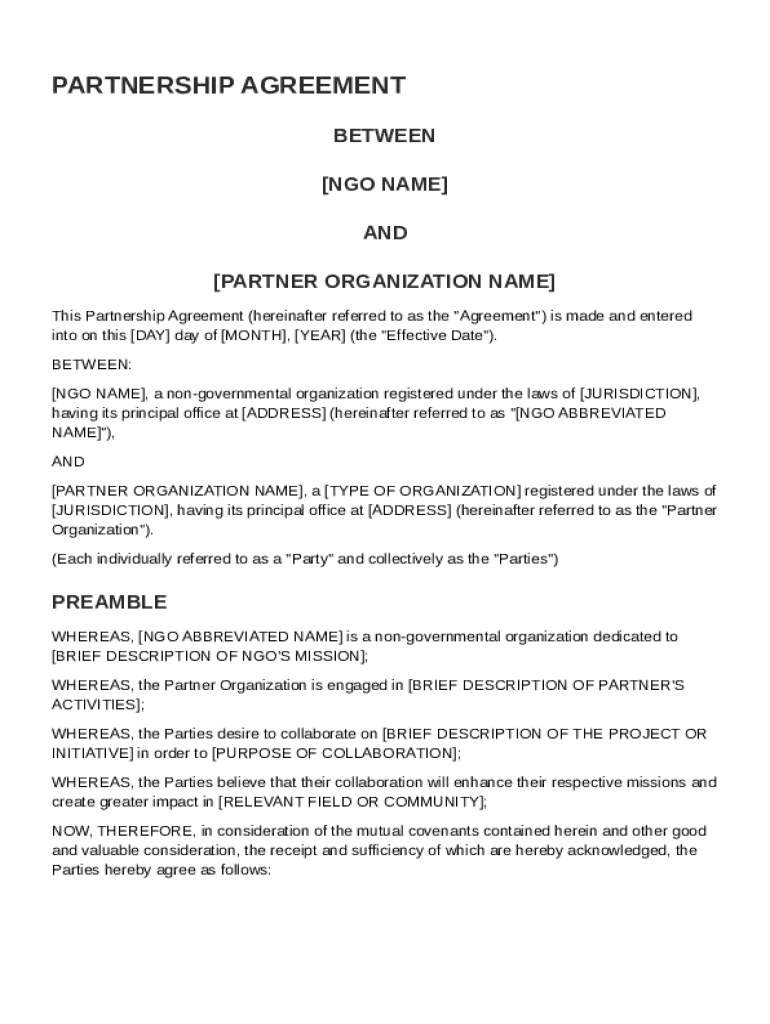
An NGO Partnership Agreement Template serves as a foundational document outlining the collaboration between a non-governmental organization (NGO) and a partner organization. This agreement specifies the objectives, roles, and responsibilities intended to further the missions of both parties involved. It encompasses a variety of essential legal components, ensuring that both parties are aligned and committed to achieving their goals through joint efforts. This form helps to foster cooperation, drive impactful projects, and establish clear communication channels for addressing any arising issues.
Key Elements of the NGO Partnership Agreement Template
Objectives and Scope
The agreement explicitly details the scope of collaboration, setting clear and measurable objectives for the project. This ensures both organizations have the same understanding and expectations regarding the outcomes and timelines.
Roles and Responsibilities
It clearly defines the roles and responsibilities of each party involved. This clarity helps prevent overlap and confusion, enabling both organizations to function cohesively and efficiently.
Financial Arrangements
Detailed financial arrangements, including budget allocations, payment schedules, and financial reporting requirements, are integral to the agreement. Ensuring transparency in financial dealings promotes trust and accountability.
Communication Protocols
Established communication protocols guide the flow of information between the organizations. These detailed guidelines help maintain consistent communication, ensuring timely updates and effective issue resolution.
Steps to Complete the NGO Partnership Agreement Template
-
Identify Key Participants: Start by listing all parties involved, including representatives responsible for overseeing and executing the partnership.
-
Establish Objectives: Outline the specific objectives and goals of the partnership to ensure mutual understanding and commitment.
-
Define Roles and Responsibilities: Clearly state what each party is responsible for, contributing to smoother operations and greater efficiencies.
-
Detail Financial Arrangements: Specify how funds will be allocated and managed, including budgetary commitments from each party.
-
Set Communication Protocols: Establish how and when communications will occur, detailing preferred channels and regular meeting schedules.
-
Include Dispute Resolution Procedures: Define procedures for resolving disagreements to preempt and manage potential conflicts effectively.
Legal Use of the NGO Partnership Agreement Template
The template is a vital legal tool that outlines the terms and conditions under which the partnership operates. This ensures compliance with applicable legal standards and offers protection to both parties in case of disputes. Codifying these elements into a formal agreement is a critical step in mitigating risks and ensuring enforceability under the law.
How to Use the NGO Partnership Agreement Template
The template should be used as a customizable framework, allowing organizations to adjust its sections to specific needs and requirements. Legal consultation is recommended to ensure alignment with jurisdiction-specific requirements and to verify that all included terms are enforceable and meet both parties' expectations.
Practical Considerations
- Fill in the template with factual and relevant data specific to the partnership.
- Review the agreement draft with stakeholders of both organizations to ensure completeness and accuracy.
- Engage legal professionals to review the document before finalization for legal soundness and compliance with jurisdiction-specific laws.
Who Typically Uses the NGO Partnership Agreement Template
This template is often used by NGOs looking to collaborate with other organizations, such as governmental bodies, private corporations, or other NGOs. It is particularly beneficial for organizations engaging in projects that require shared resources, knowledge exchange, or joint funding initiatives.

Examples of Using the NGO Partnership Agreement Template
Case Study: Environmental NGOs Collaborating on a Recycling Project
Two environmental NGOs used the template to formalize a partnership focused on expanding recycling programs in urban areas. The template helped them outline their shared goals, assign responsibilities for public awareness campaigns, and set schedules for project milestones.
Scenario: Cross-Border Health Initiatives
An NGO based in the United States partnered with an international health organization to tackle specific health issues. The agreement facilitated a legal framework for sharing medical data, coordinating health workshops, and distributing resources effectively.
Important Terms Related to the NGO Partnership Agreement Template
Understanding specific terms in the agreement is crucial. This includes being familiar with terms like "confidentiality obligations," which protect sensitive information exchanged between partners. Terms such as "intellectual property rights" ensure that any shared or developed content during the collaboration is adequately managed and protected.
By addressing these sections, organizations can streamline their collaborative efforts, reduce misunderstandings, and align their resources toward achieving mutual aspirations efficiently and effectively.