
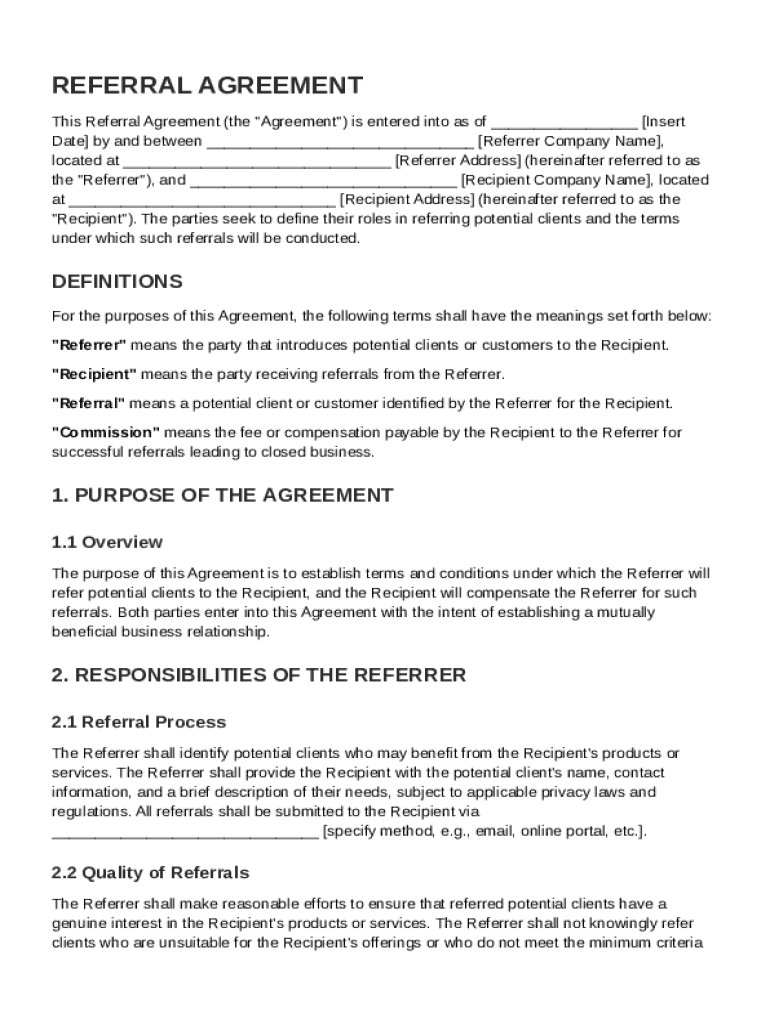







Definition and Purpose of a Referral Agreement Template
A Referral Agreement Template serves as a formal document that outlines the specific terms under which a Referrer introduces potential clients to a Recipient. This agreement sets clear expectations for both parties by specifying roles, responsibilities, compensation structures, and confidentiality obligations. By detailing these elements, the template aims to establish a structured framework that facilitates a mutually beneficial relationship where the Referrer earns a commission for successfully facilitated business transactions. Furthermore, it provides a mechanism to resolve any disputes that might arise, fostering a sense of trust and professionalism between all involved parties.
Key Components of the Template
- Roles and Responsibilities: Defines the specific duties of the Referrer and Recipient to prevent misunderstandings.
- Compensation Structure: Details how and when the Referrer will be compensated, specifying whether payment is based on leads, conversions, or other metrics.
- Confidentiality Obligations: Covers the confidentiality of shared information to protect proprietary or sensitive data.
- Dispute Resolution: Outlines methods for resolving disagreements, such as mediation or arbitration, ensuring conflicts are settled efficiently.
Utilizing the Referral Agreement Template Effectively
The Referral Agreement Template is best used by systematically articulating each party's obligations and expectations. Users can customize sections like payment terms and responsibilities to suit specific business needs, ensuring clarity and alignment. To maximize utility, ensure all necessary fields are filled out accurately. This includes defining the criteria for successful referrals and specifying the terms under which payments will be made. Thorough completion of the template reduces the likelihood of disputes and supports a seamless transaction process.
Illustrative Examples of Implementation
- Commission-Based Referrals: A marketing consultant refers clients to a web development company. Under the agreement, they receive a commission for each client who signs a contract.
- Service-Based Referrals: A financial planner refers clients to an accounting firm for tax preparation, with compensation outlined in the template based on successful client engagements.
Steps to Complete the Referral Agreement Template
Completing the Referral Agreement Template involves several essential steps:
- Identify Parties: Clearly state the names and contact details of both the Referrer and Recipient.
- Define Scope: Specify what services or products are covered under the referral agreement.
- Outline Compensation: Detail how the referrer will be compensated, including payment schedules and conditions for earning commissions.
- Set Confidentiality Terms: Establish clauses to protect sensitive business information.
- Specify Duration: Indicate the timeframe during which the agreement applies, including any renewal terms.
- Add Dispute Resolution Methods: Include procedures for handling potential disagreements, choosing methods that suit both parties.
Importance of Using a Referral Agreement Template
Utilizing a Referral Agreement Template is crucial for establishing a clear, documented arrangement that can prevent potential disputes and misunderstandings. By solidifying expectations before entering into a business relationship, both parties can ensure mutual benefits are maximized. This proactive measure is particularly valuable in safeguarding the interests of both the Referrer and Recipient, reinforcing professional relationships, and establishing legal protections in case of non-compliance or disputes.
Typical Users of Referral Agreement Templates
Referral Agreement Templates are primarily utilized by professionals and businesses that rely on referrals to drive customer acquisition. This includes industries such as real estate, legal services, finance, marketing, and technology solutions. Both solo entrepreneurs and large organizations benefit from these templates by efficiently managing referral partnerships, enhancing business growth opportunities through strategic collaborations.
Important Terms and Legal Use
Understanding key terms within the Referral Agreement Template is vital for compliance and legal clarity:
- Indemnification: A provision that requires one party to compensate the other for certain costs or losses.
- Force Majeure: A clause that frees parties from liability or obligation when an extraordinary event prevents one or both from fulfilling the agreement.
- Governing Law: Specifies which jurisdiction’s laws will apply to the interpretation and enforcement of the agreement.
Using legally vetted templates helps ensure compliance with applicable U.S. laws and standards, providing peace of mind that agreements are enforceable and comprehensive.
Real-World Applications of the Template
The Referral Agreement Template can be applied in numerous scenarios that highlight its versatility:
- Real Estate: An agent refers clients to a mortgage company, earning a commission per completed loan.
- Legal Services: A law firm refers clients to a specialized attorney, structured through a detailed referral agreement outlining compensation.
Each application benefits from the template's customizable nature, allowing users to tailor it to diverse business models and industries.
Differences Across States
Though the template provides a solid framework, compliance with state-specific regulations is essential. Each U.S. state may have unique requirements affecting referral agreements, such as specific licensing, disclosure norms, or compensation limits. It is advisable to consult legal professionals to ensure that the template aligns with both federal and state laws, minimizing risk and ensuring enforceability.




