






Definition & Meaning
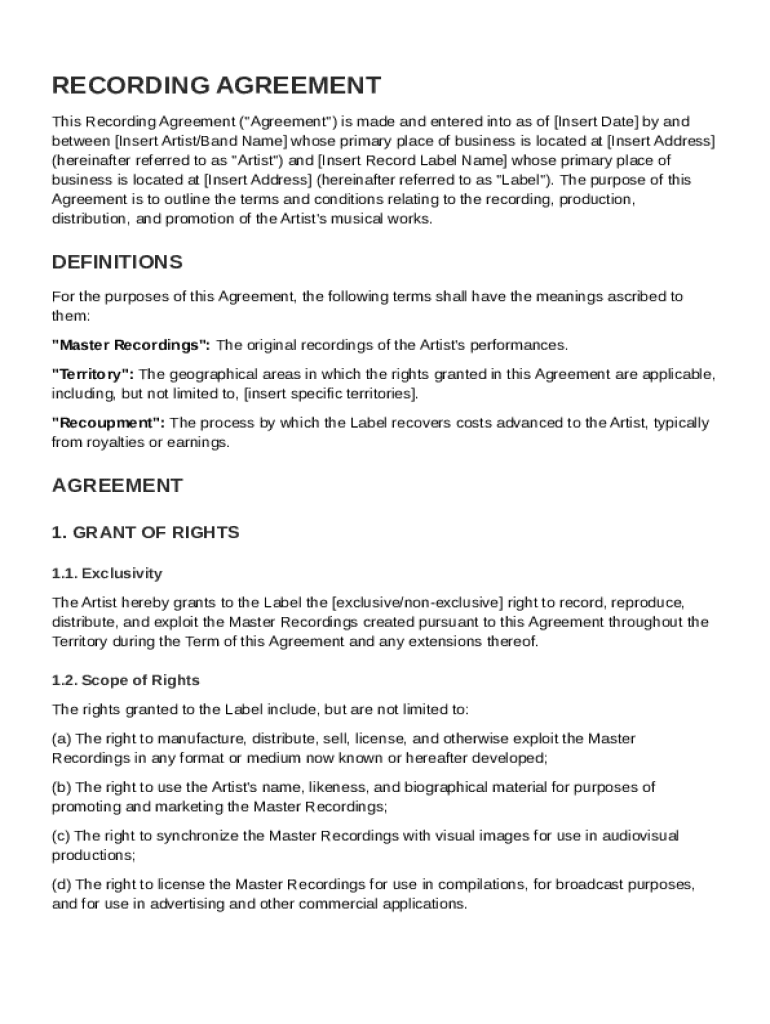
A Recording Agreement Template is a formal contract between a music artist and a record label that sets forth the terms under which the artist's music will be recorded, produced, distributed, and promoted. This document is essential for defining the relationship between the artist and the label, ensuring that both parties understand their rights and obligations. The agreement typically includes provisions on the rights granted to the label for exploiting master recordings, recording commitments from the artist, compensation structures, and other contractual elements such as termination clauses and indemnification responsibilities. It serves as a foundational document that governs the nuances of artist-label interactions in the music industry.
How to Use the Recording Agreement Template
Using a Recording Agreement Template effectively requires careful consideration of its various sections and the specific circumstances of the parties involved. First, review the template to ensure it aligns with your objectives and addresses key aspects such as creative control, marketing obligations, and compensation models. Customize the document to reflect the unique terms negotiated between the artist and the label. Pay special attention to sections requiring detailed information or decisions, such as recording timelines or promotional commitments. To finalize the agreement, both parties should review it for accuracy and completeness before signing to ensure mutual understanding and commitment.
Key Elements of the Recording Agreement Template
The Recording Agreement Template encompasses multiple critical elements that define the partnership between an artist and a label.
- Compensation Structures: Details on advances, royalties, and other payments made to the artist.
- Creative Control: Specifies the level of artistic freedom the artist retains over their work.
- Recording Commitments: Outlines the number of albums or tracks the artist must produce.
- Rights Granted: Lists the rights granted to the label for promoting and distributing the recordings.
- Termination Clauses: Defines the conditions under which the agreement can be terminated.
- Warranties and Indemnifications: Includes promises and legal protections agreed upon by both parties.
- Marketing Obligations: Details the label's responsibilities in promoting the artist's work.
These elements are crucial to ensuring a balanced agreement that protects the interests of both the artist and the label.
Important Terms Related to Recording Agreement Template
Understanding the terminology used within the Recording Agreement Template is vital for effective implementation.
- Master Recordings: Original recordings from which copies are made for distribution.
- Advance: A pre-payment made to the artist, recoupable against future royalties.
- Royalties: Percentage of revenue paid to the artist from the sale or exploitation of their music.
- Exploitation Rights: Rights given to the label to market and distribute the artist's music.
- Indemnification: Legal obligation of one party to compensate for losses incurred by another.
Familiarity with these terms helps in navigating and negotiating the terms laid out in the recording agreement effectively.
Legal Use of the Recording Agreement Template
The Recording Agreement Template must comply with legal standards to ensure enforceability. These agreements are subject to contract law, which requires that they be entered into voluntarily, without duress or undue influence. Both parties should possess the legal capacity to enter the agreement, meaning they are of sound mind and legal age. The contract must serve a legitimate purpose and be clearly drafted to avoid ambiguities. It is advisable for both parties to seek legal counsel to review the agreement to confirm that it aligns with applicable laws and regulations, safeguarding against potential legal disputes.
Examples of Using the Recording Agreement Template
Numerous scenarios illustrate the application of a Recording Agreement Template:
- New Artist Contracts: Record labels often use these templates to engage new talents, outlining mutual benefits and responsibilities.
- Album Production Deals: Agreements developed to govern the production and release of specific albums.
- Single Release Partnerships: Contracts focusing on the promotion and distribution of an individual song or single.
- Partnership with Established Artists: Tailored templates address the nuanced needs of seasoned artists joining a label.
These examples highlight the versatility of the recording agreement template in various contexts within the music industry.
Steps to Complete the Recording Agreement Template
Completing a Recording Agreement Template involves several key steps:
- Review the Template: Ensure the template suits the goals of both the artist and the label.
- Negotiate Terms: Discuss and finalize significant details such as royalties, advances, and creative control.
- Customize the Document: Modify sections of the template to reflect agreed-upon terms, ensuring clarity and specificity.
- Conduct Legal Review: Both parties should seek legal advice to review the terms for compliance and fairness.
- Finalize and Sign: Make a final review of the document, ensuring all necessary details are included, then execute the agreement with signatures from all involved parties.
Thoroughly following these steps helps in creating a comprehensive agreement that meets the needs of both parties effectively.
Who Typically Uses the Recording Agreement Template
The Recording Agreement Template is primarily used by record labels and music artists. Record labels utilize these templates to formalize the terms of engagement with new and existing artists, ensuring legal and operational clarity in their partnerships. Artists, on the other hand, use these templates to understand and negotiate their contractual obligations and benefits, such as compensation and creative rights. Additionally, legal advisers and managers representing artists or labels often engage with these templates to provide guidance throughout the negotiation and execution process, ensuring that the agreements serve the best interests of their clients.