
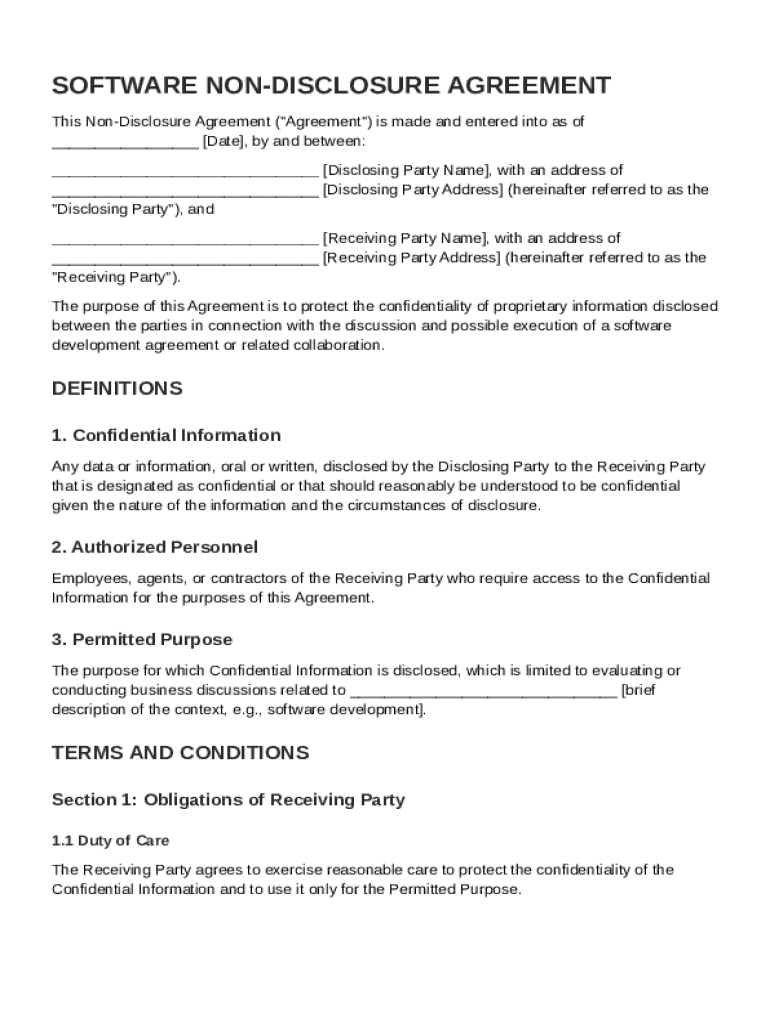







Definition & Meaning
A Software Non-Disclosure Agreement Template serves as a legal contract between parties to protect the confidentiality of proprietary information shared during software development discussions. This agreement clearly defines what constitutes Confidential Information, specifying what can and cannot be disclosed to third parties. It establishes the obligations of the parties involved, particularly how the Receiving Party must handle, protect, and use the confidential information.
Key Elements of the Software Non-Disclosure Agreement Template
- Confidential Information: Clearly describes which information is considered confidential and deserves protection. This can encompass code, algorithms, technical documentation, and project plans.
- Obligations of Receiving Party: Details the Receiving Party's duty to maintain confidentiality and the restrictions on using the information for purposes other than intended.
- Exclusions from Confidentiality: Lists exceptions where information is already public or developed independently.
- Duration: Specifies how long the confidentiality obligations remain in effect.
- Return or Destruction of Information: Outlines procedures for returning or destroying confidential information upon agreement termination.
- Legal Remedies for Breaches: Details consequences and legal actions available if terms are violated.
How to Use the Software Non-Disclosure Agreement Template
- Review the Template: Examine all sections to ensure it aligns with your specific needs and context.
- Customization: Replace placeholders with actual details, such as party names, and specify the scope of information covered.
- Legal Advice: Consider consulting a legal professional to validate the template and adapt it for your particular situation.
- Execution: Ensure both parties sign the document, making it enforceable.
Steps to Complete the Software Non-Disclosure Agreement Template
- Identify the Parties: Clearly list the Disclosing Party and Receiving Party.
- Define Confidential Information: Specify what information the Receiving Party must protect.
- Set Obligations and Restrictions: Outline what the Receiving Party can and cannot do with the information.
- Determine the Duration: Decide on the period the obligations will last.
- Include Legal Frameworks: Insert clauses about governing law, severability, and assignment.
- Sign and Execute: Obtain signatures from both parties to formalize the agreement.
Why Should You Use the Software Non-Disclosure Agreement Template
Using this template helps safeguard your proprietary software development ideas and information. It ensures that any shared data with partners, contractors, or potential collaborators remains secure. Having a signed agreement establishes trust, encourages openness, and outlines clear legal recourse in case of a confidentiality breach.
Who Typically Uses the Software Non-Disclosure Agreement Template
- Software Developers: Protects code and project details when partnering with clients or contractors.
- Businesses: Secures confidential business information during negotiations with potential partners.
- Investors: Safeguards information when evaluating investment opportunities in software projects.
- Consultants and Freelancers: Ensures sensitive client information remains confidential during and after project completion.


Important Terms Related to Software Non-Disclosure Agreement Template
- Non-Disclosure Agreement (NDA): A contract that obligates parties to keep shared information confidential.
- Proprietary Information: Information that is owned by a company or individual, often a trade secret.
- Receiving Party: The individual or entity receiving access to confidential information.
- Disclosing Party: The entity sharing confidential information under an NDA.
Legal Use of the Software Non-Disclosure Agreement Template
The template is used to create legally binding NDAs compliant with relevant U.S. laws, such as the Uniform Trade Secrets Act. Properly executed, it enables the protection of intellectual property and provides a framework for legal resolution if a breach occurs. Legal cases often rely on precise definitions within the NDA to resolve disputes, highlighting the importance of thoroughness in drafting.




