






Definition and Purpose of the Software Development and Maintenance Agreement Template
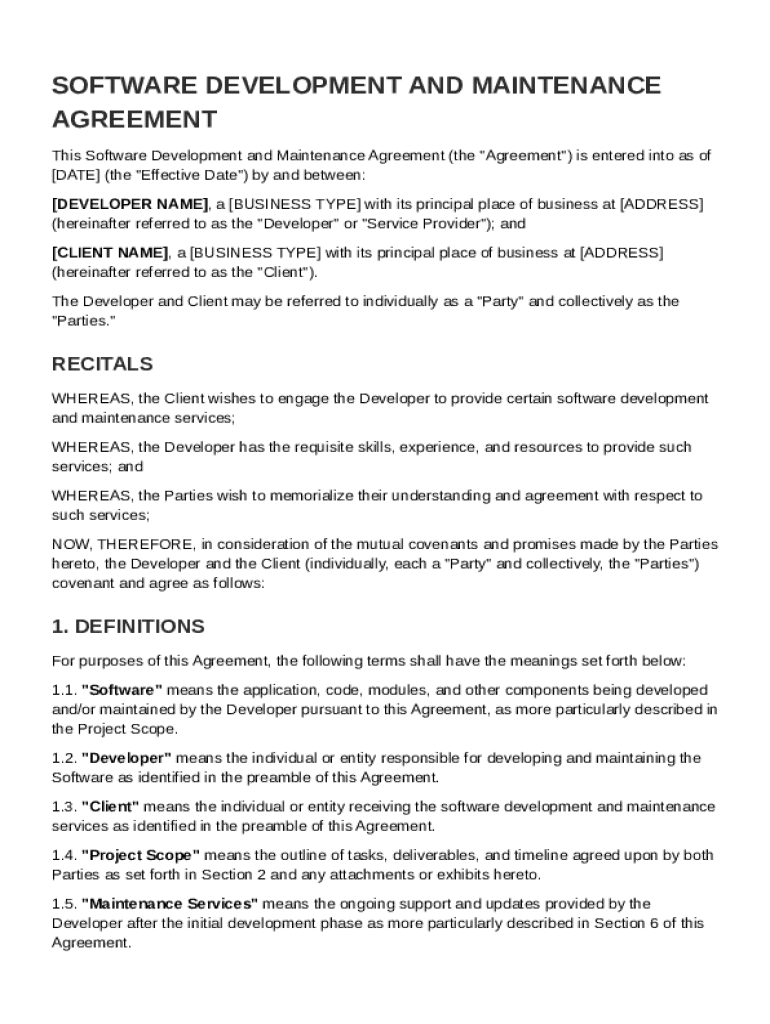
A Software Development and Maintenance Agreement Template serves as a foundational document between a developer and a client that outlines the terms for software development and subsequent maintenance services. This agreement is crucial for setting clear expectations regarding the scope of work, deliverables, timelines, payment structures, and more. It ensures that both parties understand their roles, responsibilities, and the conditions under which the software will be developed and maintained. Additionally, it provides legal protections relating to intellectual property rights and confidentiality obligations, fostering a trusting and secure business relationship.
Key Elements of the Software Development and Maintenance Agreement
When drafting a Software Development and Maintenance Agreement, several critical elements must be addressed to ensure comprehensiveness and clarity for both parties involved:
- Scope of Work: Clearly defines the software project, including specifications, tasks, and deliverables expected during the development phase.
- Payment Terms: Outlines the compensation structure, whether it is milestone-based, hourly, or flat rate, and details the invoicing schedule.
- Intellectual Property Rights: Specifies ownership of the software, ensuring that intellectual property rights are transferred correctly and legally.
- Confidentiality Obligations: Establishes the confidentiality expectations between the developer and client to protect sensitive information.
- Timelines and Milestones: Provides a detailed schedule, including all major milestones and deadlines, to monitor project progress.
- Maintenance and Support: Defines ongoing support and maintenance requirements after the software is delivered, including response times and update schedules.
- Dispute Resolution: Outlines procedures for addressing disagreements, often recommending mediation or arbitration before resorting to litigation.
Steps to Complete the Agreement Template
Completing the Software Development and Maintenance Agreement involves several structured steps, ensuring all necessary components are addressed:
- Identify Parties Involved: Clearly state the full legal names and contact information of both the developer and the client.
- Detail the Project Scope: Include detailed descriptions of the software to be developed, along with user requirements and functionality.
- Establish Payment Schedule: Specify the payment type, frequency, and conditions for installment releases tied to project milestones.
- Set Timelines: Create a comprehensive timeline that includes key milestones and final delivery dates.
- Detail Maintenance Services: Specify the scope of maintenance services, including specific tasks, frequencies, and any ongoing obligations.
- Outline Intellectual Property Provisions: Clearly state the ownership rights for all developed software and any relevant third-party components.
- Include Confidentiality Clauses: Add clauses covering confidentiality to ensure the protection of proprietary information exchanged.
- Define Termination Conditions: Specify the conditions under which the agreement can be terminated by either party, including any required notice periods.
Importance of the Agreement Template
Utilizing a Software Development and Maintenance Agreement Template is critical for several reasons:
- Legal Protection: Provides a clear legal framework to protect both the developer and client in case of disagreements or misunderstandings.
- Project Clarity: Ensures all parties have a mutual understanding of the project's scope and terms, reducing the risk of scope creep.
- Risk Mitigation: Helps mitigate risks by clearly defining responsibilities, deliverables, and contingencies for unforeseen events.
- Professionalism: Demonstrates professionalism and preparedness, enhancing the business relationship and increasing trust between parties.
Who Typically Uses the Agreement Template
Several entities and individuals can benefit from employing the Software Development and Maintenance Agreement Template:
- Independent Software Developers: Freelancers who work with various clients to ensure clear understanding and expectations.
- Software Development Firms: Companies providing comprehensive development services to external clients to formalize projects.
- Corporate Clients: Businesses seeking software solutions tailored to their needs and requiring formal agreements with developers.
- Legal Advisors: Attorneys specializing in technology or intellectual property law who draft and review agreements for clients.


Examples of Using the Agreement Template
In practice, a Software Development and Maintenance Agreement Template can be used in various scenarios:
- Bespoke Software Projects: When a business commissions a developer to create a custom application tailored to its specific needs.
- Long-Term Maintenance Contracts: For ongoing maintenance and updates planned over an extended period, such as annual or multi-year agreements.
- Collaborative Development: In projects where multiple developers or teams are involved, ensuring coordination and consistency.
Legal Use of the Agreement Template
Utilizing a Software Development and Maintenance Agreement Template must comply with legal standards and regulations:
- Compliance with State Laws: Ensures that the agreement adheres to state-specific regulations regarding contracts and intellectual property.
- Electronic Signature Legality: Allows for digital signing in accordance with the ESIGN Act, making the agreement legally enforceable with electronic signatures.
- Protection of Rights: Proper use of the template protects the rights and interests of both parties, especially regarding proprietary information and software ownership.
Software Compatibility and Support
When using the Software Development and Maintenance Agreement Template, it is essential to consider compatibility with various software tools:
- DocHub Platform: Offers seamless integration for creating, editing, and managing agreements with features that support PDF, DOC, and other formats.
- Google Workspace Integration: Enhances productivity by allowing agreements to be imported and exported directly through Google Drive and Gmail, reducing administrative overhead.
- Digital Signing Capabilities: Facilitates the inclusion of legally binding electronic signatures, streamlining the signing process for all parties involved.