
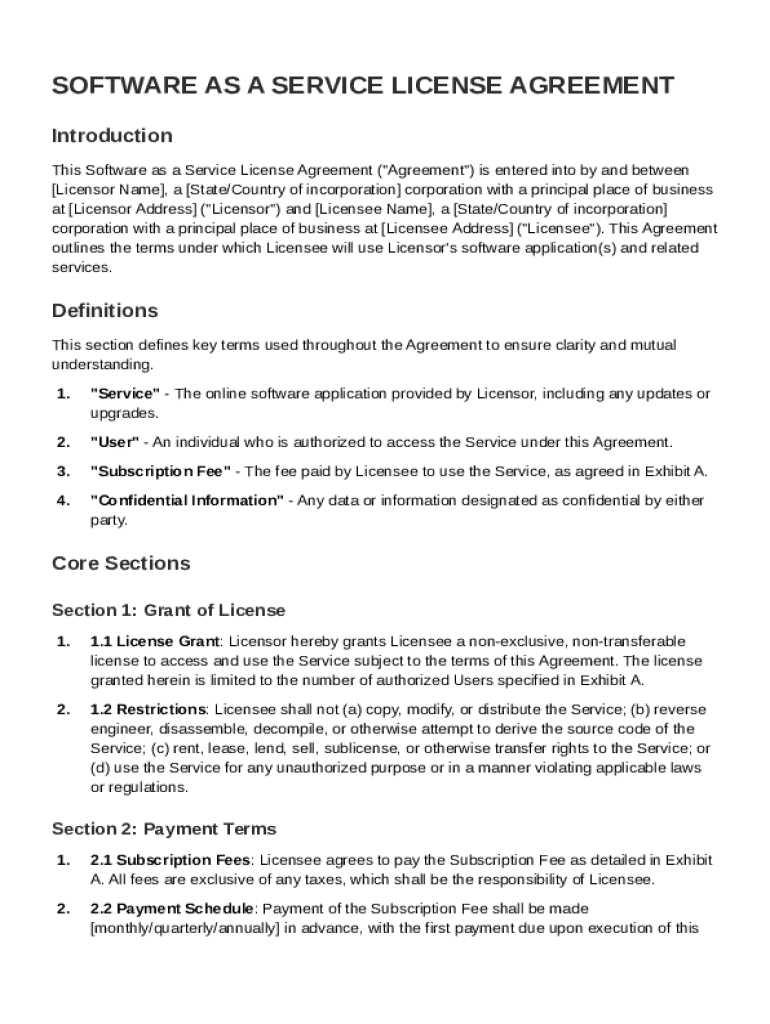







Definition & Meaning
A Software as a Service (SaaS) License Agreement is a legal contract between a service provider (Licensor) and a customer (Licensee) that outlines the terms under which the Licensee can access and use the SaaS application and related services. This agreement details the scope of the license, service usage restrictions, and user obligations. It typically includes important sections like payment terms, data ownership, confidentiality clauses, and liability disclaimers. This document also defines key legal terms and conditions such as dispute resolution procedures and prevailing laws to resolve conflicts.
How to Use the Software As a Service License Agreement Template
To effectively use the SaaS License Agreement Template, begin by reviewing the pre-filled sections for general adaptability to your needs. Personalize it by inserting specifics about your software service and licensee information, such as names, addresses, and relevant dates. Modify clauses to reflect precise payment terms, service levels, and unique conditions relevant to your business operations. Collaborate with stakeholders, including legal advisors, to ensure compliance with applicable laws and completeness. Save and distribute the finalized agreement for review and signature, ensuring all parties understand and accept the terms before proceeding.
Customization Steps
- Replace placeholder text with actual details specific to your agreement.
- Adjust sections such as data ownership and liability to suit specific legal and operational requirements.
- Make sure to add any unique clauses that your service might need, like industry-specific compliance or additional security measures.
Steps to Complete the Software As a Service License Agreement Template
Completing a SaaS License Agreement Template involves several critical steps to ensure it is detailed and legally sound:
- Review Template: Start by thoroughly reading the whole template to understand the default structure and content.
- Enter Basic Information: Input essential data like the names of both parties, addresses, and relevant date sections.
- Tailor Terms: Customize terms regarding software usage, service limitations, and responsibilities to match your exact service offering and policies.
- Financial Clauses: Clearly define payment structures, billing cycles, and penalties for late payments.
- Validate Legal Compliance: Engage a legal professional to review and ensure no section conflicts with current state or federal regulations.
- Finalize and Approve: Obtain feedback from both internal and external stakeholders, finalize the document, and require signatures from all involved parties.
Key Elements of the Software As a Service License Agreement Template
The SaaS License Agreement Template is comprehensive, covering critical elements necessary for protecting both licensor and licensee interests:
- License Grant: Specifies the scope and limitations of the SaaS usage.
- Payment and Fees: Details all financial obligations, including subscription fees and potential penalties.
- Data Security and Privacy: Establishes data protection standards and handling procedures.
- Termination Conditions: Outlines situations under which the agreement can be terminated.
- Dispute Resolution: Designates methods for resolving any disagreements that arise under the agreement.
- Governing Law: Specifies which state laws will be used to interpret the contract.
Legal Use of the Software As a Service License Agreement Template
The legal use of a SaaS License Agreement Template involves ensuring that all provisions within the document comply with applicable federal and state laws. Legal review is necessary to verify that confidentiality clauses, data protection terms, and consumer rights are upheld. The agreement should outline adherence to regulations such as the ESIGN Act for electronic signatures and relevant data protection acts for customer data managed through the service. Maintaining this compliance minimizes legal risk and ensures enforceability in potential disputes.
Important Terms Related to Software As a Service License Agreement Template
Understanding essential vocabulary is crucial for interpreting the SaaS License Agreement Template effectively:
- Licensor: The entity providing the software service.
- Licensee: The party gaining access to the software application.
- Service Level Agreement (SLA): A document that outlines the expected service quality and metrics.
- Confidential Information: Specific information designated as confidential and protected under the agreement.
- Indemnification: Clauses limiting responsibility for losses and damages between the parties involved.
Who Typically Uses the Software As a Service License Agreement Template
The SaaS License Agreement Template is typically utilized by software service providers, including but not limited to established tech companies, startups offering cloud-based solutions, and IT service firms. It is equally important for businesses in sectors like healthcare, finance, and education who utilize SaaS solutions for operational efficiency. These agreements are essential for organizations looking to define clear terms of service with their clients, ensuring mutual understanding and legal protection.


Business Entity Types
- Corporations and LLCs: Require structured agreements to protect assets and business interests.
- Partnerships: Utilize the agreements to specify partner responsibilities and client obligations.
- Startups: Implement the template to quickly establish legal frameworks with early adopters and clients.
State-Specific Rules for the Software As a Service License Agreement Template
While the SaaS License Agreement Template sets a baseline, the specifics can vary significantly by state due to differing legal requirements and business practices. States like California, for instance, have stringent data protection laws that must be integrated into any SaaS contract. The governing law section of the template should reflect the state in which the principal business operates, incorporating any additional clauses needed to ensure compliance with local legislation. This prevents potential legal conflicts and assures the contract's enforceability within the jurisdiction.




