






Key Elements of the Project Agreement Template
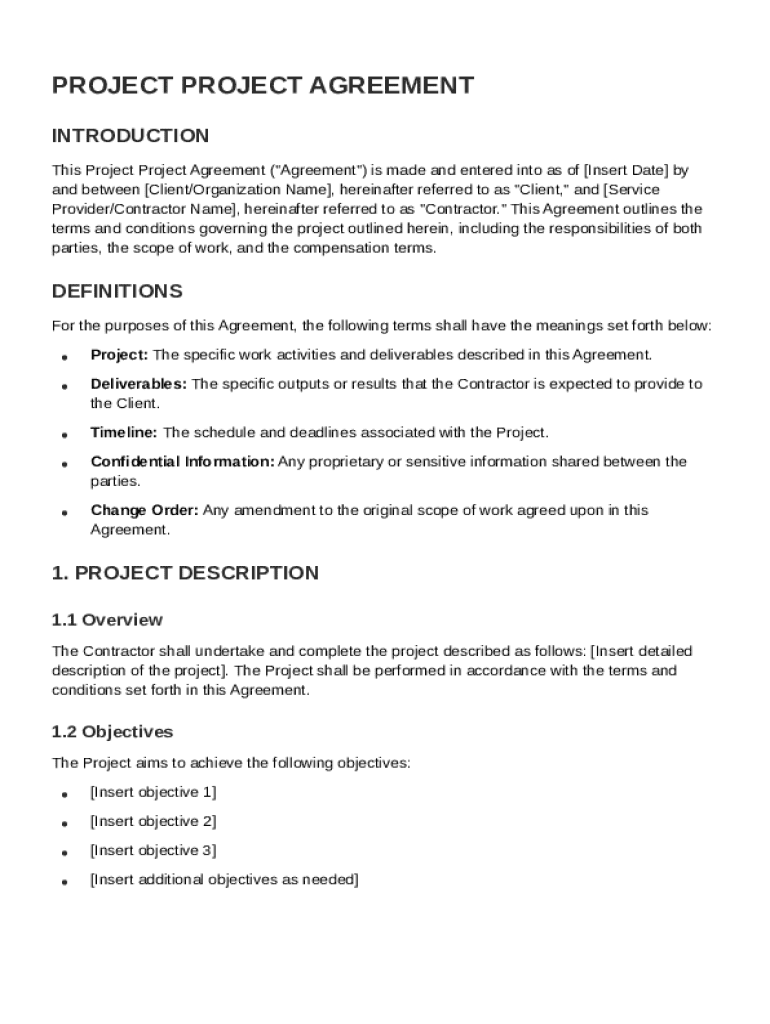
A Project Agreement Template serves as a foundational document detailing the terms and specifics of a project between a client and a contractor. It typically includes provisions that define roles, responsibilities, the scope of work, and timelines. Compensation terms and financial structures are often outlined, ensuring clarity on payment schedules or milestones. Confidentiality clauses may be included to protect proprietary or sensitive information exchanged during the project. Termination conditions specify the circumstances under which parties may exit the agreement. Legal governance aspects, such as jurisdiction and applicable laws, are also critical sections.
Steps to Complete the Project Agreement Template
- Identify the Parties Involved: Clearly state the names and contact information of the client and the contractor.
- Define the Scope of Work: Describe in detail what the project entails, including deliverables and objectives.
- Outline the Timeline: Establish start and end dates, as well as key milestones.
- Specify Compensation Details: Include payment terms such as rates, schedules, and methods.
- Incorporate Confidentiality Obligations: If required, include clauses to protect sensitive information.
- Detail Termination Conditions: Outline how the agreement can be terminated by either party.
- Confirm Legal Parameters: Define which laws and jurisdictions govern the agreement.
Legal Use of the Project Agreement Template
The Project Agreement Template is used to formally establish the legal framework for collaborations. It must comply with relevant contract laws, ensuring that all clauses are enforceable. This includes meeting requirements such as mutual consent and consideration, which are vital for the agreement's legality. The template should also accommodate industry-specific regulations or standards that might apply to the project at hand.
Who Typically Uses the Project Agreement Template
The Project Agreement Template is widely utilized by businesses across various sectors. Freelancers and independent contractors often use it to formalize their engagements with clients. Companies embarking on collaborative projects, especially those involving substantial duration or resources, also find this template valuable. Organisations dealing with subcontractors may also rely on this document to ensure clarity and mutual understanding.


Definition & Meaning
A Project Agreement Template is a standardized document designed to outline the terms and conditions of a professional engagement between a client and a contractor. Its purpose is to define expectations, responsibilities, and obligations of each party involved, thereby minimizing misunderstandings and disputes.
Important Terms Related to Project Agreement Templates
- Client: The person or organization commissioning the project.
- Contractor: The individual or company executing the project work.
- Scope of Work: The detailed description of tasks and responsibilities to be performed.
- Compensation: Payment terms agreed upon by both parties.
- Termination: Conditions under which the agreement can be dissolved.
Software Compatibility
While Project Agreement Templates are often available in PDF format, platforms like DocHub allow you to edit them without needing additional software. Documents can be imported from or exported to popular cloud services like Google Drive and Dropbox, ensuring broad compatibility.
Digital vs. Paper Version
Using a digital version of a Project Agreement Template offers efficiencies in terms of ease of editing, sharing, and storage. Digital signatures, legally binding and compliant with the ESIGN Act, provide an easy way to finalize agreements electronically. However, some organizations may still prefer paper versions for traditional reasons or where required by industry practices.
Examples of Using the Project Agreement Template
Consider a software development company contracted to build an application. The Project Agreement Template would detail the timeline, deliverables, and payment terms specific to the phases of development. Similarly, a marketing agency could use the template to establish terms for a campaign, specifying responsibilities for both creative and reporting duties.