






Definition and Purpose of the Product Agreement Template
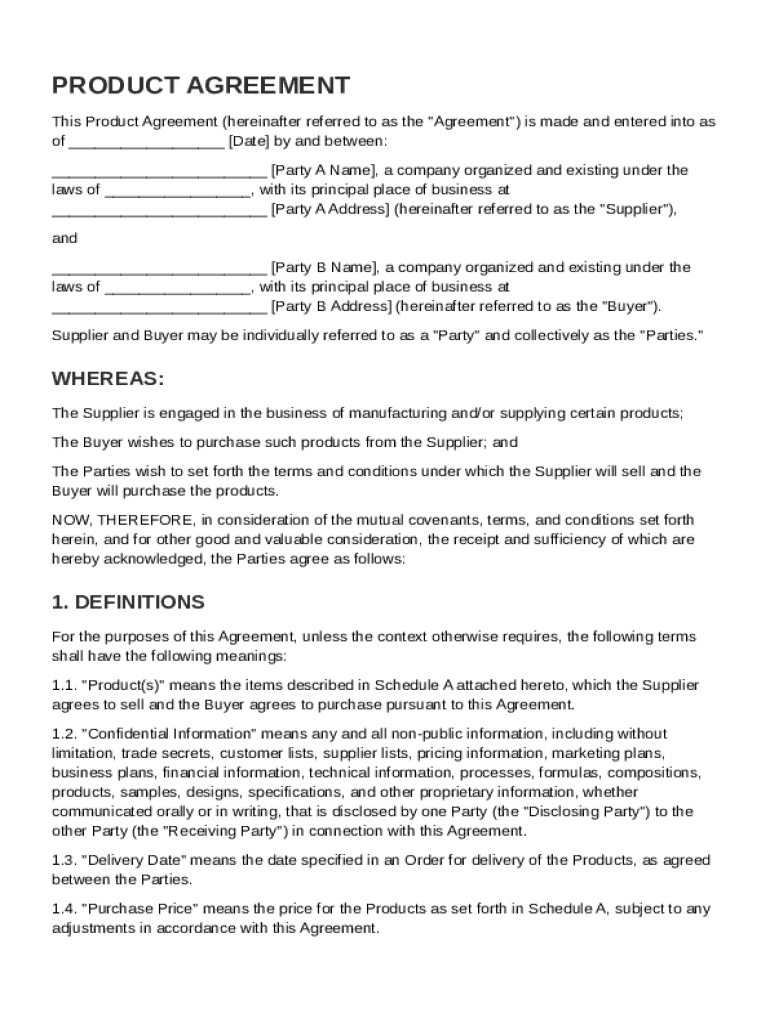
The Product Agreement Template is a pre-designed document that outlines the terms and conditions surrounding the sale and purchase of specified products between a supplier and a buyer. This template establishes the responsibilities of both parties, covering aspects such as delivery, payment terms, warranties, confidentiality, and termination clauses. The purpose of this agreement is to provide a clear framework for transactions and to protect the mutual interests of both parties involved in the deal. By having a standardized format, both suppliers and buyers can ensure consistency and completeness in their contractual arrangements.
Key Elements of the Product Agreement Template
A well-structured Product Agreement Template typically includes several key components that are essential to the contract's comprehensiveness and enforceability:
- Definitions: Clearly defines the terms used within the agreement to ensure all parties have a mutual understanding.
- Responsibilities: Outlines the obligations of both the supplier and the buyer regarding product delivery, quality assurance, and payment terms.
- Warranties and Disclaimers: Describes what warranties the supplier provides regarding the products and any disclaimers related to potential defects.
- Confidentiality Clauses: Ensures that both parties keep the contents of the contract and any shared business information private.
- Termination Conditions: Specifies the circumstances under which the contract can be legally terminated by either party and the procedures for doing so.
Steps to Complete the Product Agreement Template
Completing a Product Agreement Template involves several systematic steps to ensure all necessary details are accurately captured:
- Review the Template: Thoroughly read the entire document to ensure it meets your specific needs and that you understand each section.
- Fill in Essential Information: Add specific details related to the buyer and supplier, including names, addresses, and contact information.
- Specify Product Details: Clearly outline the products being sold, including descriptions, quantities, and any relevant specifications.
- Set Payment Terms: Define the payment structure, including amounts, due dates, and accepted payment methods.
- Detail Delivery Arrangements: Establish delivery timelines, locations, and any associated costs.
- Add Specific Clauses: Customize the agreement with any additional clauses needed for confidentiality, arbitration, or special considerations.
Important Terms Related to the Product Agreement Template
Understanding key terminology within the Product Agreement Template is vital for both parties to ensure mutual comprehension:
- Parties: Refers to the buyer and seller involved in the agreement.
- Consideration: The monetary amount agreed upon for the purchase of the goods.
- Force Majeure: A clause that addresses the inability to fulfill contractual obligations due to unforeseen events beyond one's control.
- Indemnification: A provision where one party agrees to compensate the other for any losses that occur.
- Jurisdiction: Specifies which legal framework and geographical location will govern the agreement.
Legal Use of the Product Agreement Template in the United States
The legal application of a Product Agreement Template in the United States requires adherence to federal and state laws regarding contracts:
- Uniform Commercial Code (UCC): Most product agreements are subject to the UCC, which governs sales and commercial transactions.
- Federal Trade Commission (FTC) Regulations: Ensure compliance with FTC guidelines to avoid any deceptive or unfair trade practices.
- State Variations: Each state may have additional requirements or exceptions that need compliance, particularly in terms of sales tax and consumer protection laws.
State-Specific Rules for the Product Agreement Template
While the template can provide a consistent framework nationwide, state-specific rules may influence the agreement's content and enforceability:
- California: Requires inclusion of certain consumer protection clauses.
- New York: Has specific requirements for disclaiming warranties in product sales.
- Texas: Offers particular provisions for resolving disputes through mediation before litigation.
Who Typically Uses the Product Agreement Template
The Product Agreement Template is broadly utilized by various entities and individuals needing standardized contract agreements:
- Suppliers and Manufacturers: Often employ this template when formalizing sales with distributors or other businesses.
- Retailers: Use the template for purchasing stock from various suppliers.
- Small Businesses: Benefit from the template for maintaining uniformity across all supplier agreements.
- Legal Teams: Customize these templates to fit specific contractual needs for their clients.


Examples of Using the Product Agreement Template
Real-world scenarios provide insight into how this template can be effectively applied:
- E-commerce Business Expansion: A growing online retailer uses the template to formalize agreements with multiple suppliers as it expands its product offerings.
- Start-up Supplier Agreements: A tech start-up employs the template to solidify initial agreements with component suppliers.
- Manufacturing Contract Renewal: A manufacturer contracts via the template with a current supplier to extend their relationship with updated terms.