






Definition & Meaning
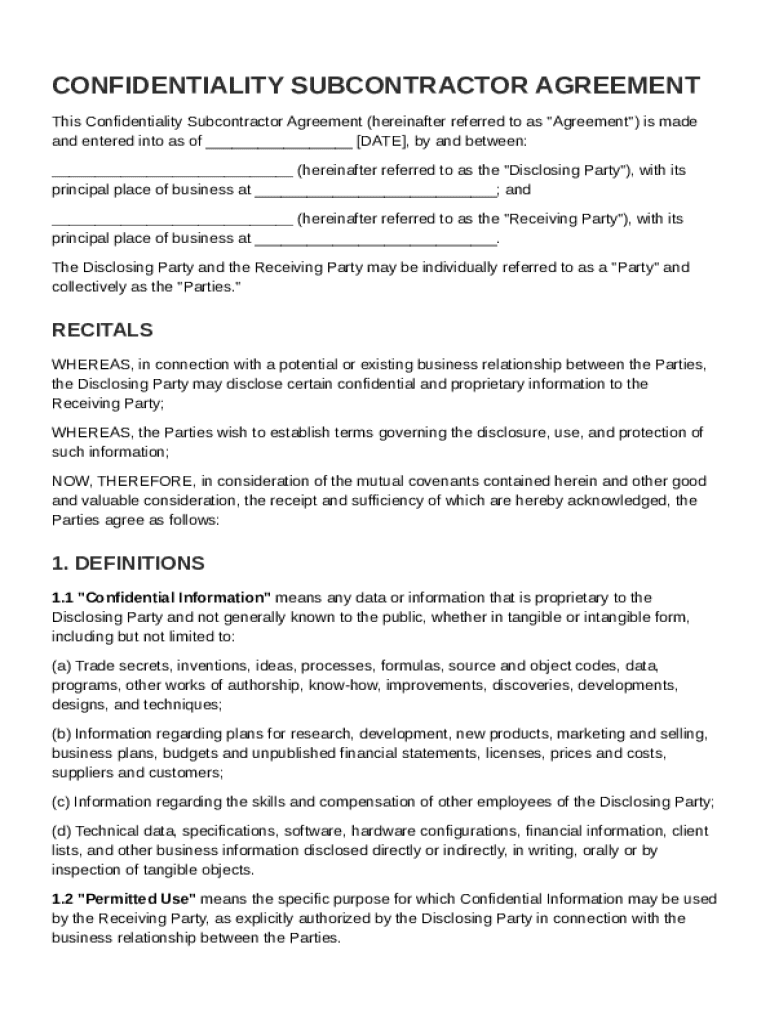
The Confidentiality Subcontractor Agreement Template is a legally binding document designed to safeguard sensitive information shared between a Disclosing Party and a Receiving Party during a business relationship. It clearly defines what constitutes 'Confidential Information' and outlines the responsibilities of the Receiving Party in protecting this information. This includes the terms for how confidential data may be used, as well as the conditions under which it must be returned or destroyed.
- Confidential Information: Typically encompasses proprietary data, trade secrets, and other non-public business information.
- Obligations: The Receiving Party must adhere to stringent measures to prevent unauthorized disclosure or use.
This template serves as a critical tool for businesses needing to protect their intellectual property during collaborations with subcontractors.
Key Elements of the Confidentiality Subcontractor Agreement Template
The template includes several essential components that establish the parameters for confidentiality:
- Identification of Parties: Clearly specifies both the Disclosing and Receiving Parties involved in the agreement.
- Definition of Confidential Information: Provides a detailed description of what data is considered confidential.
- Obligation of Confidentiality: Outlines the Receiving Party's duty to safeguard the information.
- Exclusions from Confidentiality: Lists what is not covered, such as information already in public domain.
- Duration: Specifies how long the confidentiality obligations remain in effect.
- Termination Conditions: Details the circumstances under which the agreement can be ended.
These elements ensure that both parties have a clear understanding of their rights and responsibilities, reducing the risk of misunderstandings or legal disputes.
Steps to Complete the Confidentiality Subcontractor Agreement Template
Completing the Confidentiality Subcontractor Agreement Template involves several critical steps to ensure its efficacy and legal enforceability:
- Identify and List Parties: Start by clearly identifying and listing the Disclosing Party and Receiving Party.
- Define the Confidential Information: Specify what information will be protected under the agreement.
- Determine Obligations: Outline the responsibilities of the Receiving Party to protect the information.
- Establish Exclusions: Clearly define any exceptions to the confidentiality obligations.
- Set Duration: Determine how long the agreement will remain in effect.
- Outline Termination Clauses: Detail how and under what circumstances the agreement can be terminated.
Thoroughly reviewing and accurately completing each section of this template is crucial to ensure it meets the specific needs of the parties involved.
Legal Use of the Confidentiality Subcontractor Agreement Template
The legal enforceability of the Confidentiality Subcontractor Agreement Template is grounded in its compliance with applicable laws:
- Governing Law: Agreements are typically governed by the laws of the state in which they are executed. Ensure that your template complies with state-specific legal requirements.
- Dispute Resolution: The template should include a mechanism for resolving disputes, such as mediation or arbitration.
- Binding Nature: Both parties should acknowledge the binding nature of the agreement through signatures.
To maximize legal protection, parties should consider consulting with a legal professional to tailor the template to their specific circumstances.
Importance of Using the Confidentiality Subcontractor Agreement Template
Utilizing the Confidentiality Subcontractor Agreement Template offers several advantages to businesses and individuals:
- Protects Sensitive Information: Helps prevent unauthorized disclosure of proprietary data, trade secrets, and business strategies.
- Mitigates Legal Risks: Clearly defined terms reduce the risk of disputes and legal liabilities.
- Enhances Professional Relationships: Establishes clear expectations, which can foster trust and cooperation between parties.
Incorporating this template into subcontractor relationships is a strategic move for businesses aiming to secure their confidential information.
Examples of Using the Confidentiality Subcontractor Agreement Template
Consider these scenarios where the Confidentiality Subcontractor Agreement Template proves invaluable:
- Manufacturing: A company hires a subcontractor to produce components for a new product and wants to protect proprietary production processes.
- IT Services: An IT firm engages a subcontractor to develop a software application and needs to safeguard its source code and architecture.
- Marketing Agencies: A marketing agency uses subcontractors for campaign development and needs to protect client information and marketing strategies.
These examples illustrate how diverse industries can benefit from implementing robust confidentiality agreements.
State-Specific Rules for the Confidentiality Subcontractor Agreement
While confidentiality agreements are generally consistent, state laws can affect their enforceability:
- Non-Compete Clauses: Some states have restrictions on or prohibit the inclusion of non-compete clauses within confidentiality agreements.
- Trade Secret Definitions: Definitions of what constitutes a trade secret can vary significantly across states.
- Enforcement: Varies in terms of penalties and remedies available for breach of confidentiality obligations.
Legal professionals can provide guidance on state-specific requirements to ensure compliance when drafting or executing these agreements.
Who Typically Uses the Confidentiality Subcontractor Agreement Template
This agreement is commonly used by a wide range of professionals and organizations that engage subcontractors:
- Construction Companies: For sharing project plans and cost estimates.
- Tech Companies: For maintaining software and hardware development secrecy.
- Health Care Providers: For protecting patient data when outsourcing billing services.
Each of these entities benefits from limiting the risk of unauthorized disclosures by subcontractors through a structured confidentiality framework.