






Definition and Meaning
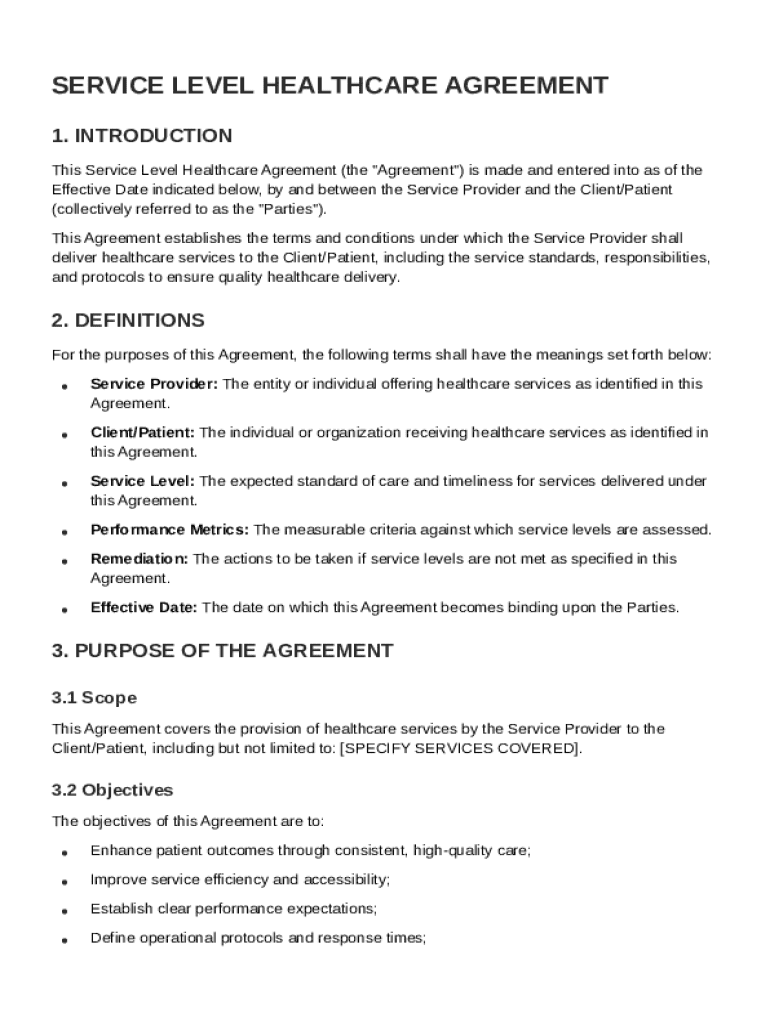
A Service Level Healthcare Agreement Template is a structured document used by healthcare providers and clients to define the terms and conditions of service deliveries. It includes roles, responsibilities, service standards, performance metrics, compliance obligations, and procedures for addressing service shortfalls. This template is crucial for ensuring clear communication, enhancing patient outcomes, and maintaining high-quality care standards while safeguarding patient data privacy and security. Within the healthcare industry, these agreements serve as binding contracts that enforce accountability and promote consistent service quality.
Key Elements of the Service Level Healthcare Agreement Template
The template is composed of several crucial elements that form the backbone of the agreement:
-
Roles and Responsibilities: Clearly outlines the obligations of both the service provider and the client. The healthcare provider's duties can include the delivery of specific health services, while the patient's obligations may involve providing accurate medical information and complying with treatment plans.
-
Service Standards: Defines the quality and timeliness expectations for the services provided. This section ensures that healthcare providers maintain a standard of care that meets professional medical standards.
-
Performance Metrics: Identifies the benchmarks and key performance indicators (KPIs) used to evaluate service effectiveness. Metrics might include patient recovery rates, appointment wait times, and diagnostic accuracy.
-
Compliance and Regulations: Ensures adherence to healthcare laws, such as HIPAA regulations for patient privacy and data protection. This is critical to ensure legal compliance and safeguard sensitive medical information.
-
Remediation Processes: Describes the steps for addressing any service deficiencies. This includes corrective actions, time frames for resolution, and compensation or service credits in cases of non-compliance.
Steps to Complete the Service Level Healthcare Agreement Template
Completing the Service Level Healthcare Agreement Template involves a series of methodical steps:
-
Initial Drafting: Begin by gathering relevant information from both parties, including their expectations, responsibilities, and compliance requirements.
-
Define Services: Clearly articulate the healthcare services being provided, ensuring specificity in descriptions to avoid ambiguity.
-
Set Standards: Establish measurable standards and performance metrics. This ensures that both parties agree on what constitutes acceptable service quality.
-
Draft Compliance Clauses: Include clauses addressing compliance with legal and ethical standards in healthcare.
-
Detail Remediation: Outline the remediation procedures to highlight how service lapses will be addressed and corrected.
-
Review and Revise: Collaboratively review the draft with all parties involved. Make necessary revisions to ensure clarity and mutual agreement.
-
Finalize and Sign: Finalize the document by obtaining signatures from the relevant parties, making the agreement legally binding.
Legal Use of the Service Level Healthcare Agreement Template
The template is used within the framework of U.S. healthcare regulations, serving as a binding contract between the service provider and recipient. It ensures compliance with laws like the Health Insurance Portability and Accountability Act (HIPAA) for patient data protection. By incorporating legal guidelines, the agreement outlines consequences for breaches and offers legal recourse to address non-compliance. It's essential for users to ensure that the agreement is reviewed by legal professionals to ensure it meets all necessary legal standards and addresses all possible liabilities and responsibilities.
Who Typically Uses the Service Level Healthcare Agreement Template
This template is generally used by:
-
Healthcare Providers: Hospitals, clinics, and independent practitioners who deliver medical services to patients.
-
Patients and Clients: Individuals receiving healthcare services who need a formal agreement outlining their service expectations.
-
Healthcare Administrators: Professionals who manage service provider contracts and ensure patient care standards are met.
-
Legal and Compliance Teams: Specialists responsible for reviewing healthcare contracts to assure regulatory compliance.


How to Use the Service Level Healthcare Agreement Template
Using the template involves understanding its structure and purpose:
-
Customization: Tailor the template to the specific services and standards pertinent to the provider and the patient.
-
Collaboration: Work collaboratively with affected stakeholders, including medical staff, legal advisors, and compliance officers, to ensure all aspects of the service are covered.
-
Documentation: Collect all necessary service details, performance standards, and compliance requirements before filling out the template.
-
Distribution and Storage: Ensure that all involved parties have access to the finalized agreement and store it securely, adhering to data protection regulations.
State-Specific Rules for the Service Level Healthcare Agreement Template
Healthcare regulations can vary significantly from state to state. It's important for providers and clients to:
-
Research Specific State Laws: Understand how state-specific healthcare laws may affect the terms outlined in the template.
-
Include State Regulations: Adapt the template to incorporate any state-specific compliance mandates, ensuring that the agreement is legally enforceable within the relevant jurisdiction.
-
Seek Legal Guidance: Engage with legal counsel familiar with state regulations to review and approve the agreement, ensuring compliance with local laws.
Examples of Using the Service Level Healthcare Agreement Template
-
Hospital Partnerships: A large hospital group uses the template to establish consistent service standards across various locations, ensuring uniform patient care quality.
-
Specialist Clinics: A cardiology clinic implements the template to guarantee that patients receive timely and effective interventions, aligned with professional healthcare standards.
-
Telemedicine Services: A telehealth provider delineates service quality metrics and compliance requirements, addressing unique challenges in remote healthcare delivery and ensuring that virtual consultations meet in-person care standards.