






Definition and Meaning
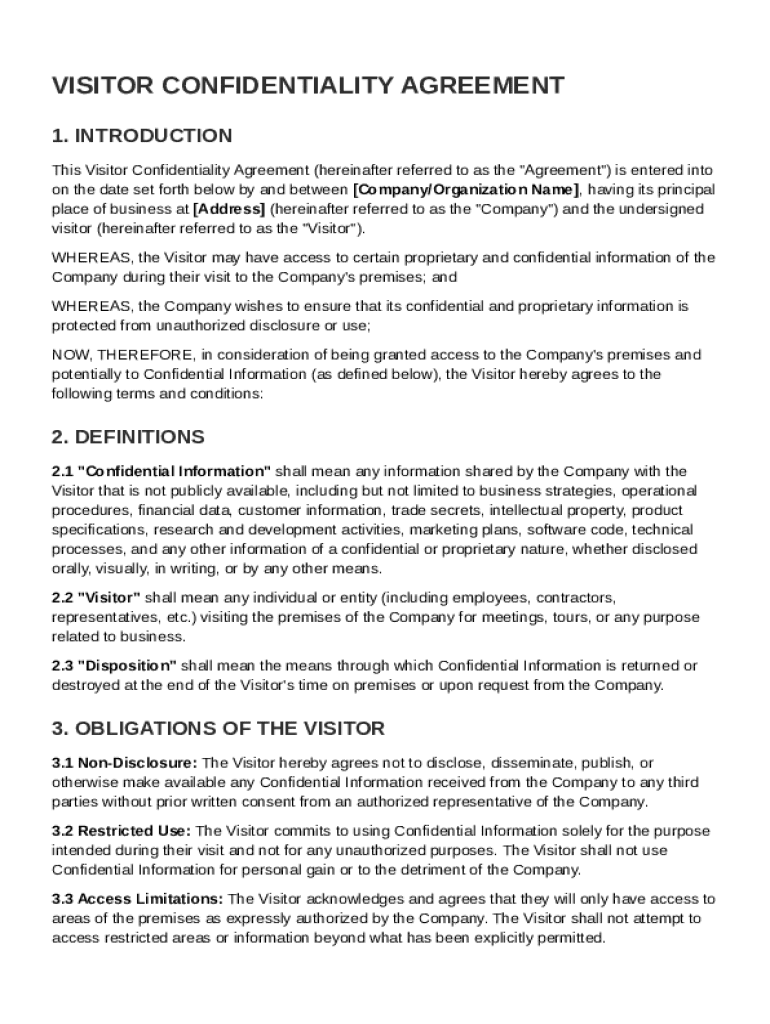
A Visitor Confidentiality Agreement is a legal document that outlines the responsibilities of a visitor when accessing confidential information during a company visit. It defines what constitutes 'Confidential Information' and sets the limitations on how this information can be used by the visitor. The agreement serves to protect sensitive business information, ensuring it is not disclosed to unauthorized parties and is only used for intended purposes.
Key Components
- Confidential Information: Specifies the types of information considered confidential, such as business strategies, financial data, customer lists, or proprietary technology.
- Obligations of the Visitor: Establishes the responsibility of the visitor to maintain confidentiality and adhere to the limitations on information usage.
- Duration of Confidentiality: Sets the timeframe during which the visitor is required to maintain confidentiality, which often extends beyond the visit.
Key Elements of the Visitor Confidentiality Agreement Template
The Visitor Confidentiality Agreement Template comprises several essential elements crucial for legal protection and clarity.
Components of the Template
- Parties Involved: Clearly identifies the visitor and the host company.
- Purpose of Visit: Details the specific reason for the visit and the nature of the confidential information shared.
- Non-Disclosure Obligations: Provides detailed obligations prohibiting disclosure of confidential information to third parties.
- Use Restrictions: Limits the use of the confidential information to the scope defined in the agreement.
Practical Application
These elements ensure that both parties understand their rights and responsibilities, preventing potential legal disputes and fostering mutual trust.
Steps to Complete the Visitor Confidentiality Agreement Template
Completing a Visitor Confidentiality Agreement involves several methodical steps to ensure accuracy and completeness.
Detailed Instructions
- Identify Parties: Fill in the names and contact details of both the visitor and the company.
- Outline Confidential Information: Clearly describe the information that will be accessed and categorized as confidential.
- Set Terms and Conditions: Detail the visitor’s obligations concerning non-disclosure and restricted usage.
Important Considerations
- Legal Review: It’s advisable to have the agreement reviewed by legal counsel to ensure compliance with legal standards.
- Signatures: Require both parties to sign the agreement to formalize it legally.
Legal Use of the Visitor Confidentiality Agreement Template
The Visitor Confidentiality Agreement Template is designed to meet legal requirements and provide enforceability in the event of a breach.
Legal Framework
- Breach Consequences: The agreement outlines potential legal repercussions if the visitor breaches its terms.
- Jurisdiction: Specifies the legal jurisdiction under which disputes will be resolved.
Practical Legal Advice
Ensuring the template complies with legal standards is crucial for maintaining its enforceability in court. Consulting a legal professional to customize the template to specific needs and jurisdictions is often recommended.
Important Terms Related to Visitor Confidentiality Agreements
Understanding specific legal and technical terms used within the agreement is crucial for clarity and compliance.
Key Terminology
- Disclosing Party: The company sharing the confidential information.
- Receiving Party: The visitor who receives the confidential information.
- Material Breach: A significant breach that could result in legal action.
Usage Context
These terms help clarify the responsibilities and expectations from both parties involved in the confidentiality agreement, ensuring mutual understanding and adherence to the terms.
Business Types That Benefit Most from Visitor Confidentiality Agreement Templates
Certain business sectors can gain substantial benefits from implementing Visitor Confidentiality Agreements.
Industries Utilizing Visitor NDA
- Technology Firms: Protect proprietary software and business models.
- Manufacturing Companies: Guard trade secrets and production processes.
- Healthcare Providers: Ensure patient data confidentiality.
Benefits
These agreements help companies safeguard critical information. By defining terms of access and usage, businesses can avoid unauthorized disclosure, maintaining competitive advantages.
Who Typically Uses the Visitor Confidentiality Agreement Template?
This agreement template is widely used across different sectors where maintaining information secrecy is crucial.


Typical Users
- Corporate Offices: Protect sensitive business strategies.
- Research Facilities: Secure intellectual property during collaboration with external parties.
- Government Agencies: Preserve confidentiality of sensitive programs and operations.
Rationale
The use of the template is indispensable where the flow of confidential information is part of business operations, ensuring that all involved parties comply with confidentiality requirements.
State-Specific Rules for the Visitor Confidentiality Agreement Template
Certain states may have specific rules and regulations governing the enforceability of confidentiality agreements.
Legal Variations Across States
- California: Strict limitations on non-compete clauses that might influence the wording of confidentiality agreements.
- Texas: Enforces robust protections for trade secrets.
- New York: Requires clear definition and scope of confidential information.
Adaptation Strategy
Consideration of state-specific laws is vital when drafting these agreements to ensure they are legally binding. Consulting with a legal expert familiar with local regulations can help tailor agreements effectively.
Examples of Using the Visitor Confidentiality Agreement Template
Providing real-world scenarios helps illustrate the effectiveness of using a Visitor Confidentiality Agreement.
Industry Scenarios
- Tech Startups: A tech company inviting potential investors might use a confidentiality agreement to protect innovative software details.
- Medical Research Labs: During tours for potential collaborators, labs employ these agreements to safeguard proprietary research data.
Result Analysis
In these cases, agreements prevent unauthorized information leaks, protecting the competitive and proprietary interests of the organizations effectively.
Who Issues the Form
The Visitor Confidentiality Agreement Template is generally issued by the host company or organization that controls the confidential information.
Issuance Process
- Corporate Legal Departments: Responsible for drafting and issuing the template.
- HR Departments: Often oversee the distribution and execution of such agreements during onboarding or visitor entry processes.
Management
Typically, the agreement is distributed and managed by internal departments to ensure all visitors are properly briefed and compliant before accessing sensitive areas or documents.