






Definition and Meaning of Verbal Agreement Template
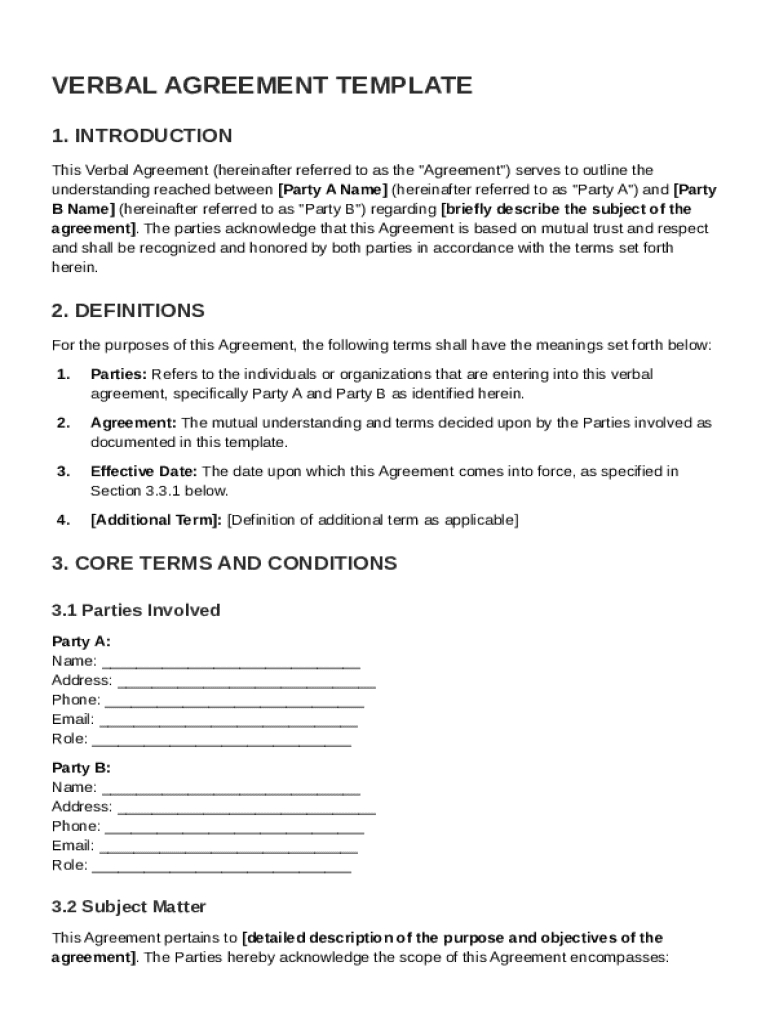
A verbal agreement template serves as a foundational structure for outlining the mutual consent and terms agreed upon between two parties, known as Party A and Party B, in situations where a formal written contract is not created. It is a document format that consolidates crucial elements such as terms, conditions, and responsibilities into a cohesive document while emphasizing verbal consent as a rightful form of agreement. This template often includes sections such as definitions, core terms and conditions, responsibilities of each party, and compensation details. Each of these components is meant to establish clear guidelines that both parties are expected to follow, ensuring a mutual understanding and commitment without needing formal documentation.
How to Use the Verbal Agreement Template
Using a verbal agreement template involves several key steps to ensure all aspects of the agreement are well-documented. First, gather information relevant to the agreement, like the parties involved, key terms, and expected responsibilities. Then, populate the template with these details, ensuring that each section aligns with the discussed and agreed-upon terms. Perform a thorough review to confirm that all aspects are clearly articulated and both parties fully understand each component. Upon completion, both parties should verbally acknowledge and consent to the terms outlined within the template, reinforcing that all sections reflect their intentions and consent. It is prudent to keep a digital record of the agreed terms for reference in case disputes arise later.
Key Elements of the Verbal Agreement Template
The verbal agreement template is broken down into several key components, ensuring that all needed details are captured. Key elements include:
- Definitions: Clearly define all terms and parties involved in the agreement to eliminate ambiguity and confusion.
- Terms and Conditions: Outline the core agreements, specifying obligations, deliverables, timelines, and methods of performance.
- Responsibilities: Assign duties and responsibilities to each party, clearly noting expectations and performance criteria to avoid misunderstandings.
- Compensation Details: Include terms related to payments, financial arrangements, or exchanges, ensuring clarity in terms of amount, method, and schedule.
- Communication Methods: Specify preferred communication channels for ongoing updates and resolving any issues that arise.
- Amendments and Modifications: Outline how changes can be made to the agreement, including requirements for additional consent.
Each of these elements plays a pivotal role in ensuring that both parties have a comprehensive understanding and the elements are tailored to match the nature of the agreement.
Legal Use of the Verbal Agreement Template
In the United States, verbal agreements are generally legally binding, but proving the details may be challenging compared to written agreements. The verbal agreement template aids in structuring the agreement as thoroughly as possible under a verbal premise. This helps clarify terms and conditions that can be critically useful in circumstances where evidence of consent and terms need to be presented. Various states have different rules about what constitutes a binding agreement and the template should be carefully reviewed to meet these local legal standards, especially in cases involving substantial financial transactions or long-term commitments.
State-Specific Rules for the Verbal Agreement Template
When using a verbal agreement template, it is important to consider state-specific rules and regulations. While general contract law in the United States allows for verbal agreements to be legally binding, certain jurisdictions have specific requirements or limitations. For instance, certain types of contracts must be in writing according to the Statute of Frauds, which varies from state to state. Swiftly reviewing these legislations helps prevent legal complications in enforceability. Understanding these variations is crucial for adapting the template to fit the specific regulatory environment of the state where the agreement is being executed.
Steps to Complete the Verbal Agreement Template
Completing a verbal agreement template involves a structured approach:
- Gather Initial Information: Collect all necessary details, including the parties involved, nature of the agreement, and any specific terms discussed.
- Populate the Template: Fill out the template sections systematically, ensuring accuracy and completeness in the provided information.
- Review for Completeness: Go through the filled template to ensure all aspects of the verbal agreement are captured and any potential areas of ambiguity are clarified.
- Verbal Consent and Acknowledgment: Both parties should discuss and verbally agree on the details within the template to ensure mutual understanding.
- Digital Record Keeping: Maintain a digital or written record of the verbal agreement for future reference or in case of disputes.
Through these steps, the verbal agreement template efficiently translates spoken terms into a structured format, providing clarity and coherence to all parties involved.
Common Use Cases for the Verbal Agreement Template
Verbal agreement templates have versatile applications in various contexts:
- Freelancer Agreements: Often used for short-term projects where formal contracts may be deemed excessive.
- Informal Partnerships: Suitable for temporary collaborations where mutual benefit is acknowledged.
- Service Exchanges: Utilized in arrangements where services, rather than goods, are exchanged and require clearly defined service expectations.
Each use case illustrates the flexibility of verbal agreements in professional or personal settings where trust, simplicity, and immediate consent are prioritized over complex formalities.
Important Terms Related to Verbal Agreement Template
Several crucial terms are often associated with verbal agreements:
- Mutual Consent: The agreement of both parties on the terms and conditions outlined in the template.
- Performance Obligations: Specified duties each party is expected to fulfill as part of the agreement.
- Breach: Failure to meet any of the terms which may impact enforceability or lead to dispute resolution processes.
Understanding these terms and ensuring they are effectively integrated into the verbal agreement template can help safeguard against misunderstandings and foster a more collaborative and coherent relationship between parties.