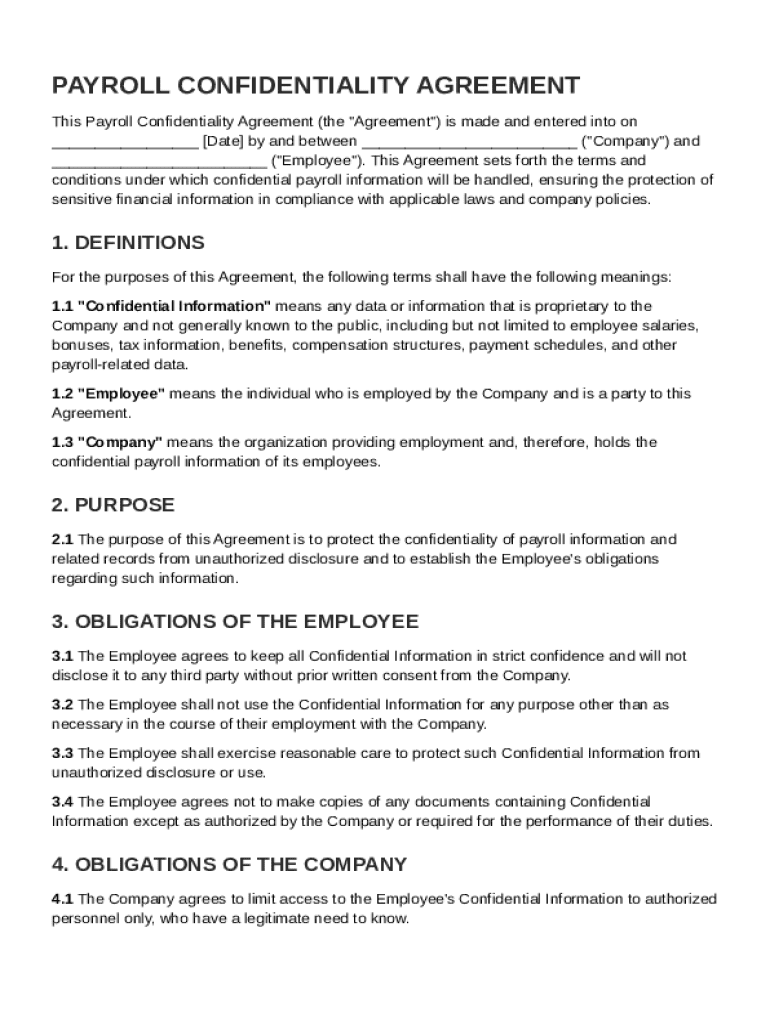







Definition and Purpose of the Payroll Confidentiality Agreement Template
The Payroll Confidentiality Agreement Template serves as a documented arrangement designed to protect sensitive payroll information shared between a company and its employees. By employing this template, organizations can clearly define what constitutes 'Confidential Information' related to payroll, creating a shared understanding of the bounds of confidentiality. The agreement also delineates the obligations of both parties for maintaining the secrecy of payroll details, reflecting a mutual commitment to safeguarding sensitive data.
Key Elements of a Payroll Confidentiality Agreement
When drafting or reviewing a Payroll Confidentiality Agreement, several critical components must be present to ensure comprehensive coverage:
- Definition of Confidential Information: A clear description of what payroll details are considered confidential.
- Obligations: Specific responsibilities each party has in maintaining confidentiality.
- Duration: The time period during which the information must remain confidential.
- Exceptions: Scenarios in which information might be disclosed legally, such as under law enforcement requirements.
- Remedies: Potential consequences or legal actions in case of a breach of agreement.
Steps to Complete the Payroll Confidentiality Agreement Template
The process of customizing a Payroll Confidentiality Agreement Template involves several key steps to ensure it meets the specific needs of both the company and employee:
- Fill in Basic Details: Include the names and contact information of the company and employee involved.
- Specify Confidential Information: Clearly define which pieces of payroll information are to be kept confidential.
- Outline Obligations: Document the specific actions both parties agree to undertake to protect the information.
- Clarify Exceptions: Detail any circumstances under which the information might be legally disclosed.
- Determine Duration: Set the timeframe for which the agreement is valid.
- Finalize and Sign: Ensure both parties read, understand, and sign the agreement to demonstrate acceptance.
How to Obtain the Payroll Confidentiality Agreement Template
Accessing this template can be straightforward. Many firms offer downloadable forms, while platforms like DocHub provide editable templates that can be customized online. Here's how you might obtain and begin using the template:
- Downloadable Options: Available from legal document service providers that offer PDF or DOC formats.
- Online Platforms: Utilize services like DocHub to edit and save templates without downloading software.
- Business Software: Companies may integrate these templates directly into HR or accounting software systems.
Who Typically Uses the Payroll Confidentiality Agreement Template
This type of agreement is essential in various professional settings:
- Human Resources Departments: Manage employee records and ensure payroll confidentiality.
- Finance Teams: Need to handle payroll data that must remain confidential.
- Legal Departments: Review and enforce confidentiality agreements.
- Employees: Expected to acknowledge and respect the confidentiality of their payroll information and peers.


Legal Use of the Payroll Confidentiality Agreement Template
Legal enforceability is a cornerstone of confidentiality agreements. Here's how to ensure legal compliance:
- Use Clear Language: Avoid ambiguity to prevent disputes over entry terms.
- Ensure Mutual Consent: Both parties must voluntarily agree to the terms.
- Adhere to Local Laws: Agreements must comply with state and federal regulations, which may affect validity or enforceability.
- Periodically Review: Regularly update the agreement to reflect any legal or organizational changes.
Important Terms Related to Payroll Confidentiality Agreement Template
Familiarity with certain legal and technical terms can improve comprehension of the agreement:
- 'Confidential Information': Explicitly defined data that must be protected.
- 'Breach': A violation of the agreement's terms.
- 'Governing Law': Legal jurisdiction applicable to the agreement.
- 'Non-Disclosure': The action of keeping information private and not sharing it without permission.
Business Types that Benefit Most from the Payroll Confidentiality Agreement Template
Specific business types may find this template particularly beneficial due to the nature of their payroll handling:
- Large Corporations: Where payroll is managed for large numbers of employees across various departments.
- Small Businesses: Need a structured framework to introduce professionalism in handling payroll details.
- Accounting Firms: Often have access to payroll information for various clients and need to ensure proper confidentiality.
- Tech Companies: Manage payroll for employees working remotely and across international jurisdictions.
Software Compatibility with Online Confidentiality Agreement Tools
The payroll confidentiality agreements, when edited online, can be accessed and modified using various digital platforms:
- DocHub Integration: Streamlined editing directly in browsers without the need for additional software.
- Google Workspace Compatibility: Direct integration allows editing within Google Drive or exporting signed documents back into cloud storage.
- Cross-Platform Usage: Accessible and functional on both desktop and mobile devices, utilizing consistent SSL encryption for security.