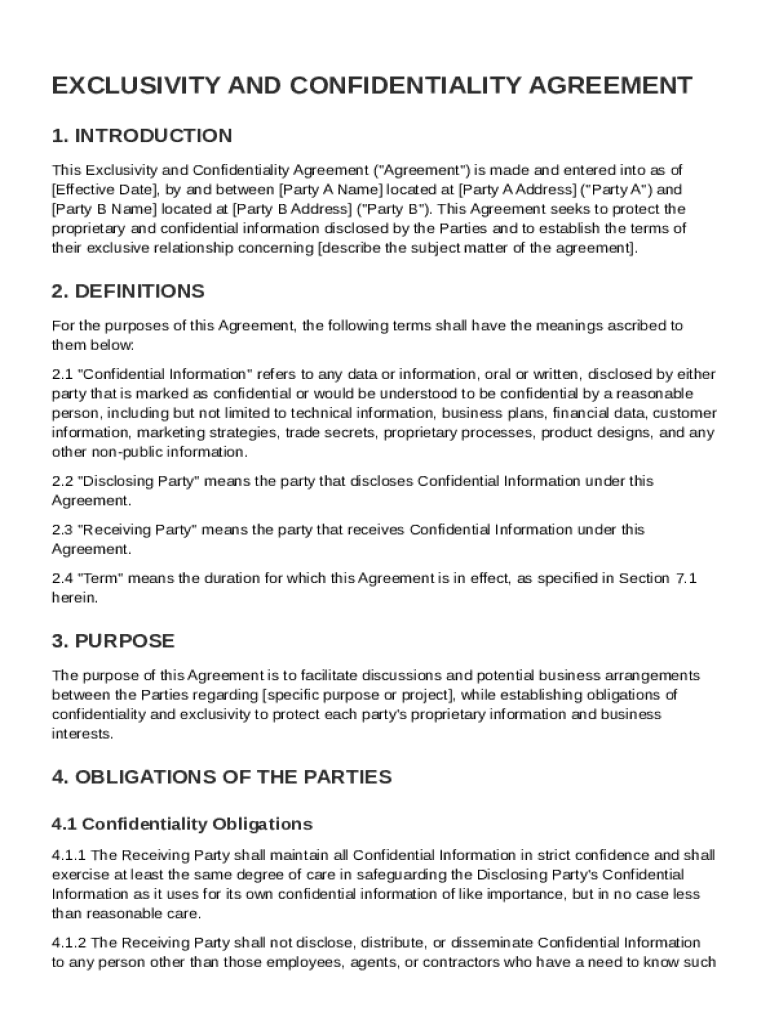







Definition and Meaning
An Exclusivity and Confidentiality Agreement is a legal document that outlines the parameters of confidentiality and exclusivity between two parties, typically in a business context. The agreement serves to protect sensitive information that will be exchanged and to ensure that neither party discloses or uses this information outside the agreed terms. Exclusivity refers to the commitment by the parties to engage solely with each other for specified purposes, prohibiting any third-party interactions in these areas. This agreement is essential in establishing trust and laying the foundations for a secure business relationship, setting legal boundaries, and clarifying expectations for both parties involved.
Key Elements of the Exclusivity and Confidentiality Agreement Template
The Exclusivity and Confidentiality Agreement Template typically includes several important elements:
- Definitions: Clarifies what constitutes confidential information and proprietary data.
- Confidentiality Obligations: Details the responsibilities each party has in protecting and handling shared information.
- Exclusivity Terms: Specifies the scope and duration of the exclusivity between parties.
- Exceptions to Confidentiality: Lists circumstances under which sharing information is permissible.
- Intellectual Property Rights: Protects the rights related to any intellectual property exchanged or collaborated on during the project.
- Termination Provisions: Describes the conditions and processes for ending the agreement, including breach scenarios.
These components ensure that all necessary aspects of confidentiality and exclusivity are comprehensively addressed.
How to Use the Exclusivity and Confidentiality Agreement Template
Utilizing the Exclusivity and Confidentiality Agreement Template involves a systematic approach to ensure it meets the specific requirements of the engaging parties.
- Customization: Tailor the template by inserting the specific names and details of the parties involved.
- Scope Definition: Clearly outline the scope of information and activities covered under the exclusivity and confidentiality terms.
- Review Terms: Ensure all terms are understood and agreed upon, including legal obligations and rights.
- Legal Assistance: Consider consulting legal professionals to verify that the agreement adheres to applicable laws and effectively protects the interests of both parties.
- Signature and Date: Both parties must sign and date the document to formalize the agreement.
This approach ensures the agreement is customized appropriately and legally binding.
Steps to Complete the Exclusivity and Confidentiality Agreement Template
Completing the Exclusivity and Confidentiality Agreement Template is a structured process:
- Fill Out Party Details: Enter accurate party names, addresses, and roles.
- Define Confidential Information: Detail what constitutes as confidential information based on the business needs.
- Set Exclusivity Conditions: Specify the start and end dates, and any conditions under which the exclusivity can be altered.
- Outline Confidentiality Obligations: Clearly state each party’s obligation toward maintaining confidentiality.
- Determine Exceptions: List exceptions, if any, that allow for information to be shared.
- Include Termination Clauses: Address how and when the agreement can be terminated.
- Execute the Agreement: Ensure all necessary signatures and dates are included to validate the document legally.
Following these steps ensures thorough and accurate completion of the agreement.
Important Terms Related to Exclusivity and Confidentiality Agreement Template
When working with an Exclusivity and Confidentiality Agreement, several terms hold particular importance:
- Proprietary Information: Refers to data and information that is owned by a party and is considered confidential.
- Non-Disclosure Agreement (NDA): A component of confidentiality that restricts parties from disclosing information.
- Breach of Contract: Occurs when any terms of the agreement are not adhered to, leading to legal implications.
- Mutual Agreement: An arrangement where both parties consent to terms and conditions outlined in the agreement.
- Jurisdiction: Determines under which legal framework or geographical area the agreement is governed.
Understanding these terms is crucial for comprehending the agreement’s scope and implications.
Legal Use of the Exclusivity and Confidentiality Agreement Template
The legal use of an Exclusivity and Confidentiality Agreement Template underscores its significance in protecting business interests and securing proprietary information. This document legally binds parties to confidentiality, preventing the misuse of shared data. It establishes legal accountability, ensuring that any deviation from the agreed terms can lead to legal consequences. The agreement also provides legal grounding for engaging in exclusive negotiations, deterring the unauthorized involvement of third parties. Thus, its usage is crucial in minimizing legal risks and maintaining a secure business environment.
State-Specific Rules for the Exclusivity and Confidentiality Agreement Template
While the core elements of an Exclusivity and Confidentiality Agreement remain consistent, certain state-specific rules may impact its structure and enforcement:
- Varying Legal Requirements: States may have different regulations regarding the enforceability of confidentiality agreements.
- Public Policy Considerations: Some states impose limitations based on public policy to ensure agreements do not overly restrict competitive practices.
- Governing Law Provisions: Agreements may need to specify the state law that governs the terms of the contract.
Understanding and aligning with state-specific rules ensures the agreement remains enforceable and compliant.
Examples of Using the Exclusivity and Confidentiality Agreement Template
Real-world scenarios elucidate the practical use of the Exclusivity and Confidentiality Agreement Template:
- Mergers and Acquisitions: Companies involved in M&A transactions often use these agreements to protect sensitive negotiations and business data.
- Product Development Collaborations: Businesses that co-develop new products need to ensure their proprietary technologies and processes remain confidential.
- Vendor Relationships: Before entering into exclusive supply agreements, companies may rely on these templates to secure pertinent negotiations and data exchanges.
These examples illustrate the versatility and critical importance of such agreements in various business contexts.