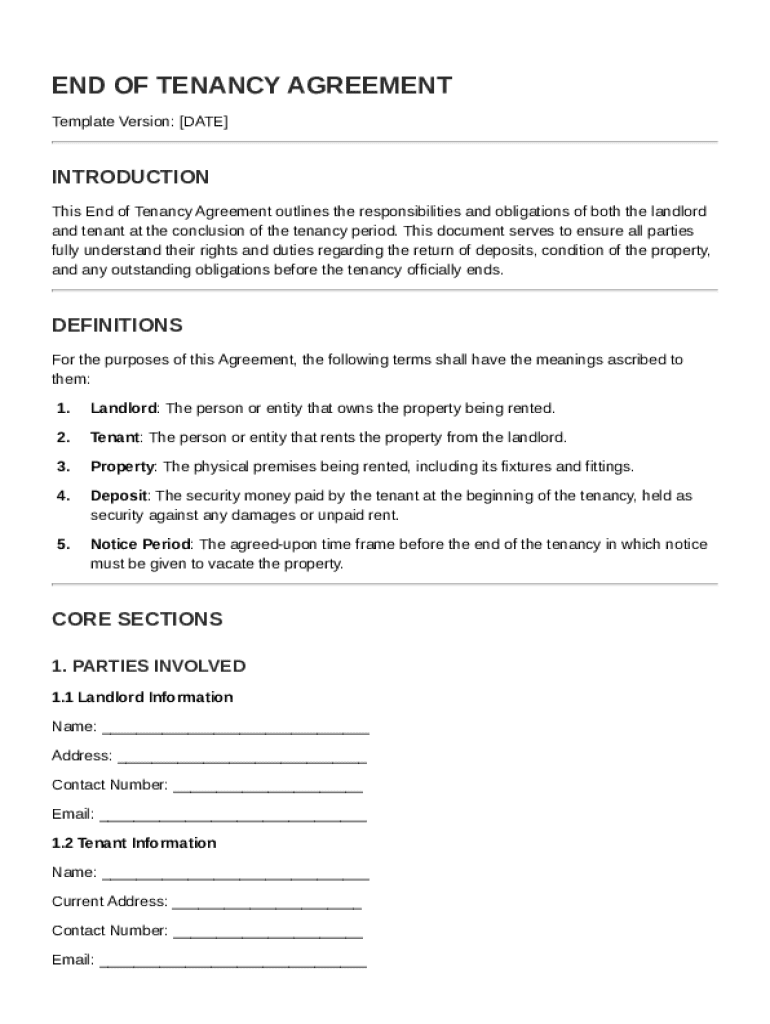







Definition & Meaning
The End of Tenancy Agreement Template is a formal document that outlines the responsibilities and obligations of landlords and tenants at the conclusion of a rental period. It acts as a legal arrangement to ensure all parties are clear about their duties, which often includes returning deposits, property inspections, and agreeing on the timeframe and conditions required for vacating. By specifying these details, the template helps to prevent misunderstandings and disputes at the end of a lease.
- Typically includes agreements on how the property should be returned to the landlord.
- Contains clauses regarding the return of security deposits after evaluating property condition.
- Provides guidelines for addressing any damages or maintenance issues noted at the time of exit.
- Aids in ensuring compliance with relevant state laws and regulations.
Key Elements of the End of Tenancy Agreement Template
The template contains several critical components that need to be addressed. Each section ensures clarity and serves a specific purpose in concluding a tenancy.
- Tenant and Landlord Information: Lists the contact details and legal names of all parties involved, establishing clear lines of communication.
- Property Details: Describes the property being rented, including address and any unique features or items included in the lease.
- Deposit Return Conditions: Specifies conditions under which the security deposit will be returned, including deductions for damages beyond normal wear and tear.
- Notice Requirements: Details the amount of notice required by both the tenant and landlord before vacating or terminating an agreement.
- Inspection Process: Outlines a mutual property inspection timeline to verify the condition of the rental unit.
Steps to Complete the End of Tenancy Agreement Template
Completing the End of Tenancy Agreement requires careful attention to detail to ensure accuracy and compliance.
- Fill in Basic Information: Start by entering the personal details of both the tenant and landlord, as well as the property details.
- Specify Notice Periods: Clearly indicate the notice period required for terminating the tenancy, typically outlined by state law.
- Detail Deposit Return Protocol: Include the terms that govern the return of deposits and any potential deductions.
- Outline Inspection Procedures: Agree on a process for conducting the final property inspection to assess any potential damage.
- Signatures and Dates: Ensure all parties sign and date the agreement to validate its terms.
This template can be digitally signed and shared using platforms like DocHub, which ensure the legality and authenticity of signatures.
Legal Use of the End of Tenancy Agreement Template
The legal framework surrounding end-of-tenancy agreements is essential for protecting the rights of both landlords and tenants.
- Compliance with Landlord-Tenant Laws: Ensure the template adheres to local regulations and standard practices within the jurisdiction.
- Dispute Resolution Clauses: Include clauses that provide methods for resolving disputes, reducing the likelihood of litigation.
- Legally Binding Signatures: Utilize electronic signature processes to bind the agreement legally, as offered by platforms like DocHub.
Examples of Using the End of Tenancy Agreement Template
Real-world scenarios provide insight into the practical application of the End of Tenancy Agreement Template.
- Family Moving to a New State: A family relocates, requiring clear agreement terms to ensure their deposit is returned after leaving the rental property in good condition.
- College Student Transitioning Housing: A student uses the agreement to formalize the move-out process from campus housing, ensuring all parties are aligned on responsibilities.
- Corporate Lease Ending: A business uses the template to end a commercial lease, making clear agreement adjustments specific to office space and equipment.
Important Terms Related to End of Tenancy Agreement Template
Understanding key terminology within the template is crucial for both landlords and tenants.
- Security Deposit: A sum of money held in trust to cover potential damages or unpaid rent.
- Wear and Tear: Refers to the expected deterioration that occurs in property due to normal use.
- Lease Termination: The process by which a tenancy is formally concluded.
Who Typically Uses the End of Tenancy Agreement Template
Several categories of users routinely depend on this template to ensure a smooth transition at the end of a lease term.
- Landlords: Utilize the template to protect property investments and ensure compliance with lease terms.
- Tenants: Rely on the template to document and safeguard their rights and financial interests at the end of a tenancy.
- Property Managers: Employ the template to standardize the closing process for multiple units, ensuring consistency.


How to Obtain the End of Tenancy Agreement Template
Accessing the End of Tenancy Agreement Template can be straightforward and efficient.
- Online Platforms: Platforms like DocHub offer the template in a fillable, ready-to-use format that can be customized and signed digitally.
- Download from Cloud Storages: Available through cloud services such as Google Drive or Dropbox, enhancing accessibility and convenience.
By leveraging digital resources such as DocHub, both landlords and tenants can streamline the process, facilitating immediate editing and sharing.