






Definition and Meaning of an NDA Agreement Template
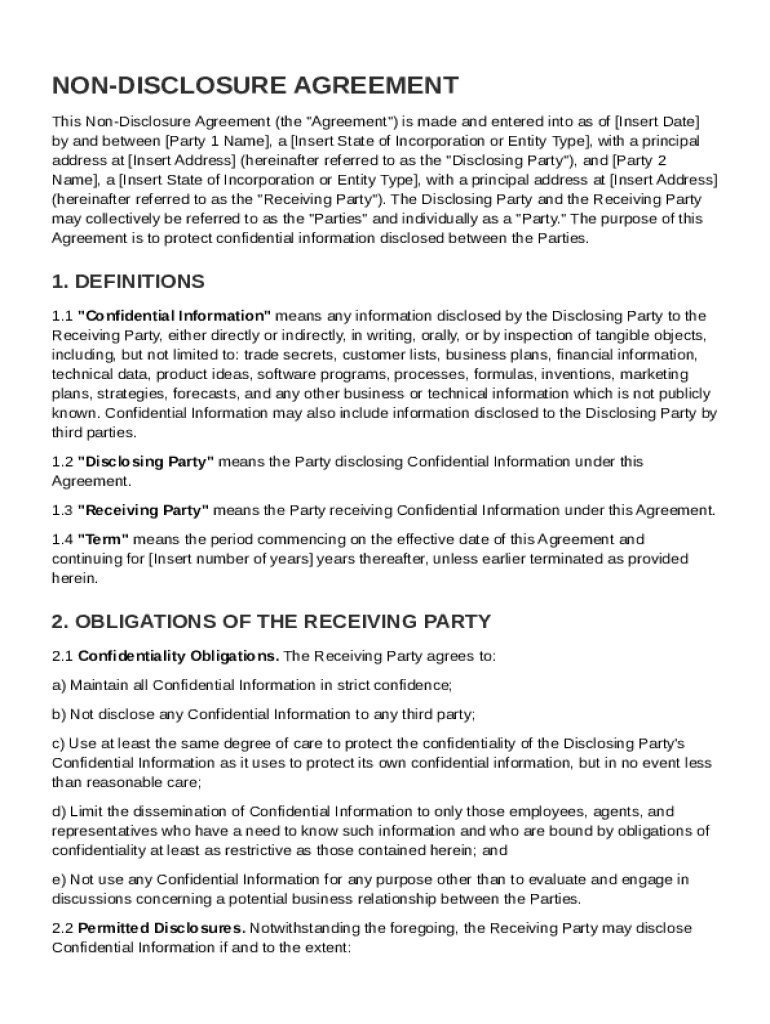
The NDA Agreement Template outlines the foundational framework establishing confidentiality between two parties, typically the Disclosing Party and the Receiving Party. This template serves to protect sensitive information shared during business negotiations, partnerships, or collaborations. At its core, the NDA defines what constitutes 'Confidential Information' which can range from trade secrets and proprietary processes to client lists and financial records. These elements become crucial in ensuring that all shared information remains secure and that potential breaches are handled legally.
Specific Use Cases for NDAs
- Business Partnerships: In scenarios where companies enter negotiations or joint ventures, NDAs shield sensitive information like market strategies.
- Employment: Employers often use NDAs to protect intellectual property when new hires access proprietary technologies.
- Mergers and Acquisitions: Critical in securing financial and operational details exchanged between involved entities.
How to Use the NDA Agreement Template
Utilizing the NDA Agreement Template involves several careful steps to ensure it meets specific business needs. First, identify all parties involved and specify the nature of the confidential information shared. Both parties must acknowledge and agree upon the terms laid out in the document. The document can then be customized using DocHub’s comprehensive editing tools, such as adding text fields for signatures or annotation areas to clarify terms.
Step-by-Step Guide
- Upload the Document: Import the template from your storage or create a new document on DocHub.
- Define Confidential Information: Clearly articulate what information should remain confidential.
- Outline Obligations: Specify the obligations of the Receiving Party regarding how they should handle the information.
- Include Exclusions: Detail any exclusions from confidentiality, such as publicly available information.
- Finalize Terms: Ensure all legal, ownership, and return terms are included.
Key Elements of the NDA Agreement Template
The NDA Agreement Template is composed of several key sections that provide comprehensive guidance for managing confidential information. These elements are critical to protecting sensitive data and ensuring legal enforceability.
Core Components
- Description of Confidential Information: Clearly outlines what information is protected under the agreement.
- Obligations of the Receiving Party: Specifies how the receiving party must handle and protect the information.
- Exclusions from Confidentiality: Identifies what information is not covered by the NDA, such as information already publicly available.
- Duration of Confidentiality: Dictates the period during which the information must be kept confidential.
- Return of Materials: Details the process for returning or destroying confidential information upon request.
Legal Use of the NDA Agreement Template
The legal enforceability of an NDA is crucial for its utility. When drafting or using an NDA Agreement Template, it is important to adhere to applicable laws such as the Uniform Trade Secrets Act or specific state laws. For the NDA to be binding, parties must ensure mutual understanding and consent, emphasizing precision and clarity in the language. Additionally, for international dealings, it’s essential to align the NDA with relevant foreign laws to maintain enforceability.
Steps to Complete the NDA Agreement Template
Completing the NDA Agreement Template involves a structured approach to ensure that all critical elements are addressed. Begin by filling in the parties' names and respective roles, followed by detailing the confidential information to be protected. It is essential to utilize DocHub's editing features to customize the template effectively.
Detailed Completion Steps
- Enter Party Information: Specify the names and roles of all involved parties.
- Define Scope of Confidentiality: Clearly define what is considered confidential.
- Use Editing Tools: Add, edit, or annotate specific clauses using DocHub's robust tools.
- Include Legal Provisions: Ensure that all legal provisions, such as governing law, are included.
- Review and Sign: Finalize the document, allowing parties to review and digitally sign using DocHub’s signature tools.
How to Obtain the NDA Agreement Template
Accessing the NDA Agreement Template can be streamlined through digital platforms like DocHub, where the document can be edited, shared, and stored. By importing the template from your storage or directly from cloud services like Google Drive, Dropbox, or OneDrive, users can ensure ease of access and compatibility with various file formats.
Access Methods
- Direct Download: Access from your computer or connected cloud services.
- Start from Scratch: Use DocHub to build a bespoke NDA template.
- Collaboration Features: Share with team members for input and approval within DocHub’s collaborative toolkit.
State-Specific Rules for the NDA Agreement Template
In the U.S., each state may have specific regulations governing NDAs, which influence how they are drafted and enforced. These state-specific rules can affect aspects like non-compete clauses or the statute of limitations for breaches. It is vital to customize your NDA based on the state jurisdiction to ensure compliance and enforcement.
Considerations by State
- California: Often restrictive, especially regarding non-compete clauses.
- New York: Requires reasonable limits on duration and scope.
- Texas: Demands NDAs to be explicit in their definition of confidential information.
Important Terms Related to NDA Agreement Template
Understanding the terminology associated with NDA Agreement Templates enhances comprehension and effective usage. These terms form the lexicon necessary for drafting, interpreting, or negotiating NDAs.
Key Terminologies
- Disclosing Party: The entity sharing confidential information.
- Receiving Party: The entity receiving the confidential information.
- Confidentiality Bond: Legal commitment to keep information discreet.
- Governing Law: Jurisdictional laws that apply to the agreement.
These sections and detailed explanations provide robust insight and utility for understanding and effectively leveraging an NDA Agreement Template within various business contexts.