






Definition and Purpose of the CCTV Service Level Agreement Template
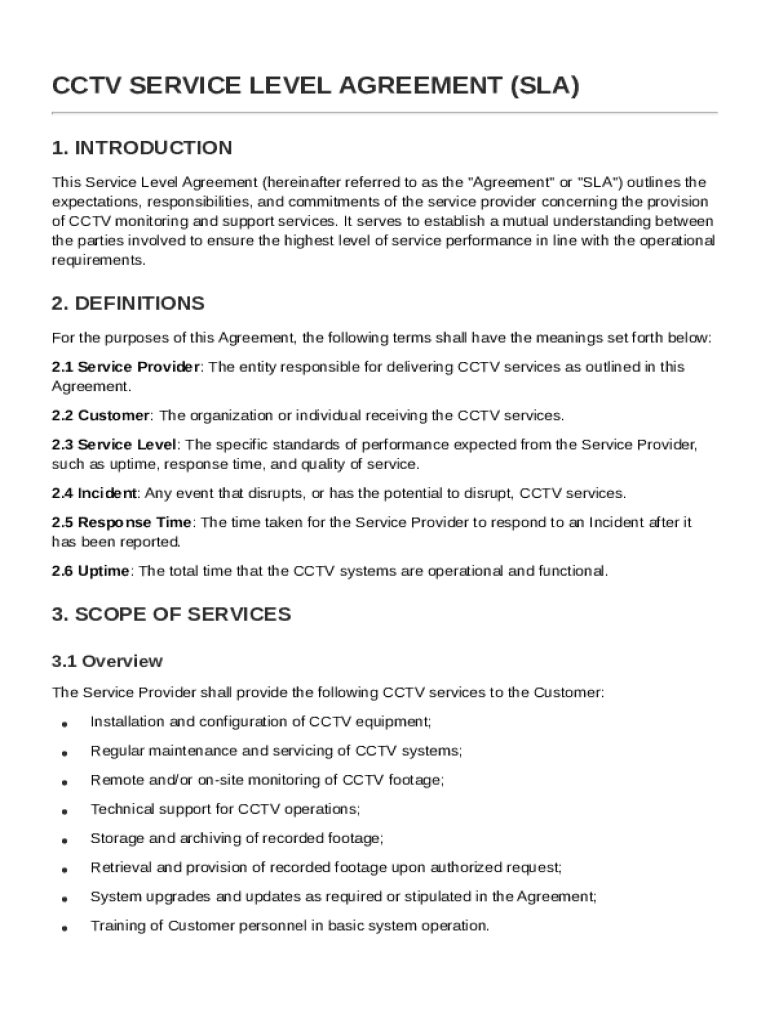
The CCTV Service Level Agreement (SLA) Template is a foundational document establishing the terms of service between a CCTV service provider and a client. It clearly defines both parties' roles, responsibilities, and expectations in terms of CCTV monitoring and support services. The primary objective is to ensure high service performance that aligns with the operational needs of both the provider and the customer, while mitigating potential disputes over service expectations and delivery.
- Key Terms Outlined: The template includes precise definitions of critical terms to prevent misunderstandings, such as uptime, response time, and incident management. This ensures clear communication and mutual understanding between the parties involved.
- Scope of Services: It elaborates on the range of services provided, detailing everything from installation to maintenance and monitoring, offering the customer a comprehensive view of the services covered under the agreement.
How to Use the CCTV Service Level Agreement Template
Using the CCTV SLA Template involves customizing it to fit the specific requirements and arrangements between the service provider and the client.
- Customization: Adjust the template to reflect unique service arrangements, including response times, performance metrics, and any additional services such as emergency support or extended monitoring.
- Review and Approve: After customization, both parties should carefully review the document to ensure all expectations are accurately captured. This review process should include legal advisors if necessary to verify compliance with local regulations.
- Implementation: Once both parties agree on the terms, the SLA is finalized and signed, officially becoming the guiding document for the service relationship.
Key Elements of the CCTV Service Level Agreement Template
A robust CCTV SLA Template includes several critical components to ensure clarity and enforceability:
- Performance Metrics: Defines the standards for evaluating the service quality, such as response times and system uptime percentages, to ensure accountability.
- Incident Management Procedures: Outlines the steps to be taken in the event of a service disruption, including reporting protocols and resolution timelines.
- Roles and Responsibilities: Clearly delineates the obligations of both the provider and the customer to avoid overlap and ensure each party knows their duties.
Steps to Complete the CCTV Service Level Agreement Template
Completing the SLA requires a systematic approach to ensure all elements are adequately addressed:
- Gather Necessary Information: Collect data on service levels, performance expectations, and customer requirements.
- Draft the Agreement: Fill out the template with the gathered information, focusing on customizing sections that reflect the unique service needs.
- Review and Revise: Conduct a joint review session with both parties to address any discrepancies and make necessary revisions.
- Finalize and Sign: Obtain signatures from authorized representatives of both parties to formalize the agreement.
Important Terms Related to the CCTV Service Level Agreement Template
Familiarity with specific legal and technical terms is crucial for understanding and implementing the SLA effectively.
- Uptime: The guaranteed percentage of time the CCTV system will be operational and accessible to the customer.
- Response Time: The time frame within which the service provider must address a reported issue or service request.
- Amendment Clause: Describes how modifications to the SLA can be made, including notification requirements and approval processes.
Legal Use of the CCTV Service Level Agreement Template
The SLA serves as a legally binding document, setting forth obligations that both parties must adhere to:
- Confidentiality Obligations: Protects sensitive information accessed or managed by the service provider during the contract term.
- Amendments and Termination: Details the conditions under which the agreement can be altered or terminated, providing a framework for orderly modification or cessation of services.
Examples of Using the CCTV Service Level Agreement Template
Real-world application of the CCTV SLA Template can be seen in various settings where security services are contracted:
- Corporate Offices: Utilizing the template for ensuring consistent CCTV coverage across multiple office locations with standardized response protocols.
- Retail Chains: Implementing SLAs across various store locations to ensure rapid incident response and system uptime, enhancing overall security and customer safety.
State-Specific Rules for the CCTV Service Level Agreement Template
In the United States, specific state regulations may affect the content and enforcement of an SLA:
- Compliance: Certain states have laws that may mandate specific clauses or disclosures within service agreements, particularly regarding privacy and data protection.
- Variations in Obligations: Different states may impose varying obligations on service providers, influencing terms related to data security and emergency response.
Digital vs. Paper Versions of the CCTV Service Level Agreement Template
Choosing between digital and paper versions of the SLA involves considering several factors:
- Convenience: Digital versions offer easy sharing, editing, and storage, ideal for organizations with remote teams or those that prioritize digital workflows.
- Legal Considerations: Both versions can be legally binding, provided they include authorized signatures and adhere to contractual standards, with digital signatures offering added convenience and efficiency.
Who Typically Uses the CCTV Service Level Agreement Template
This template is commonly used by:
- Security Firms: To formalize service agreements with clients requiring CCTV monitoring and related services.
- Property Managers: As a tool to contract security services for residential or commercial properties, ensuring clear communication and accountable service delivery.
By providing detailed guidance on these critical sections, users can better understand, customize, and implement the CCTV Service Level Agreement Template effectively, ensuring a seamless and productive relationship between service providers and clients.