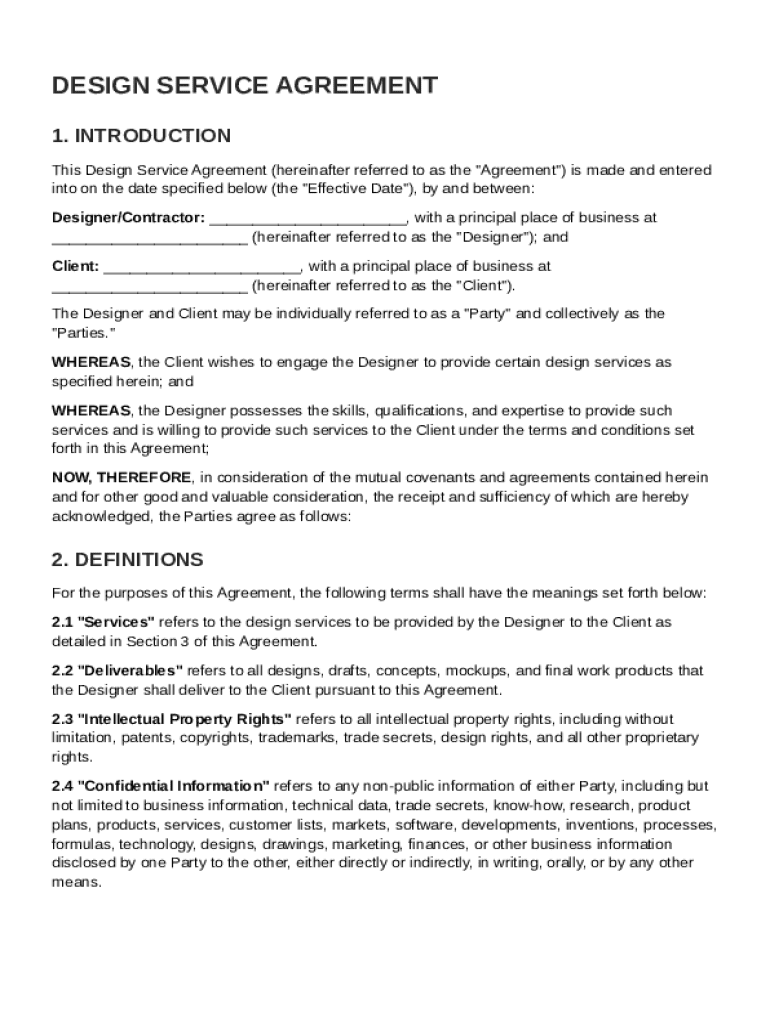







Definition and Importance of a Design Service Agreement Template
A Design Service Agreement Template is a crucial document used to delineate the professional relationship and expectations between a designer and a client. This agreement outlines the terms under which the designer will provide services to the client, including the scope of work, timeline, and payment details. It serves as a contractual foundation that helps in avoiding misunderstandings by clearly setting out the roles and responsibilities of both parties.
The template typically includes sections on compensation, confidentiality, revisions, termination, and dispute resolution. Intellectual property rights and ownership of the work are also critical elements addressed, ensuring that both parties understand who retains rights to the designs created during the contract process. By using this formalized template, both the designer and client can protect their interests and ensure a professional workflow.
How to Obtain the Design Service Agreement Template
Securing a Design Service Agreement Template can be accomplished through various channels, providing flexibility based on user preferences and needs. Online platforms, such as DocHub, offer customizable and ready-to-use templates that users can download and tailor to their specific requirements. Alternatively, professional legal services and design associations often provide templates that align with industry standards.
- Online Platforms: Websites like DocHub allow users to access a library of templates, which can be customized for specific project needs.
- Legal Services: Engaging a lawyer or legal consultant to draft or provide a template ensures that all legal requirements are met and tailored to the business.
- Professional Associations: Many design associations offer standard agreement templates to their members, which include industry-specific nuances.
Steps to Complete the Design Service Agreement Template
Completing a Design Service Agreement Template involves several key steps to ensure accuracy and compliance with both client and designer expectations.
- Provide Party Details: Include names, contact information, and roles of the signatories.
- Define Scope of Work: Clearly outline the tasks the designer will undertake, including deliverables and milestones.
- Establish Compensation Terms: Specify the payment structure, rates, and any milestone-related payments.
- Intellectual Property Rights: Detail the ownership rights of the designs. Specify if the rights are retained by the designer or transferred to the client upon completion.
- Set Timeline: Establish start and end dates for the project, including any key deadlines.
- Include Confidentiality Clauses: Ensure both parties agree on non-disclosure terms regarding sensitive information.
- Outline Termination Conditions: Specify conditions under which the agreement may be terminated prematurely.
- Address Revisions and Approvals: Explain how revisions will be handled and the number of revisions included in the agreement.
By carefully following these steps, both parties can ensure that the agreement is comprehensive and effective.
Key Elements of the Design Service Agreement Template
The Design Service Agreement Template typically contains several essential sections that are pivotal to a successful professional engagement:
- Scope of Work: A detailed description outlining the specific services to be provided.
- Compensation Details: Clear articulation of fees, payment structure, and terms for expenses.
- Timeline and Deliverables: Expected timeframes for completion and specific deliverables to be provided at various stages.
- Revisions Policy: Guidelines for how revisions will be managed, including the allowance for adjustments.
- Ownership and Rights: Terms for intellectual property rights, detailing the transfer or retention of ownership.
- Confidentiality Obligations: Protection of trade secrets and sensitive information agreed upon by both parties.
- Termination and Dispute Resolution: Conditions under which the agreement can be terminated and the resolution process for any disputes.
Each section is essential for aligning expectations and protecting the interests of both parties involved.
Legal Use of the Design Service Agreement Template in the U.S.
The Design Service Agreement Template must adhere to U.S. legal standards to be enforceable. The document serves as a legally binding agreement between the designer and client, with implications for breach or default.
- Compliance: The template should comply with state-specific laws governing contracts and business agreements.
- Enforceability: By meeting requirements for clear terms and mutual agreement, the template is enforceable in legal proceedings.
- Amendments Clause: Include a clause on how amendments to the agreement should be handled.
- Jurisdiction: Specify the legal jurisdiction under which the agreement falls, typically based on the location of one of the parties.
Ensuring the agreement is legally robust protects both the designer's and client's interests.
Examples of Using the Design Service Agreement Template
Design Service Agreement Templates are versatile and applicable in various scenarios, illustrating their broad utility in the design field.
- Freelance Graphic Designers: Freelance designers can use these agreements to formalize projects with clients, ensuring clarity on deliverables and payment.
- Agencies: Design agencies use these templates to streamline client onboarding for projects involving multiple team members or services.
- Web Design Projects: Agreements can be tailored to web design tasks, addressing specific deliverables like website wireframes, design drafts, and live site deployment.
- Interior Design: For interior designers, the agreement can specify phases, including conception, design development, and implementation stages.
These examples demonstrate the flexibility and necessity of a well-structured agreement in the dynamic field of design.
Digital vs. Paper Version of the Template
The format choice—digital or paper—affects accessibility, ease of use, and storage for the Design Service Agreement Template.
- Digital Version: Offers flexibility and ease of access. Platforms like DocHub enable digital completion, electronic signatures, and instant sharing.
- Paper Version: Traditional and sometimes preferred where digital literacy or resources are limited. Provides a physical record but lacks convenience in edits and sharing.
- Considerations: The choice may depend on client preferences, project scale, or resource availability. Digital offers streamlined processes, while paper may be required for legal authenticity in some cases.
Opting for one format over the other involves weighing factors such as convenience, accessibility, and client requirements in the design industry.
Software Compatibility and Integration
Modern design agreements often necessitate compatibility with various software platforms to streamline processes and ensure ease of use.
- DocHub Integration: Easily import and export documents, including design service agreements, from platforms like Google Drive, Dropbox, and OneDrive.
- Software Tools: Compatible with PDF and document-editing software for seamless edits, annotations, and signing.
- Workflow Optimization: Integrations with project management and design software like Adobe Suite or team collaboration tools simplify management and tracking.
- Cloud Storage: Ensures agreements are securely stored and accessible from any location, supporting remote work and virtual collaboration.
Considering compatibility and integration options allows for enhanced functionality and optimized workflow in managing design agreements.