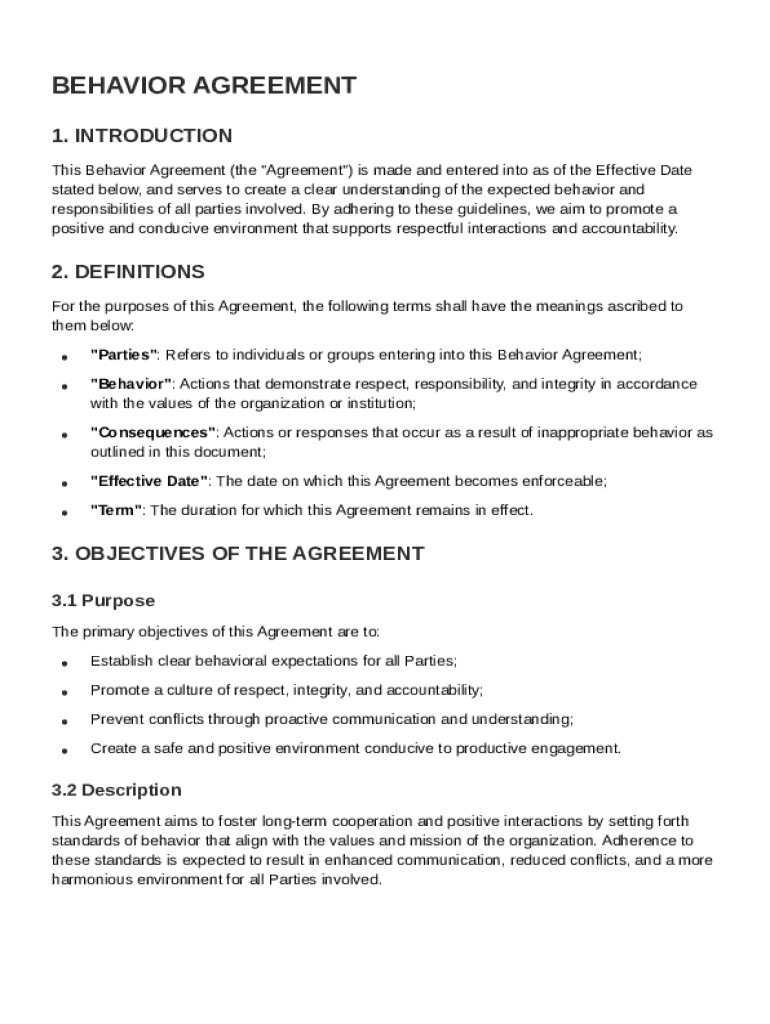







Definition & Meaning
The Behavior Agreement Template is a structured document used to outline expected behaviors among involved parties. It establishes clear guidelines for conduct, detailing both positive behaviors that should be exhibited and unacceptable behaviors that must be avoided. The template aims to foster a respectful and accountable environment, ensuring that all parties understand their roles and responsibilities in maintaining decorum. By defining these expectations, the template helps to prevent conflicts and promote a positive atmosphere.
Key Components of a Behavior Agreement
- Behavioral Expectations: Outlines the specific behaviors required from each party to ensure a harmonious environment.
- Unacceptable Behaviors: Identifies actions that will not be tolerated and could potentially result in consequences.
- Consequences for Violations: Details the repercussions for not adhering to the agreement, which could range from warnings to more severe actions depending on the severity of the breach.
How to Use the Behavior Agreement Template
Utilizing a Behavior Agreement Template involves several steps to ensure it is effective and comprehensive. The process starts with customization, aligning the template with specific needs and scenarios.
- Customization: Begin by tailoring the template to fit the specific context and requirements of the parties involved.
- Distribution: Share the template with all relevant parties, ensuring they review and understand the expectations outlined.
- Review and Discussion: Hold a meeting to discuss the agreement, allowing for questions and clarifications.
- Signing: All parties should sign the agreement to acknowledge their understanding and commitment.
- Implementation: Put the agreed behaviors into practice while monitoring compliance and addressing any breaches.
Steps to Complete the Behavior Agreement Template
Completing the Behavior Agreement Template requires careful attention to detail and clear communication.
- Identify Stakeholders: Determine all parties involved who will be subject to the agreement.
- Define Expectations: Clearly articulate what is expected from each party in terms of behavior and responsibilities.
- List Unacceptable Behaviors: Provide a comprehensive list of behaviors deemed unacceptable within the context of the agreement.
- Establish Consequences: Outline potential repercussions for any breaches of the agreement.
- Finalize and Distribute: Ensure the document is thoroughly reviewed, signed by all parties, and distributed accordingly.
Key Elements of the Behavior Agreement Template
A well-constructed Behavior Agreement Template should include the following key elements:
- Introduction: A brief overview of the purpose and significance of the agreement.
- Behavioral Guidelines: Specific instructions outlining acceptable and expected conduct.
- Roles and Responsibilities: Detailed description of each party’s obligations.
- Compliance Monitoring: Procedures for monitoring adherence to the agreement.
- Amendment Procedures: Guidelines on how changes to the agreement can be requested and incorporated.
Legal Use of the Behavior Agreement Template
The Behavior Agreement Template can serve as a legally binding document when utilized correctly. It is important to ensure that the template includes clauses that clearly define the legal obligations and consequences for non-compliance. This can include the following:
- Consent Clauses: Statements indicating that all parties consent to the terms outlined.
- Dispute Resolution: Details on how disputes regarding the agreement will be resolved, such as mediation or arbitration methods.
- Signing Authority: Confirmation that all parties have the authority to sign and commit to the agreement.
Who Typically Uses the Behavior Agreement Template
Behavior Agreement Templates are used by a variety of entities and individuals seeking to maintain a respectful and orderly atmosphere. Typical users include:
- Educational Institutions: Schools and universities may use these templates to set behavioral expectations for students and staff.
- Workplaces: Employers implement behavior agreements to outline acceptable conduct for employees.
- Community Organizations: Groups and clubs use these agreements to ensure members adhere to group norms and values.


Important Terms Related to the Behavior Agreement Template
Understanding key terms is essential when working with a Behavior Agreement Template. Some important terms include:
- Accountability: Refers to the responsible actions and behavior expected of each party.
- Compliance: The act of adhering to the guidelines and behaviors set forth in the agreement.
- Sanctions: Penalties or actions taken when a party fails to comply with the agreement.
Examples of Using the Behavior Agreement Template
Behavior Agreement Templates can be applied in numerous situations. Some practical examples include:
- School Code of Conduct: A behavior agreement for students outlining expected behaviors in educational settings.
- Employee Conduct Agreement: A document detailing the expected conduct of employees within a company.
- Volunteer Behavior Agreement: An agreement specifying the behaviors expected from volunteers participating in an event or organization.
These examples illustrate the versatility and importance of Behavior Agreement Templates in promoting accountability and clear expectations in various environments.