
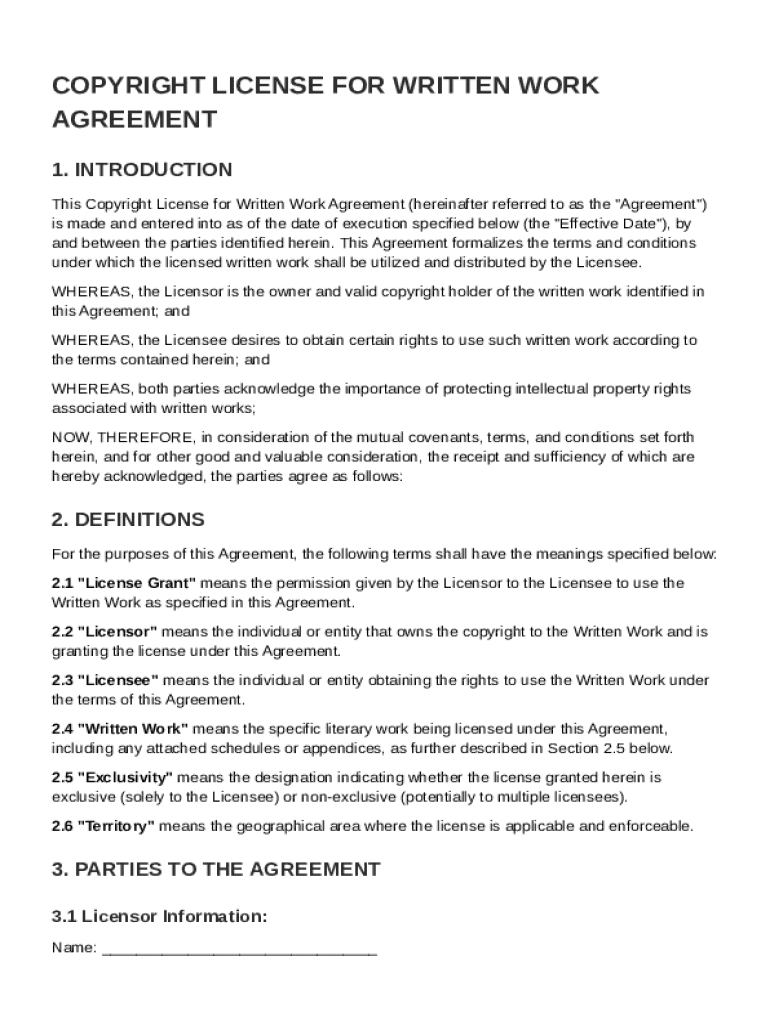







Definition and Key Concepts
A Copyright License for Written Work Agreement Template is a legal document that spells out the rights a Licensor grants to a Licensee to use a specific piece of written work. This agreement includes definitions of important terms, such as "Licensor," "Licensee," "Work," "License," and other relevant categorizations that help clarify the relationship and responsibilities between involved parties. Key aspects often covered include the scope of the license, exclusivity, duration, compensation, ownership of intellectual property, and conditions for termination. Understanding these terms is crucial for both parties to ensure a clear and binding agreement.
Important Terms Explained
- Licensor: The party granting the license to use their intellectual property.
- Licensee: The individual or entity receiving rights to use the intellectual work.
- Scope: The boundaries within which the licensed material can be used, including geographical or functional limitations.
- Exclusivity: Whether the licensee is the only party allowed to use the work in specific contexts.
- Compensation: Details about payment structures, such as flat fees, royalties, or other remuneration.
Key Elements of the Agreement
A Copyright License for Written Work Agreement Template typically includes several essential components to ensure a comprehensive understanding between parties. Each section of the agreement plays a specific role in outlining the terms of use:
- Grant of Rights: Specifies the permissions given to the licensee, including whether the license is exclusive or non-exclusive.
- Intellectual Property Protection: Establishes measures for the protection of the licensor's rights, ensuring they retain ownership of the work while allowing specified use.
- Compensation: Outlines how the licensee will pay the licensor, which may include an upfront fee, ongoing royalties, or both.
- Term and Termination: Defines the duration of the agreement, along with conditions that allow either party to terminate the agreement.
Practical Considerations
Each element should be carefully tailored to the needs of both parties. For example, if a licensee intends to use the work for a limited-time marketing campaign, the term and termination provisions should reflect this purpose clearly.
How to Use the Template
Using a Copyright License for Written Work Agreement Template involves several steps to customize the document based on the specific needs of the licensor and licensee. Here's a step-by-step guide:
- Review and Customize: Examine the pre-written sections of the template and make necessary adjustments to ensure it reflects the specifics of the transaction.
- Fill in Details: Enter specific information such as the names of both parties, details of the written work, and agreed compensation.
- Consult Legal Experts: If needed, consult with legal advisors to ensure that all terms are enforceable and comply with relevant laws.
Example Scenario
Consider a scenario where a magazine publisher wishes to use a freelance writer's article. The publisher would customize the template to detail how and where the article will be used, for what duration, and the compensation method.
Legal Use & Compliance
Ensuring the legality of a Copyright License for Written Work Agreement is paramount. The agreement must comply with intellectual property laws and any other applicable regulations.
Compliance Tips
- Follow Copyright Laws: Ensure the work is not being licensed in contradiction to existing copyright laws.
- State Regulations: Be aware of any state-specific rules that might affect the agreement's enforcement.
- Authorize Use Properly: Clearly define how the work can be used to prevent unauthorized duplication or alterations.
Versions and Alternatives
Different situations might require distinct versions of the Copyright License for Written Work Agreement Template. Variants could include specific language or clauses relevant to particular industries, such as publishing, digital media, or educational content.
Alternatives to Consider
- Non-Exclusive License Templates: For situations where multiple licensees may need access to use the same work.
- Royalties-Based Agreements: Templates that center compensation around royalties might be more suitable for ongoing collaborations or large-scale distributions.
Eligibility and Suitability
This type of agreement is generally used by individuals and businesses involved in the creation or distribution of written content. Understanding who benefits most from this template can help target its usage effectively.
Common Users
- Publishers: Utilize this agreement to license articles or book excerpts.
- Educational Institutions: Use templates to distribute educational materials.
- Corporate Enterprises: Obtain rights to written works for advertising or internal communications.


State-Specific Differences
Intellectual property laws can vary by state, making it crucial to understand any regional legal requirements that may impact the agreement.
Examples of State-Specific Differences
- California: May have more robust privacy laws influencing agreements.
- New York: Could introduce unique state court interpretations of copyright law.
When drafting or using a Copyright License for Written Work Agreement, it's always wise to review state laws and seek legal advice where necessary to ensure compliance and protect against potential disputes.


