




01. Edit your form online
Type text, add images, blackout confidential details, add comments, highlights and more.

Type text, add images, blackout confidential details, add comments, highlights and more.

Draw your signature, type it, upload its image, or use your mobile device as a signature pad.

Send it via email, link, or fax. You can also download it, export it or print it out.
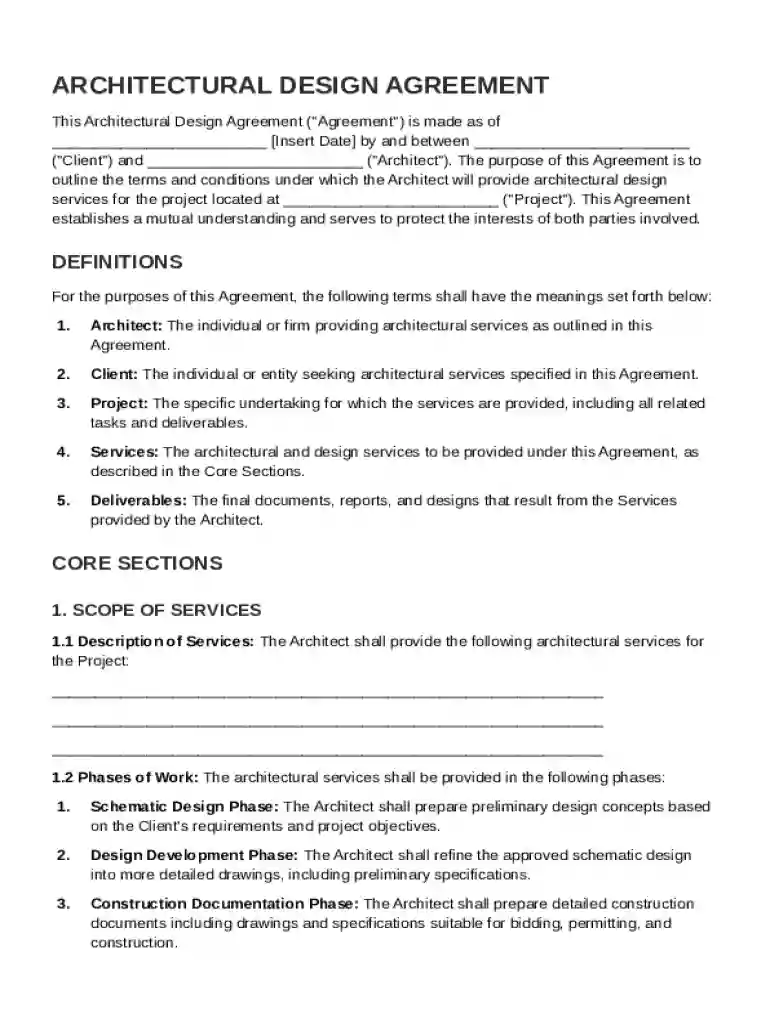
An Architectural Design Agreement Template serves as a comprehensive contract designed for use between clients and architects. It specifies the terms and conditions under which architectural services are provided, detailing various aspects of the architectural design process. This document ensures that both parties have a clear understanding of their roles, responsibilities, and the project's scope. It includes elements such as schematic design, construction documentation, and project administration. By establishing expectations upfront, the agreement aims to protect the interests of both clients and architects and prevent potential disputes.
Project Scope: This section defines the overall scope of the project, detailing the specific services the architect will provide. It serves as a foundation for both parties to understand the breadth of the design efforts, from preliminary sketches to finalized plans.
Roles and Responsibilities: Outlines the duties and tasks assigned to each party, ensuring clarity in execution and reducing the likelihood of missed obligations or misunderstandings.
Compensation Structure: Details the fee arrangements and payment schedules, which may include fixed fees, hourly rates, or milestone-based payments.
The Architectural Design Agreement Template is designed for ease of use, allowing users to efficiently craft a comprehensive contract by filling in specific details related to their unique project. Here’s a step-by-step guide on using it:
Download the Template: Access the template format suitable for your needs, whether digital or printable.
Customize the Details: Insert project-specific information, such as client and architect names, project addresses, and date of commencement.
Define Project Specifications: Include detailed descriptions of the architectural services, deliverables, and timeframe for completion.
Review Legal Terms: Carefully go through legal clauses, such as confidentiality obligations and intellectual property rights, customizing them if necessary to align with specific project or state requirements.
Finalize the Agreement: After completing the document details, have both parties review the entire agreement to ensure mutual understanding.
Obtain Signatures: Both parties should sign the document to validate the agreement, making it legally binding.
A well-structured Architectural Design Agreement Template includes several critical elements:
Project Description: Provides a detailed explanation of the design project, including objectives and deliverables.
Timeline and Milestones: Sets forth the expected timeline for completion, with key milestones that organize the workflow.
Payment Terms: Clearly defines how and when payments will be made, specifying acceptable payment methods and due dates.
Liability and Risk Management: Details how risks will be managed and outlines the liability limitations for both the architect and client.
Dispute Resolution: Incorporates mechanisms for resolving disagreements or disputes, such as mediation or arbitration clauses.
Understanding the terminology used in an Architectural Design Agreement is essential for both clarity and legal compliance. Here are key terms typically included:
Schematic Design: Refers to the early phase of design where the architect develops initial concepts and sketches.
Construction Documentation: Encompasses finalized plans and specifications provided to contractors for building the structure.
Intellectual Property Rights: Covers the ownership and use rights of design documents and intellectual property produced during the project.
Confidentiality: Ensures that all project details and proprietary information are kept private and secure from unauthorized parties.
Completing the Architectural Design Agreement involves several critical steps:
Gather Information: Collect all relevant details about the project, including site information, design specifications, and estimated costs.
Draft the Agreement: Using the template, insert the collected data into the appropriate sections while ensuring all information is accurate.
Incorporate Legal Provisions: Review all included legal clauses, tailoring them to suit specific project needs and ensuring compliance with local regulations.
Conduct a Review with All Parties: Have both the client and architect review the document multiple times to identify any omissions or errors.
Make Final Adjustments: Implement any necessary changes based on the reviews conducted by both parties or legal advisors.
Sign the Agreement: Secure signatures from authorized representatives of both parties involved in the agreement.
The Architectural Design Agreement Template is primarily used by a wide range of parties involved in construction and design projects, including:
Architects: Professionals who design buildings and structures often use this template to formalize their services and terms with clients.
Clients/Property Owners: Individuals or entities commissioning design projects utilize this agreement to define expectations and ensure proper service delivery.
Construction Firms: Although not their primary document, construction firms may require insights into the architectural scope to align their work accordingly.


Ensuring the legal enforceability of an Architectural Design Agreement requires adherence to specific legal standards:
Compliance with the ESIGN Act: The agreement, when signed electronically, must comply with federal laws that govern electronic signatures to maintain legal validity.
State and Local Regulations: The contract should reflect any relevant state-specific building codes or architectural practice statutes.
Intellectual Property Laws: It must address the ownership and use of designs and derivatives explicitly to prevent unauthorized reproduction or alterations.
Real-world applications of architectural design agreements are diverse, with varying requirements based on project scope or location:
Residential Projects: Custom home builders use these agreements to outline the scope and timeline, focusing on client-specific design preferences.
Commercial Buildings: Business owners renovating or constructing new facilities employ these agreements to ensure alignment on design and compliance.
Public Structures: Municipal projects use these templates to validate the mutual understanding of expectations between public authorities and architecture service providers.
At DocHub, your data security is our priority. We follow HIPAA, SOC2, GDPR, and other standards, so you can work on your documents with confidence.



An Architectural Decision Record (ADR) is a documented software design choice that meets three essential criteria: Justified: The decision includes explicit
The Design Professional shall provide recommending the award of Construction Contract(s) for the Work; Senior Architectural Designer:
The Design Development Documents shall illustrate and describe the development of the approved Schematic Design Documents and shall consist of drawings andRead more


