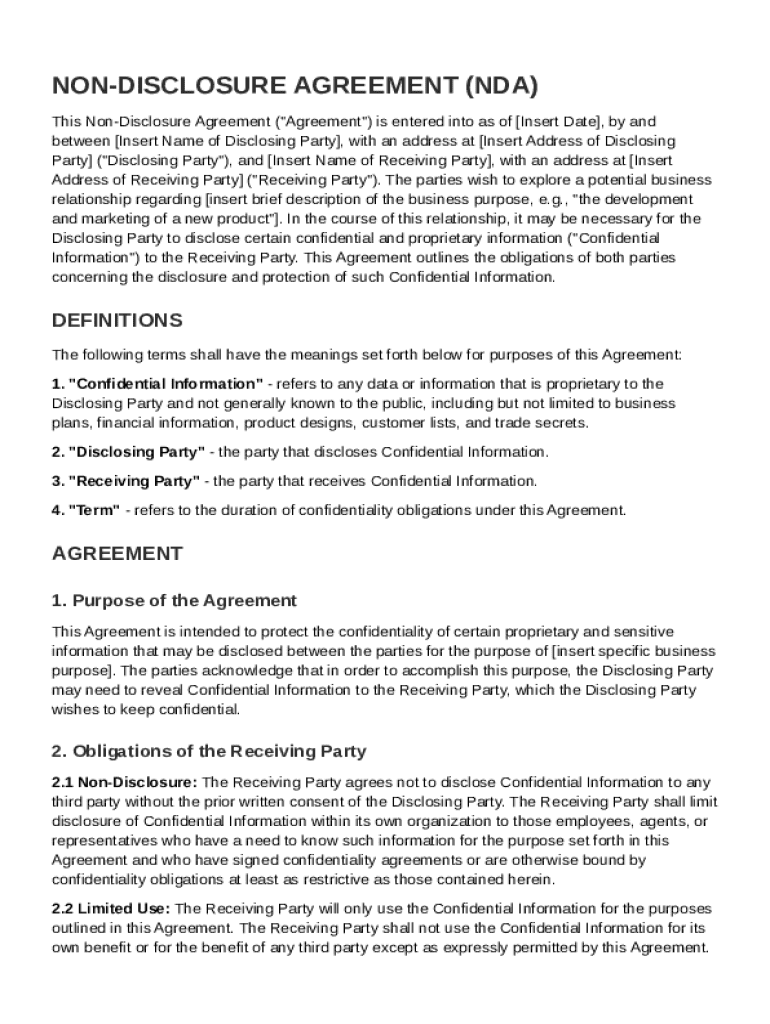







Definition & Meaning
A Non-Disclosure Agreement (NDA) is a legally binding contract that establishes a confidential relationship between a Disclosing Party and a Receiving Party. The Lance Non-Disclosure Agreement Template is designed to facilitate the sharing of confidential information for business purposes while protecting sensitive data from unauthorized disclosure. This type of agreement typically defines key concepts like confidential information, party roles, and intended uses of shared data, ensuring both parties understand their rights and obligations. By using this template, users can quickly and effectively outline terms related to confidentiality, data protection, and the handling of classified materials.
How to Use the Lance Non-Disclosure Agreement Template
Using the Lance Non-Disclosure Agreement Template involves several key steps to customize it to fit specific needs. First, identify the parties involved, specifying which party will disclose information and which will receive it. Next, detail what constitutes confidential information and define the scope of its usage, ensuring you include clauses limiting the use to specific purposes like potential partnerships or business evaluations. Lastly, review the template for any additional clauses that may be pertinent to your industry or transaction. The final version should be reviewed by legal counsel to ensure compliance with applicable laws before it is signed by both parties.
Steps to Complete the Lance Non-Disclosure Agreement Template
-
Identify Parties Involved:
- Clearly outline the Disclosing and Receiving Parties.
- Include names, addresses, and any specific roles or titles.
-
Define Confidential Information:
- Provide a detailed description of what information is considered confidential.
- Specify the formats in which confidential information can be shared (e.g., written, verbal).
-
Set Use Limitations:
- Detail the specific purpose for which confidential information can be used.
- Restrict the use of information beyond the defined share-holders.
-
Include Security Measures:
- Establish the security protocols for handling and storing information.
- List necessary measures like encryption and password protection.
-
Determine Duration and Termination:
- Define the duration of confidentiality obligations.
- Include provisions for agreement termination and conditions for data return or destruction.
-
Seek Legal Review:
- Have the final draft reviewed by legal counsel for compliance with legal standards.
Key Elements of the Lance Non-Disclosure Agreement Template
The Lance Non-Disclosure Agreement Template incorporates crucial elements to ensure a comprehensive confidentiality agreement:
-
Confidential Information Definition:
- The template specifies various forms of confidential information such as trade secrets, financial details, and business strategies.
-
Non-Disclosure Commitment:
- Both parties agree to not disclose the confidential information except as permitted within the agreement.
-
Exclusions from Confidentiality:
- Certain disclosures are excluded, such as information already in the public domain.
-
Obligations and Responsibilities:
- Describes the responsibilities of the Receiving Party in safeguarding confidential information.
-
Governing Law:
- Specifies the jurisdiction whose laws will govern the agreement.
Who Typically Uses the Lance Non-Disclosure Agreement Template
The Lance Non-Disclosure Agreement Template is typically used by:
-
Businesses:
- Companies exploring joint ventures or mergers.
- Organizations collaborating on research and development.
-
Individuals:
- Entrepreneurs and startups seeking funding.
- Consultants and freelancers working with client data.
-
Legal and Compliance Teams:
- Legal teams ensuring secure information management.
- Compliance officers maintaining confidentiality standards.


Important Terms Related to Lance Non-Disclosure Agreement Template
A few key terms frequently encountered in the Lance Non-Disclosure Agreement Template include:
-
Disclosing Party:
- The entity sharing confidential information.
-
Receiving Party:
- The entity receiving confidential information.
-
Trade Secrets:
- Specialized knowledge not disclosed to the public.
-
Duration of Agreement:
- The period during which confidentiality is enforced.
-
Exclusions:
- Conditions under which information may not be considered confidential.
Legal Use of the Lance Non-Disclosure Agreement Template
The legal use of the Lance Non-Disclosure Agreement Template involves ensuring the document meets state and federal regulations. It specifies adherence to acts like the Uniform Trade Secrets Act and the Defend Trade Secrets Act. Users must ensure the NDA is valid under jurisdiction laws, providing a legally binding framework for protecting information. Ensuring the template’s compliance with U.S.-centric laws and consulting with legal professionals helps mitigate the risk of unenforceable terms which could lead to potential legal challenges in the future.
Versions or Alternatives to the Lance Non-Disclosure Agreement Template
While the Lance Non-Disclosure Agreement Template is comprehensive, there may be alternative versions or templates for specific use cases:
-
Mutual NDA:
- For situations where both parties exchange confidential information.
-
Unilateral NDA:
- Where only one party discloses information.
-
Industry-Specific NDAs:
- Tailored versions for industries like technology or healthcare, where specific regulatory standards apply.
-
Short-Form NDAs:
- Simplified agreements for less complex transactions.
Adapting the template to the context ensures its relevance and enforceability, meeting various business and legal needs.