Definition & Meaning
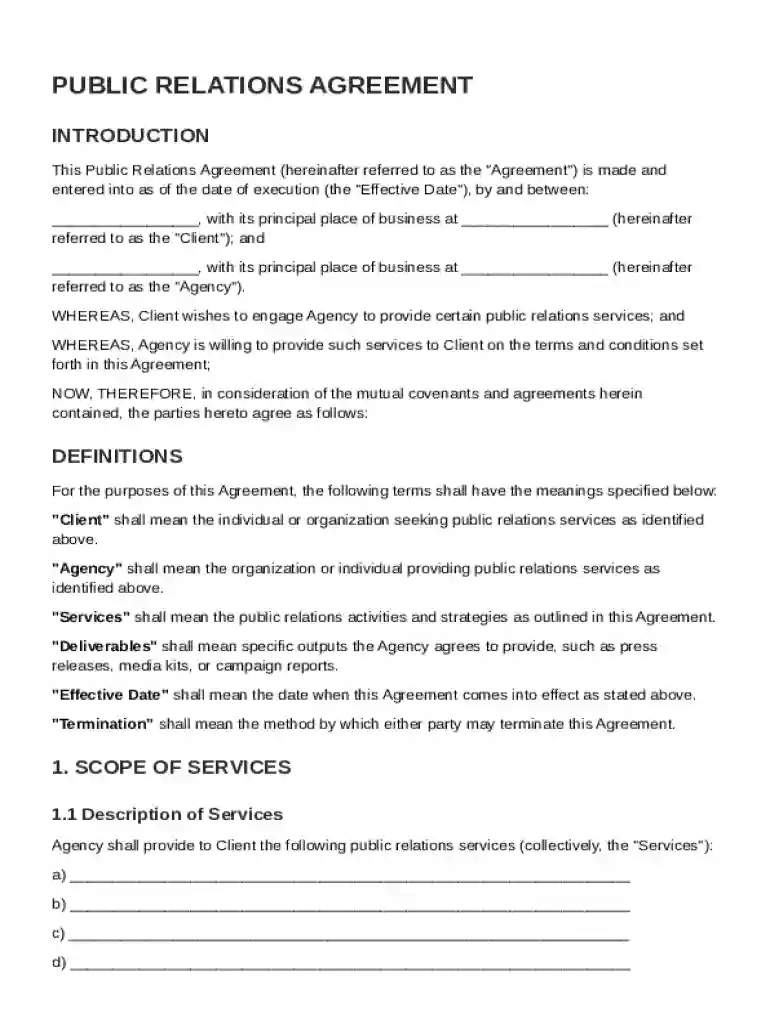
A Public Relations Agreement Template is a structured document that sets forth the terms under which a client enlists the services of a public relations agency. This form serves as a formal, legal record detailing the scope of services provided, payment terms, responsibilities, and confidentiality clauses. It protects both the client and the agency by clearly outlining each party's expectations and obligations throughout the duration of their partnership. Real-world examples include contracts between businesses and PR firms, where the latter manages media relations and public image on behalf of the business.
Key Components
- Scope of Services: Defines the specific public relations tasks the agency will perform, such as media outreach, press release creation, and event management.
- Compensation: Outlines the payment structure, including retainer fees, project-based fees, or hourly rates.
- Confidentiality: Describes obligations to protect sensitive business information from unauthorized disclosure.
- Intellectual Property: Specifies ownership rights over the materials and content created under the agreement.
How to Use the Public Relations Agreement Template
Using the Public Relations Agreement Template involves several critical steps. Initially, both parties should familiarize themselves with the template to ensure mutual understanding. The next step is to customize the template to address specific details relevant to the client and agency's particular arrangement.
- Customization: Tailor the agreement to reflect the precise services, expectations, and deliverables.
- Review: Both parties review the modified agreement to ensure all terms are clear and agreeable.
- Legal Evaluation: Seek legal counsel if necessary, especially to understand the implications of legal terms such as indemnification or dispute resolution.
Practical Example
For instance, a tech startup engaging a PR agency to enhance their product launch would detail press release plans, media pitches, and social media strategies in the scope of services.
Steps to Complete the Public Relations Agreement Template
Completing this template involves a methodical approach to ensure all necessary components are satisfactorily included. Below is a step-by-step guide to achieving this:
- Identifying Parties: Clearly state the names and contact details of both the client and the agency.
- Define Project Goals and Objectives: Describe what both parties aim to achieve through this collaboration.
- List Specific Deliverables: Enumerate all outputs expected from the agency, such as weekly press clippings, social media content, or monthly activity reports.
- Establish Payment Terms: Agree on payment methods, schedules, and any potential bonuses for achieving specific objectives.
- Set Deadlines: Define timelines for project milestones and final deliverables.
- Evaluate Insurance and Liability Clauses: Determine how liability will be handled for potential mishaps or underperformance.
- Sign and Date: Both parties must sign and date the final agreement to formalize its activation.
Key Elements of the Public Relations Agreement Template
When engaging in PR activities, certain components of the agreement are critical to its validity and functionality. These elements contribute to laying a strong foundation for a successful business relationship.
- Rights to Terminate: Specifies conditions under which either party can withdraw from the agreement.
- Amendment Procedures: Details how changes to the agreement can be proposed, agreed upon, and implemented.
- Dispute Resolution: Establishes guidelines for resolving disagreements, often through arbitration or mediation before pursuing litigation.
- Governing Law: Identifies which state's laws will apply in interpreting the agreement, crucial for resolving legal disputes.
Scenarios of Importance
- For a marketing agency seeking long-term collaboration with a PR service, clear amendment procedures ensure adaptability as marketing needs evolve.
Who Typically Uses the Public Relations Agreement Template
The Public Relations Agreement Template is widely used across various sectors and entities that require public relations expertise. It is a versatile tool applicable to:

- Corporations: Seeking to manage their brand reputation and media presence.
- Non-Profit Organizations: Aiming to increase awareness and support for their causes.
- Political Figures: Managing public image during campaigns or office tenure.
- Entertainment Industry Professionals: Publicists for artists and celebrities managing press coverage and public interactions.
Case Example
A celebrity might employ a PR agency to navigate the complexities of maintaining a positive public persona during a high-profile charity event.
Legal Use of the Public Relations Agreement Template
Legal adherence in PR agreements ensures protection against breaches, liability issues, and enforcement challenges. It is vital to understand the legal obligations included in the agreement.
- Compliance with Federal Laws: Agreements must align with U.S. contract laws and any applicable industry regulations.
- Ensuring Legally Binding Status: A mutual exchange of promises and consideration, clear terms, and signed consent from involved parties fortifies the document's legality.
Legal Ramifications
Failing to comply with agreed terms might lead to lawsuits over unfulfilled services or financial losses, emphasizing the need for sound legal preparation throughout the agreement drafting process.
State-Specific Rules for the Public Relations Agreement Template
Public relations agreements may need to account for state-specific regulations, especially in areas with pronounced legal distinctions.
- Labor Laws: Some states might have specific requirements for independent contractors vs. employees in PR service provision.
- Electronic Contracts: Variations exist in how electronic signatures are accepted, influencing how agreements are executed and stored.
Example: California
In California, strict labor laws determine how independent contractors in the PR field are classified, impacting the template's employment and compensation sections.
Examples of Using the Public Relations Agreement Template
Examined from practical standpoints, the agreement template is crucial in diverse settings beyond traditional PR scenarios:
- Event Management Companies: Drafting agreements with agencies to handle PR for high-profile events like award shows or international conferences.
- Product Launch Campaigns: Businesses entering competitive markets employ these agreements to solidify PR strategies with agencies offering specialist expertise.
Real-World Illustration
Consider a beverage company launching a new health drink. The agreement might stipulate event promotion activities, media engagement strategies, and influencer collaborations to ensure extensive market reach.
Digital vs. Paper Version
Choosing between digital and paper formats of the Public Relations Agreement Template often involves weighing convenience against traditional business practices.
- Digital Agreements: Favor convenience, ease of distribution, and ready accessibility. Ideal for businesses emphasizing paperless transactions.
- Paper Versions: Preferred in industries that prioritize tangible documentation or in scenarios where digital access is limited.
Practical Comparison
An agency operating entirely online may lean towards digital agreements, leveraging electronic signatures for efficient processes, whereas a local consultancy might maintain paper records for all agreements due to regulatory requirements or client preferences.
Versions or Alternatives to the Public Relations Agreement Template
The standard template serves a wide range of needs, but variations may better fit specific applications or industry practices.
- Custom Templates: Tailored for unique business arrangements or non-standard service provisions.
- Industry-Specific Alternatives: Templates focused around particular verticals, like healthcare PR agreements, which have additional compliance requirements.
Consideration Example
A tech-based PR firm might adapt the standard version to include technology-related clauses, benefiting from a template with built-in flexibility to accommodate sector-specific needs.