






Definition & Meaning
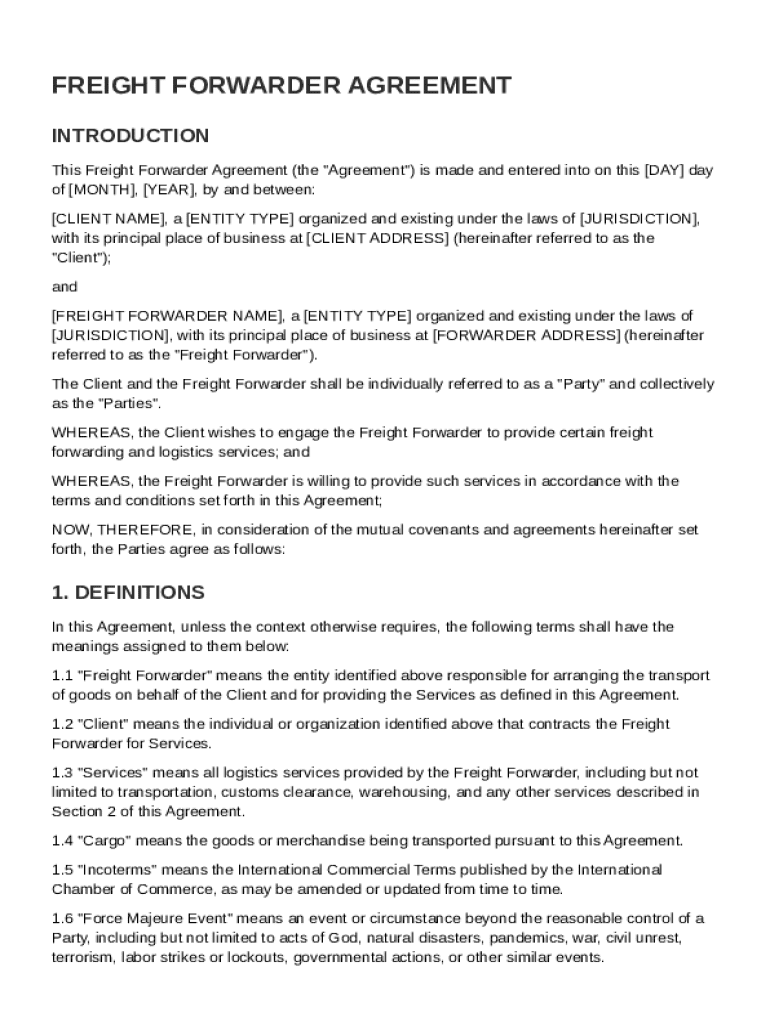
The Freight Forwarder Agreement Template serves as a structured legal document that delineates the terms and conditions under which a freight forwarder provides logistics services to a client. This agreement serves to protect both parties by clearly identifying roles, responsibilities, and the scope of services, including transportation, customs clearance, insurance, and warehousing. It establishes a framework that ensures mutual understanding and minimizes potential conflicts.
Key Components
- Roles and Responsibilities: Clearly outlines the duties and obligations of both the client and the freight forwarder.
- Scope of Services: Details the specific logistics services to be provided, ensuring there is no ambiguity in expectations.
- Payment Terms: Establishes the financial arrangements, such as payment schedules, invoicing, and acceptable payment methods.
Key Elements of the Freight Forwarder Agreement Template
A comprehensive Freight Forwarder Agreement Template should include several critical elements to ensure clarity and legal compliance.
Essential Inclusions
- Liability Limitations: Defines the extent of each party's liability, protecting them from undue risk.
- Dispute Resolution: Outlines the process for resolving disagreements, whether through arbitration, mediation, or court proceedings.
- Termination Provisions: Specifies the circumstances under which the agreement can be terminated and the process for doing so.
Additional Considerations
- Confidentiality Obligations: Ensures that any sensitive information exchanged between parties remains confidential.
- Insurance Requirements: Details the insurance coverage required to protect against potential losses during transit.
How to Use the Freight Forwarder Agreement Template
The Freight Forwarder Agreement Template is a versatile tool designed to simplify the process of formalizing logistics arrangements between clients and freight forwarders.
Step-by-Step Guidelines
- Review Standard Clauses: Begin by understanding the default provisions within the template to identify necessary customizations.
- Customize Specific Details: Tailor the agreement to reflect the particular needs of the client and the freight forwarder, including any unique service terms or conditions.
- Verification and Approval: Have both parties review the customized document to ensure mutual agreement before signing.
Customization Tips
- Highlight any non-standard terms that require special attention or negotiation.
- Ensure that all relevant details specific to the logistics service are accurately reflected.
Important Terms Related to the Freight Forwarder Agreement Template
Understanding the terminology used within the Freight Forwarder Agreement Template is crucial to ensure all parties are aligned.
Common Terms
- Consignment: Refers to the shipment of goods in the care of the freight forwarder for transport to a designated location.
- Bill of Lading: A legal document issued by a carrier to acknowledge receipt of cargo for shipment.
- Freight Forwarder: An entity responsible for organizing the transportation of goods on behalf of shippers.
Legal Terms
- Indemnification: A clause that requires one party to compensate the other for certain damages or losses.
- Force Majeure: Defines unforeseeable circumstances that may prevent parties from fulfilling the agreement.
Who Typically Uses the Freight Forwarder Agreement Template
The Freight Forwarder Agreement Template is utilized by a broad range of entities within the logistics and transportation industry.


Primary Users
- Logistics Companies: Use the template to formalize agreements with clients for the smooth execution of transport services.
- Manufacturers and Retailers: Clients who rely on shipping goods domestically or internationally.
Beneficiaries
- Import/Export Businesses: Heavily reliant on detailed logistics agreements to ensure the timely and secure shipping of goods across borders.
- Customs Brokers: May refer to specific terms within these agreements to facilitate customs clearance processes.
Legal Use of the Freight Forwarder Agreement Template
The legal framework within which the Freight Forwarder Agreement operates is crucial for maintaining contractual integrity.
Compliance and Regulations
- Adherence to Industry Standards: Aligns with international trade laws, ensuring all logistics processes comply with legal standards.
- Regulatory Requirements: Must consider regulations specific to the jurisdictions involved in the logistics process.
Importance of Legal Counsel
- Consulting legal professionals when drafting or modifying the agreement can help avoid misunderstandings and ensure that the document is enforceable in court.
State-Specific Rules for the Freight Forwarder Agreement Template
Although freight forwarding agreements are generally standardized, state-specific rules may influence how these agreements are drafted and enforced in the United States.
Variations Across States
- Contract Law Differences: Some states have unique provisions regarding contracts that may affect agreement terms.
- Taxation Implications: Logistics services may be taxed differently depending on state laws requiring inclusion in the agreement.
Reviewing Local Laws
- Parties should ensure compliance with state-specific requirements by reviewing applicable laws or consulting with legal professionals familiar with local regulations.
Examples of Using the Freight Forwarder Agreement Template
Practical examples can help illustrate the effective use of the Freight Forwarder Agreement Template in real-world scenarios.
Example Scenarios
- International Shipping Contract: A multinational company needs to transport goods from the US to Europe and uses the template to establish terms with a freight forwarding partner.
- Customs Clearance Agreement: A smaller business uses the template to streamline customs procedures for imported goods, specifying roles and documentation requirements.
Case Studies
- Risk Mitigation: A case study on how clear liability terms within an agreement helped a client resolve a dispute over damaged goods during transit.
- Efficiency Improvements: Highlighting how tailored agreements optimized logistics workflows for a retailer expanding into new markets.