




01. Edit your form online
Type text, add images, blackout confidential details, add comments, highlights and more.

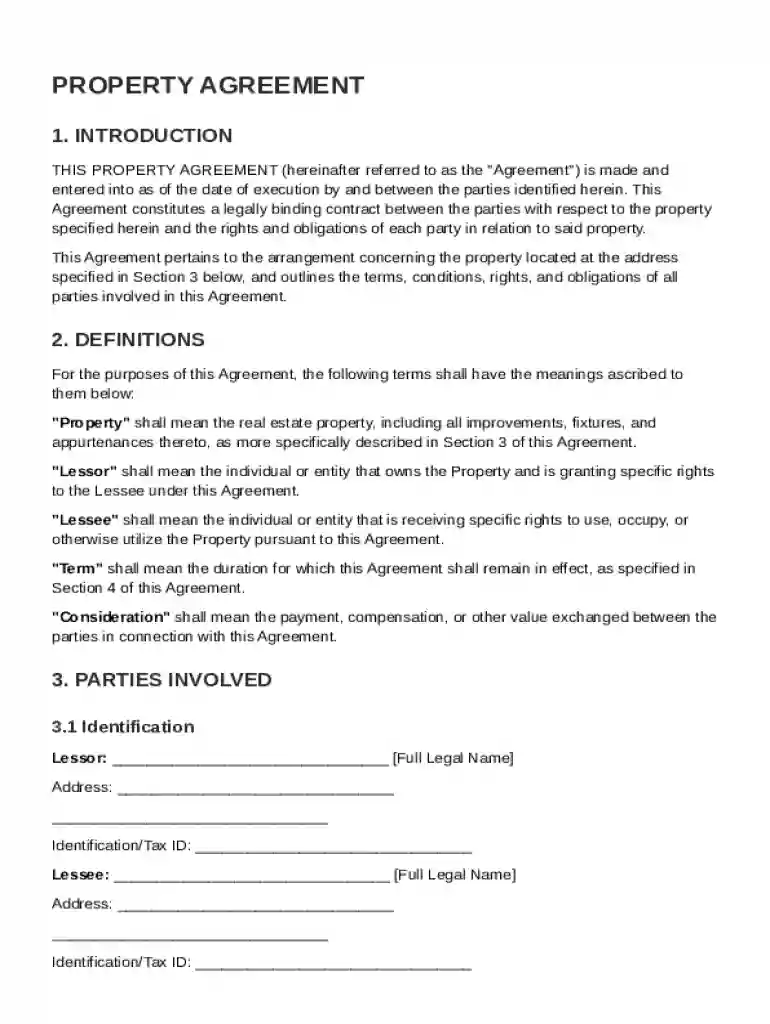
Type text, add images, blackout confidential details, add comments, highlights and more.

Draw your signature, type it, upload its image, or use your mobile device as a signature pad.

Send it via email, link, or fax. You can also download it, export it or print it out.
A Property Agreement Template is a legally binding document that outlines the terms and conditions related to the rental or lease of a property between a lessor (property owner) and a lessee (tenant). It includes detailed sections that cover various aspects such as property description, payment structures, rights, and obligations of each party. The template is designed to ensure clarity in the expectations and responsibilities of both parties, helping to prevent misunderstandings and legal disputes.
In practical terms, this agreement serves as a written record that both parties can refer to, ensuring that all aspects of the property transaction are clear and agreed upon. It often includes sections specifying the duration of the lease, rent amount, payment schedules, and any rules regarding the use of the property. The template helps safeguard the interests of both the property owner and the tenant by legally establishing each party's commitments.
To effectively use a Property Agreement Template, follow these steps:
Download the Template: Obtain the template from a trusted source, ensuring that it is up-to-date and compatible with your needs. For example, platforms like DocHub allow you to edit and manage your documents online, providing an easy-to-use interface for customizing agreements.
Review Standard Clauses: Familiarize yourself with the standard clauses and terms within the template. Understand what each section means and evaluate whether it aligns with your specific property arrangement.
Customize the Content: Modify the template to reflect the specifics of your agreement. This includes inserting the names and contact details of the involved parties, detailed property description, and any customized terms regarding rent or lease conditions.
Add Specific Conditions: Incorporate additional clauses that may be relevant to the property or the agreed-upon uses. For instance, if there are specific maintenance responsibilities or restrictions on usage, make sure these are clearly outlined.
Review Regulations: Ensure that the template complies with local state laws and regulations, as requirements can vary widely. Consulting with a legal expert can provide assurance that all necessary legal bases are covered.
Finalize the Document: Once the content is fully customized and reviewed, both parties should agree to the terms. This can be done by signing the document, either physically or through electronic signatures as facilitated by tools like DocHub.
The Property Agreement Template typically includes several crucial elements:
Party Details: Full names and contact information of the lessor and lessee.
Property Description: Detailed information about the property, including its address and any pertinent features.
Lease Term: The duration of the lease, specifying start and end dates.
Payment Terms: Rent amount, payment schedule, and acceptable payment methods.
Rights and Responsibilities: Clearly defined duties of both parties, like maintenance responsibilities and behavior expectations.
Termination Conditions: Terms under which the lease can be terminated, including notice periods and penalties for breach.
Dispute Resolution: Procedures for handling disputes, potentially specifying mediation or arbitration before litigation.
Familiarizing yourself with specific terms associated with a Property Agreement Template can enhance your understanding:
Lessor/Lessee: Lessor refers to the property owner, while lessee is the tenant.
Lease Term: The duration period for which the property is leased.
Security Deposit: An upfront amount paid by the lessee to cover potential damages or non-payment of rent.
Maintenance Clause: Specifies the responsibility of both parties in the upkeep of the property.
Subletting: Stipulations regarding the tenant’s ability to rent the property to another party.
Each state may have unique rules and regulations impacting property agreements:
Security Deposits: Vary by state, including limits on amounts and timelines for return post-tenure.
Disclosure Requirements: Some states require landlords to disclose certain materials, like lead paint or other hazards.
Notice Periods: Laws differ regarding the amount of notice required for termination or rent increase.
Rent Control: Certain jurisdictions may have rent control laws limiting how much rent can be increased.
Several scenarios illustrate how a Property Agreement Template can be applied:
Residential Lease: A template is used when renting out a single-family home to outline rent amount, responsibilities, and payment terms.
Commercial Lease: Used for leasing retail or office spaces where complexities such as tenant improvements or shared utilities are addressed.
Vacation Rentals: Agreements for short-term holiday properties that focus on transient use, often with stricter rules about noise and damage.
The legal use of a Property Agreement Template ensures protection for both parties involved:
Binding Agreement: Once signed, it legally binds both parties to the terms outlined within.
Enforcement: Clearly defined terms can be enforced by law if disputes arise.
Documentation: Serves as official documentation for the tenant’s right to occupy the premises.
It is essential for landlords and tenants alike to utilize these templates to minimize legal risks and ensure all agreements are comprehensively documented.
At DocHub, your data security is our priority. We follow HIPAA, SOC2, GDPR, and other standards, so you can work on your documents with confidence.



Feb 9, 2021 Content on this page concerns written agreements for the transfer of land and business assets, including option agreements and contracts for
As public records, contract forms adopted by the Texas Real Estate Commission are available to any person. Real estate license holders are required to useRead more


