






Definition & Importance of a Process Agreement Template
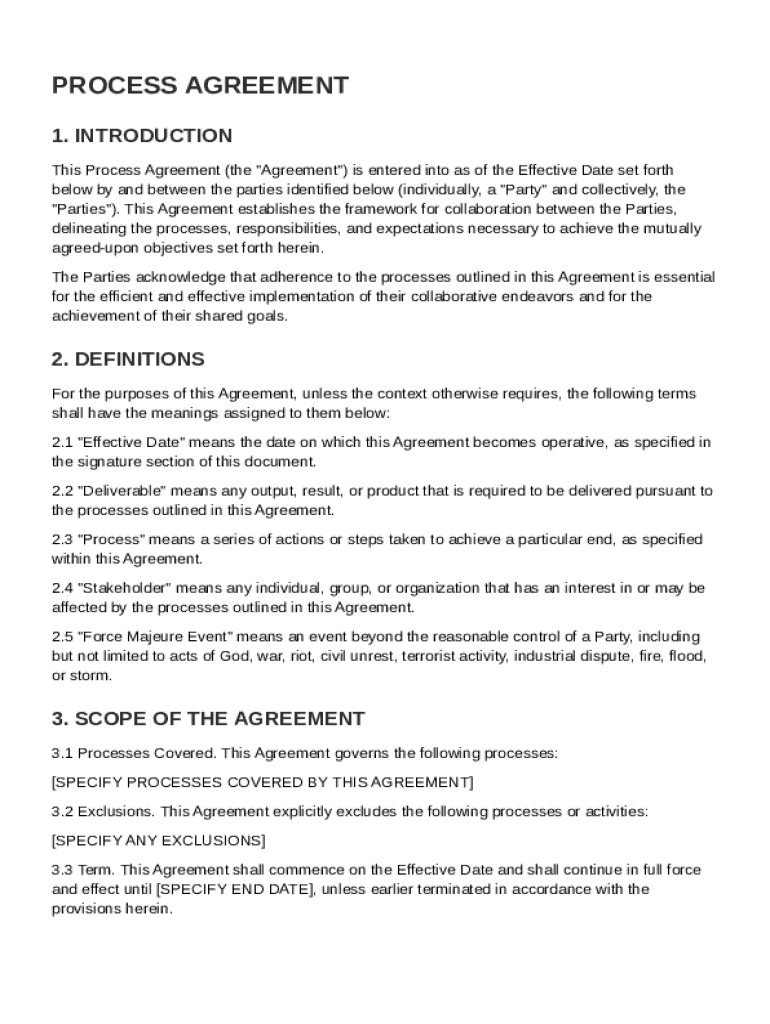
A Process Agreement Template is a formal document that outlines the collaborative framework between two parties, detailing essential elements such as roles, responsibilities, and necessary processes to achieve shared goals. The template serves as a foundational tool for establishing clear guidelines, enhancing mutual understanding, and preventing potential disputes.
A comprehensive Process Agreement typically includes sections defining key terms to ensure both parties have a mutual understanding of the language used within the agreement. This includes clauses related to the scope of work, which outlines the objectives and boundaries of the collaboration, as well as performance metrics to define how success will be measured.
The template also emphasizes the necessity of adhering to predefined processes to ensure effective implementation and successful partnerships. By having a structured document in place, organizations can streamline communication, mitigate risks, and foster a productive working relationship, which is crucial for achieving long-term success.
How to Use the Process Agreement Template
To effectively utilize a Process Agreement Template, begin by importing the template into a compatible document management platform such as DocHub, which supports various file formats including PDF, DOC, PPT, XLS, and TXT. This flexibility allows you to select the format that best suits your enterprise's needs.
Steps to Use the Template
- Import the Template: Load the template directly from your computer or a cloud storage service like Google Drive or Dropbox.
- Customize the Document: Use DocHub's editing tools to insert specific details pertaining to the agreement, such as the names of the parties involved, the scope of work, and any particular terms related to the collaboration.
- Add Fillable Fields: If there are sections requiring input from multiple parties, you can add fillable fields using the Form Fields manager. This feature enables you to include text boxes, checkboxes, and dropdown menus, ensuring that all necessary information is captured efficiently.
- Review and Modify: Before finalizing the document, review it thoroughly to ensure all sections are complete and accurately reflect the terms agreed upon by both parties.
- Export and Share: Once complete, export the finalized document back to your cloud storage or share it securely with all relevant stakeholders.
By following these steps, users can create a precise and actionable Process Agreement tailored to their specific needs.
Who Typically Uses the Process Agreement Template
The Process Agreement Template is commonly used by businesses and organizations that require a structured framework for collaboration with partners, vendors, or contractors. This includes:
- Corporations and Enterprises: To formalize partnerships with other corporations or to streamline operations between different departments.
- Small and Medium Enterprises (SMEs): For collaborations with suppliers, distributors, or clients to ensure alignment of objectives and processes.
- Non-Profit Organizations: To establish working guidelines with donors, government agencies, or other non-profit entities.
- Project Management Teams: To define roles, responsibilities, and timelines for joint ventures or collaborative projects.
By using this template, organizations across various sectors can clearly delineate expectations and responsibilities, reducing the likelihood of disputes and enhancing overall project efficiency.


Key Elements of the Process Agreement Template
The Process Agreement Template contains several crucial elements, each serving a distinct purpose:
Roles and Responsibilities
- Role Definition: Clearly outlines each party's role within the collaboration.
- Responsibility Assignment: Specifies who is responsible for what activities to ensure accountability.
Performance Metrics
- Objective Criteria: Establishes clear performance indicators to measure success.
- Review Mechanism: Includes procedures for evaluating performance against established metrics.
Dispute Resolution
- Methodology: Defines the process for resolving disputes, such as mediation or arbitration.
- Timeframes: Sets specific timeframes for initiating and resolving disputes to prevent delays.
Confidentiality and Security
- Data Protection: Details the measures in place to protect sensitive information.
- Confidentiality Clauses: Specifies what information is deemed confidential and the obligations of both parties in this regard.
These elements are designed to be comprehensive, ensuring that the agreement addresses all facets of the partnership and minimizes potential areas of conflict.
Legal Compliance and Use of the Process Agreement Template
Ensuring legal compliance is a critical aspect of using a Process Agreement Template. The document must adhere to relevant U.S. laws and regulations to be enforceable, which includes compliance with the ESIGN Act for electronic signatures.
Legal Framework
- Law Adherence: The template must include clauses that reference applicable laws and regulations.
- Electronic Signatures: Utilize DocHub's feature for legally binding electronic signatures to authenticate the agreement.
Risk Mitigation
- Compliance Checks: Regularly review the document to ensure ongoing compliance with any changes in legislation.
- Legal Consultation: Consider consulting with legal professionals to verify the agreement's compliance and enforceability.
Following these guidelines ensures that the Process Agreement not only fulfills its operational objectives but also withstands legal scrutiny.
Step-by-Step Instructions for Completing the Process Agreement Template
Completing a Process Agreement Template requires careful attention to detail. Follow these steps to ensure a comprehensive and accurate document:
- Gather Information: Collect all necessary details about the parties involved, the nature of the collaboration, and the objectives to be achieved.
- Fill in Essential Details: Use the template to input the collected information, ensuring accuracy and completeness.
- Customize Specific Clauses: Tailor clauses such as termination conditions, confidentiality obligations, and dispute resolution methods to suit the specific needs of the agreement.
- Incorporate Additional Fields: Add any additional fields for special requirements or notes specific to the agreement.
- Review and Edit: Conduct a thorough review of the document to correct any errors or omissions.
- Secure Approval and Signatures: Once finalized, circulate the agreement for approval and obtain signatures using DocHub’s electronic signature feature.
By adhering to these steps, users can create a robust, actionable Process Agreement Template tailored to their specific collaborative needs.
Examples of Using the Process Agreement Template
Real-world scenarios offer insight into the application of a Process Agreement Template:
- Corporate Expansion: Companies entering new markets may outline joint ventures with local firms using a Process Agreement Template to define shared goals and responsibilities.
- Supplier Agreements: Businesses can use the template to establish terms with suppliers, ensuring timely delivery of products and services while maintaining quality standards.
- Research Collaborations: Universities and research institutions may utilize the template to outline collaborative studies, ensuring all parties are aligned on research protocols and outcomes.
These examples illustrate the versatility of the Process Agreement Template in facilitating diverse collaborative efforts across various industries and domains.