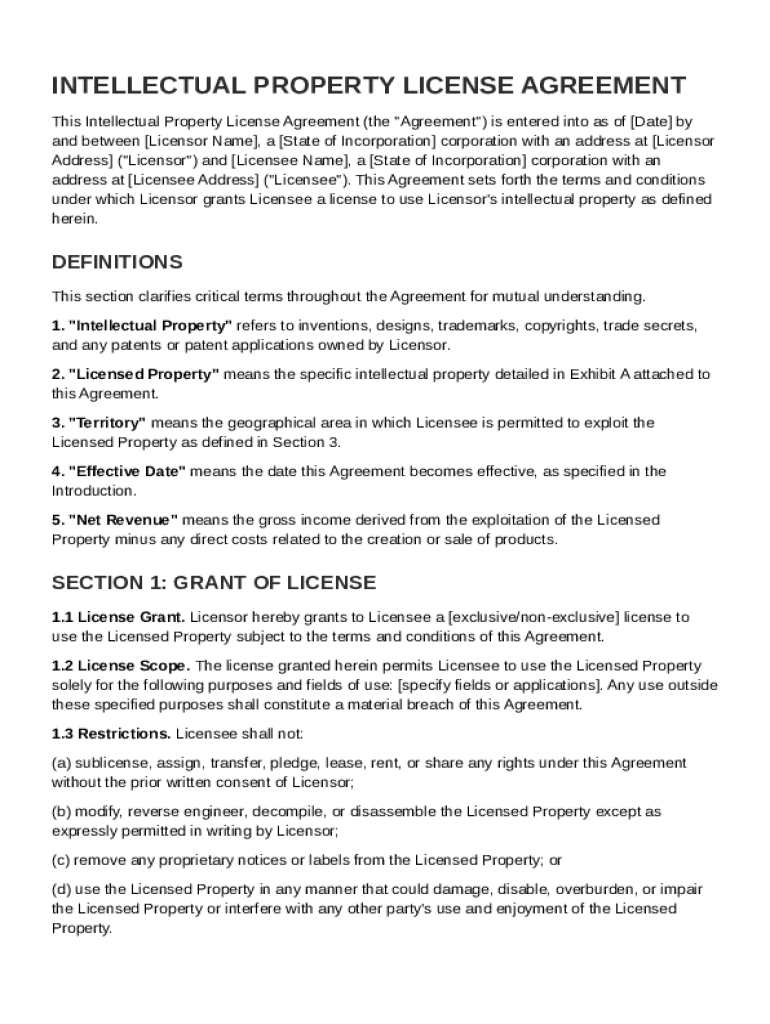







Definition & Meaning
An Intellectual Property License Agreement is a legally binding contract that grants the Licensee the rights to use the intellectual property owned by the Licensor. This document is critical in defining the parameters of usage, ensuring both parties understand their rights and obligations. The agreement helps in protecting intellectual property from misuse and ensures proper compensation is received by the Licensor for granting usage rights.
- Intellectual Property (IP): This includes patents, trademarks, copyrights, and trade secrets.
- Licensor: The owner of the intellectual property.
- Licensee: The party who is granted the rights to use the intellectual property.
Key Elements of the Intellectual Property License Agreement Template
Every Intellectual Property License Agreement Template should comprehensively cover several critical elements to ensure clarity and protect the interests of both parties involved.
- License Grant: Details the specific rights being transferred and any restrictions on those rights.
- Duration and Termination: Defines the time period for which the license is valid and conditions under which it can be terminated.
- Territorial Scope: Specifies the geographical areas where the license can be exercised.
- Royalty Payments: Outlines the payment terms, including frequency and amounts, that the Licensee agrees to pay the Licensor.
- Warranties: Includes assurances regarding the ownership of intellectual property and its validity.
- Confidentiality: Specifies how sensitive information will be handled by both parties.
- Indemnification: Details the compensations due for any losses stemming from breach of the agreement or third-party claims.
How to Use the Intellectual Property License Agreement Template
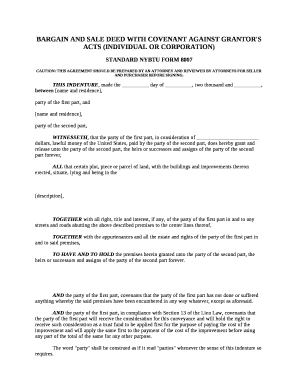
Utilizing the Intellectual Property License Agreement Template can streamline the drafting process, ensuring that all necessary components are included and compliant with legal requirements.
- Select the Appropriate Template: Choose a template that aligns with the specific type of intellectual property and industry standards.
- Customize the Template: Modify sections to reflect the unique terms and conditions agreed upon by both parties.
- Review and Revise: Engage legal counsel to ensure that the template is legally sound and all terms are clearly defined.
- Execution: Ensure that both parties sign the final document, adhering to any state-specific notarization requirements.
Important Terms Related to Intellectual Property License Agreement Template
Understanding the jargon and critical terms used in an Intellectual Property License Agreement is crucial for both drafting and comprehension.
- Exclusive vs. Non-Exclusive License: An exclusive license means only the Licensee can use the IP, while a non-exclusive license allows multiple parties to use the IP.
- Sublicensing: Ability of the Licensee to grant use of the rights to a third party.
- Field of Use: The specific industry or market where the IP can be utilized by the Licensee.
- Know-How: Refers to the accumulated expertise and skills related to the intellectual property that may also be shared under the agreement.
Steps to Complete the Intellectual Property License Agreement Template
Completing and executing an Intellectual Property License Agreement involves a series of structured steps to ensure accuracy and mutual agreement.
- Gather Required Information: Compile all necessary details about the intellectual property, including proofs of ownership.
- Draft Initial Agreement: Use the template to draft the initial terms of the agreement, including rights, obligations, and compensation terms.
- Negotiate Terms: Engage in discussions with all parties to negotiate terms and reach a mutual agreement.
- Legal Review: Have the draft reviewed by a legal professional to identify any potential issues or omissions.
- Finalize Draft: Make the necessary amendments based on the legal review and negotiations.
- Signatures: Ensure both parties sign the document in the presence of a witness or notary as required.
Legal Use of the Intellectual Property License Agreement Template
Ensuring the legality of the Intellectual Property License Agreement is crucial for valid enforcement and protection against infringement claims.
- Compliance with IP Laws: The agreement should comply with relevant patent, trademark, and copyright laws, both domestically and internationally.
- Contract Enforcement: Ensure the agreement is drafted in compliance with contract law principles, ensuring it can be enforced if disputes arise.
- Validity and Ownership: Establish clear evidence and claims of ownership and validity of the intellectual property being licensed.
State-Specific Rules for the Intellectual Property License Agreement Template
Different states in the U.S. may have specific regulations that influence the drafting or execution of an Intellectual Property License Agreement.
- Governing Law Clauses: Specify which state’s laws will govern the agreement.
- Notarization: Certain jurisdictions may require the agreement to be notarized for validity.
- Registration Requirements: Some states may necessitate registering certain intellectual property licenses, especially for trademarks.
Examples of Using the Intellectual Property License Agreement Template
Real-world scenarios where an Intellectual Property License Agreement Template is used can illustrate its necessity and application.
- Technology Transfer: A university licenses a patented technology to a tech company to bring innovations to the market.
- Franchise Agreements: A franchise system uses the template to allow franchisees to utilize branding and operational systems.
- Music Licensing: A record label licenses its catalog to streaming platforms under terms defined by the agreement.